
How to tell if a rock is a fossil
Fossils are far more common than most people think. Many beach pebbles and driveway stones have shells, stems or corals in them. Here's how to spot them, and how to avoid the look-alikes.
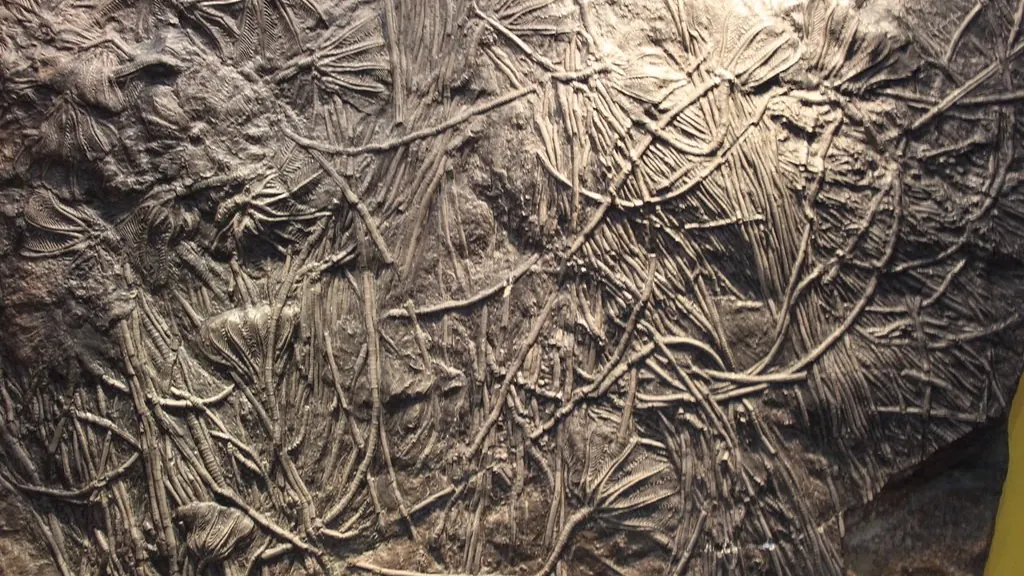
A fossil is any trace of ancient life preserved in rock: the shell, bone, wood or even footprint of something that lived millions of years ago. Most fossils aren't dinosaur skeletons. They're small, common and hiding in ordinary rocks. Once you know what to look for, you'll start seeing them everywhere.
5 signs your rock is a fossil
- A shape that looks alive. Shells, leaves, ribs, segments, teeth, stems.
- Symmetry. Living things are often symmetrical: a shell with matching halves, a star pattern, a spiral.
- Repeating patterns. Even ribs on a shell, rings on a stem, the cells of a coral, the grain of wood.
- A different texture from the rock around it. Shell material is often shinier, smoother or a different color. Bone has a honeycomb inside.
- The right kind of rock. Fossils are in sedimentary rocks: limestone, shale, sandstone, chalk. Not in granite, basalt or other once-molten rock.
The fossils you're most likely to find
| Fossil | What it looks like |
|---|---|
| Brachiopods and clams | Shells with ribs or growth lines, often in limestone |
| Crinoid stems | Little disks or stacked "beads" with a hole in the middle |
| Corals | Honeycomb pattern, or horn shapes with radiating lines |
| Bryozoans | Lacy, net-like or twig-like patterns with tiny holes |
| Ammonites | Coiled shells with wavy lines across them |
| Plant fossils | Dark leaf or fern prints in shale, often near coal |
| Petrified wood | Stone with tree rings, bark texture and wood grain |
| Shark teeth | Shiny, black or grey triangular teeth, common on some beaches |
| Bone | Spongy honeycomb texture inside, smooth outer layer |
Fossil look-alikes ("pseudofossils")
- Dendrites: black, fern-like or tree-like patterns on rock surfaces. They're manganese mineral crystals, not plants. They lie flat on a crack surface and have no real structure.
- Concretions: round or odd-shaped lumps that look like eggs, bones or even body parts. They form when minerals cement sediment around a center.
- Septarian nodules: concretions with cracks filled by calcite, which can look like turtle shells.
- Weathering patterns: holes and pits from erosion can look like coral or bone but have no regular pattern.
The test: real fossils have regular, repeating structure. Pseudofossils are random, or only look like something from one angle.
Where to look
Good places are beaches below cliffs of shale or limestone, road cuts, quarry spoil heaps (with permission), creek beds in limestone country, and gravel driveways made of crushed limestone. After storms, eroding cliffs release fresh fossils. See our rockhounding guide for tips, and check the local rules first: national parks, many protected sites, and (in the USA) vertebrate fossils on federal land are off limits without a permit.
Cleaning and keeping fossils
Use water and a soft brush. Many fossils sit in limestone, which vinegar dissolves, so avoid acids unless you know what you're doing. Let them dry slowly, and write down where and when you found each one: location makes a fossil much more interesting, and more valuable to collectors. More tips in how to clean rocks.
Fossil or not? A quick checklist
| What you see | Likely a fossil? |
|---|---|
| Repeating ribs, segments or growth lines | Yes: shells, trilobites, crinoids, corals |
| Tiny holes in a honeycomb or spongy pattern | Yes: bone or coral |
| Wood grain and rings | Yes: petrified wood |
| Fern-like branching on a flat surface, very thin | Probably not: manganese dendrites |
| Perfectly round balls or "eggs" | Probably not: concretions |
| Shiny, smooth shapes like bones or teeth with no texture | Usually not: weathered pebbles |
Is it legal to keep?
Rules depend on where you found it. In the US, common invertebrate fossils (shells, crinoids, plants) can usually be collected in small amounts for personal use on most Bureau of Land Management land, but vertebrate fossils (bones, teeth of land animals) need a permit on federal land. National parks ban all collecting. On private land you need the owner's permission. Other countries have their own laws, so check before you go. Our guide Is it legal to take rocks? explains more.
Report important finds
If you find something unusual, like a large bone, a skull, or a complete animal, leave it in place if you can, photograph it with something for scale, note the exact location, and contact a natural history museum or university geology department. Many important discoveries have been made by amateurs who did exactly that.
Questions people ask
What is the most common fossil?
Shells of brachiopods and clams, crinoid stem pieces, and corals are the fossils people find most. In many limestone areas, whole layers of rock are made almost entirely of them. Petrified wood and shark teeth are also very common in the right places.
What rock are fossils found in?
Almost always sedimentary rock: limestone, shale, mudstone, sandstone and chalk. These form from layers of mud, sand and shells where dead creatures could be buried. Igneous rocks like granite and basalt form from melted rock, so they don't contain fossils.
Is it legal to collect fossils?
It depends on where. In the USA, you can collect reasonable amounts of common invertebrate and plant fossils on most Bureau of Land Management land for personal use, but collecting vertebrate fossils (bones, teeth) on federal land needs a permit, and national parks ban all collecting. On private land you need the owner's permission. Other countries have their own rules.
How can I tell fossil bone from rock?
Fossil bone usually has a spongy, honeycomb-like texture on broken ends or a smooth outer layer with tiny pores. It's often darker than the surrounding rock. Our dinosaur bone guide explains the details.
Keep reading
How to find fossils: a beginner's guide
Which rocks hold fossils, where to look and what to bring.
Trilobite fossils: what they are and where to find them
How to identify a trilobite, where to dig your own, and what they're worth.
Crinoids: the 'sea lily' fossils that look like stacks of tiny coins
Fossil Cheerios: the sea lilies that once carpeted the ocean floor.