
Geodes: how to find them, open them and what they're worth
From the outside, a geode looks like a boring lumpy ball. Crack it open and it's a hollow cave lined with sparkling crystals. Here's how to tell which rocks are geodes before you break them.
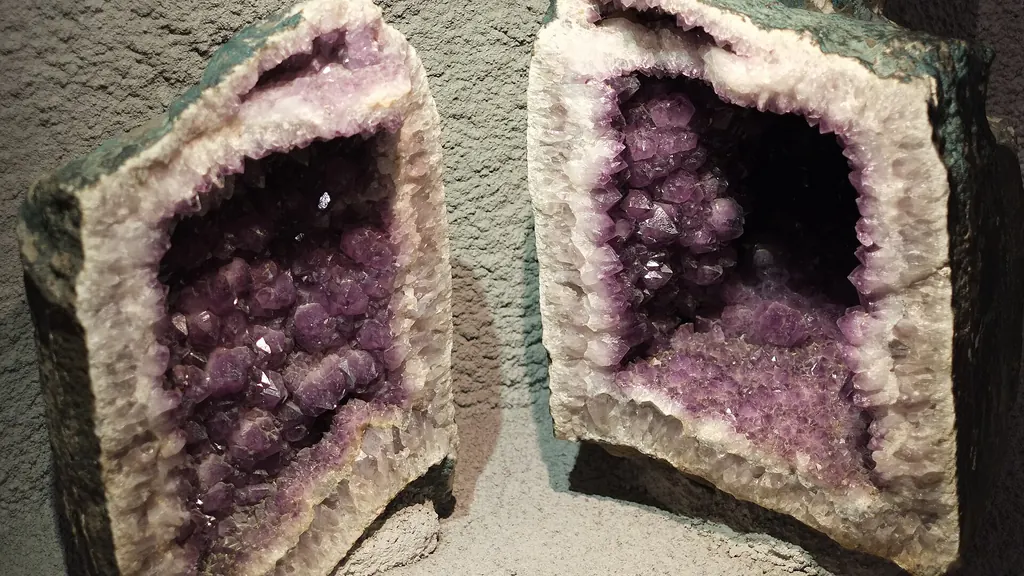
A geode is a hollow rock with crystals inside. It starts as a bubble or pocket in volcanic rock or sediment. Over thousands of years, mineral-rich water seeps in and leaves layers of chalcedony and then crystals that grow inward toward the center. The result: a dull, round rock with a crystal cave hidden inside.
How to spot a geode before you crack it
- Round or egg-shaped, from golf-ball to basketball size
- Bumpy, cauliflower-like skin, often tan, grey or brown
- Lighter than it looks: pick up two rocks of the same size; the hollow one feels lighter
- May rattle or sound hollow when gently shaken or tapped
- Found in groups in the same layer of rock or creek bed
What's inside
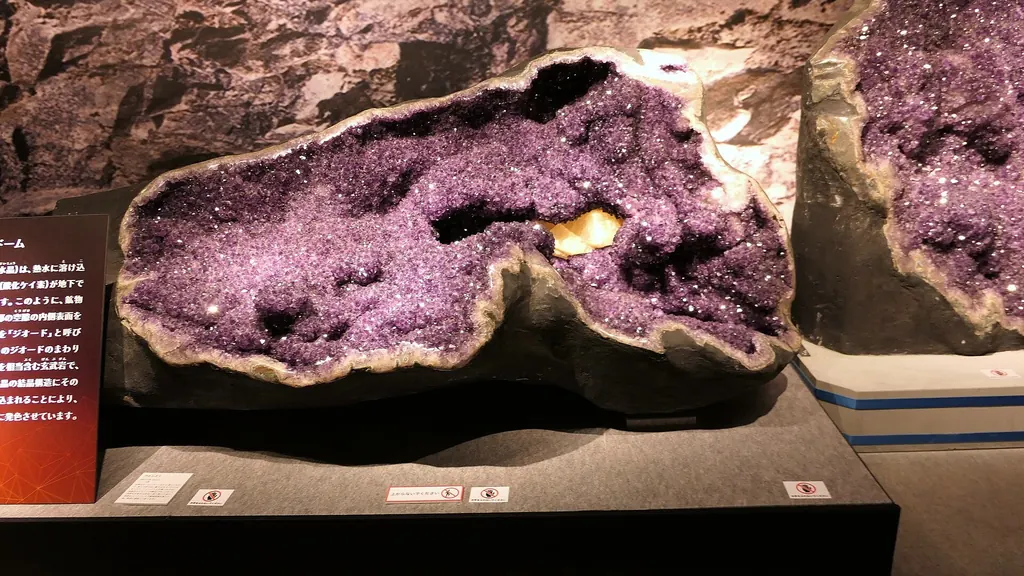
Most geodes are lined with quartz crystals, clear, white or purple (amethyst). Many also have a band of chalcedony or agate just inside the shell. Others hold calcite, sky-blue celestine, or rarer minerals like pyrite, sphalerite or kaolinite that collectors love. A few are filled completely solid; these are called nodules.
Where to find geodes
Famous spots include the Keokuk area where Iowa, Illinois and Missouri meet (the Keokuk geode is Iowa's state rock), the Dugway Geode Beds in Utah, Kentucky and Indiana creek beds, and the Las Choyas beds in Mexico. The giant amethyst geodes in shops mostly come from Brazil and Uruguay, where they form in old lava flows. Several pay-to-dig sites let you keep what you find. See our rockhounding guide for tips.
How to get geodes: 4 ways
- Hunt for them yourself. Free and the most fun. Best in known geode areas like the Keokuk region (Iowa, Illinois, Missouri), Kentucky and Indiana creeks, and Utah's Dugway Geode Beds on public land.
- Pay to dig. Rock shops and private mines in geode country charge a small fee and let you keep what you find. Search for "geode dig" plus your state.
- Buy them whole. Uncracked geodes from Mexico and Morocco sell online and in rock shops for a few dollars each, so you can crack them at home.
- Gem and mineral shows. Many have kids' tables where you pick a geode and they crack it for you.
Geode hunting: where to look and what to look for
- Creek beds and gravel bars after high water, when new stones wash out
- Eroded banks, road cuts and gullies in limestone and shale country, where geodes weather out of the rock
- Desert washes near old volcanic rock in the western US, for geodes and thundereggs
Look for round or egg-shaped stones from golf-ball to softball size with a bumpy, cauliflower-like surface. Pick them up: a hollow geode feels lighter than a solid rock of the same size. Check the rules first: casual collecting is usually allowed on US BLM land, never in national parks, and private land always needs the owner's permission.
How to open a geode
- Soil pipe cutter: a chain wrapped around the middle squeezes until it cracks cleanly in two. The best tool for small and medium geodes.
- Rock saw: a diamond saw gives two flat halves you can polish. Many rock shops will cut geodes for a small fee.
- Hammer and chisel: tap gently all the way around the middle, turning as you go. Expect a few broken pieces.
Always wear safety glasses. And don't open a geode you plan to sell unopened: "whole" geodes sell as a surprise.
Geode vs thunderegg
| Geode | Thunderegg | |
|---|---|---|
| Inside | Hollow, lined with crystals | Usually solid agate or jasper, often a star shape |
| Forms in | Volcanic rock or limestone and shale | Volcanic rock (rhyolite ash) |
| Weight | Lighter than it looks | Normal or heavy |
| Famous for | Iowa, Utah, Brazil, Uruguay | Oregon (state rock), Australia |
What geodes are worth
| Geode | Rough value |
|---|---|
| Small unopened geode | About $2 to $10 |
| Opened pair, quartz lined | About $10 to $50 |
| Keokuk geode with rare minerals | About $50 to several hundred dollars |
| Amethyst cluster or geode piece | About $20 to a few hundred dollars |
| Large amethyst "cathedral" geode | Hundreds to many thousands of dollars |
Deep, even purple color, sparkling unbroken crystals and large size add the most value. Watch out for dyed geodes: bright pink, blue or green insides are usually color added in a factory.
Prices are rough guides.
Found a round, lumpy rock?
Snap a photo with RockFinder to see if it looks like a geode, a thunderegg or a concretion before you crack it.
Questions people ask
How can you tell if a rock is a geode?
Geodes are usually round or egg-shaped, with a bumpy, cauliflower-like outer surface. Most importantly, they feel lighter than a solid rock of the same size because they're hollow. Some sound hollow when gently tapped or shaken.
What's the best way to open a geode?
A soil pipe cutter (chain cutter) cracks geodes cleanly into two halves. A rock saw gives a polished-looking cut. You can also tap around the middle with a hammer and chisel, but that often breaks it into several pieces. Always wear safety glasses.
How much is a geode worth?
Small unopened geodes sell for about $2 to $10. Nice opened pairs bring $10 to $50. Large amethyst geodes from Brazil or Uruguay sell for hundreds to thousands of dollars, and geodes with rare minerals inside can be worth more to collectors.
What is the difference between a geode and a thunderegg?
A geode is hollow, with crystals lining the inside. A thunderegg forms in volcanic rock and is usually filled solid with agate or jasper, often in a star shape. Thundereggs are Oregon's state rock.
How do you get geodes?
Hunt for them in creek beds, road cuts and eroded banks in geode areas; dig at a pay-to-dig site; buy uncracked geodes online or at rock shops; or pick one at a gem and mineral show.
Where can I go geode hunting?
Famous areas include the Keokuk region where Iowa, Illinois and Missouri meet, creeks in Kentucky and Indiana, and the Dugway Geode Beds in Utah. Look in creek gravels and eroded limestone banks, and always check collecting rules first.
Keep reading
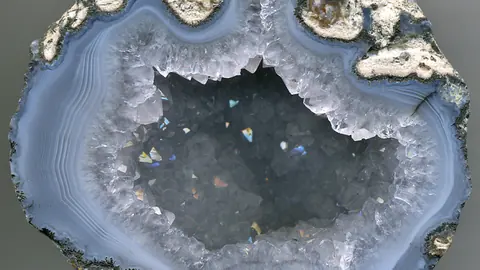
Where to find geodes in the US
The best geode hunting areas, state by state, and how to spot one.
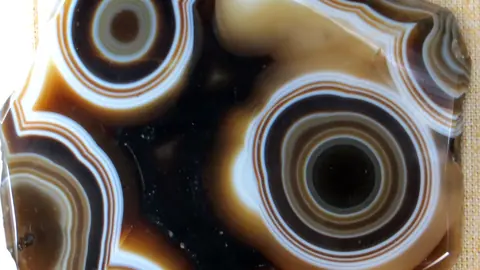
Agate: how to identify it and what it's worth
Banded stones that glow with a flashlight, from beach pebbles to $1,000 finds.
Chalcedony: the glowing stone hiding on beaches and riverbanks
Hold it up to the sun and it glows. The beach stone with a hundred names.
More guides
- Quartzite: the toughest rock on the beach
- Magnetite: the rock that grabs your magnet
- Chalcopyrite: the other fool's gold (and the world's copper)
- Dinosaur bone: how to tell if you've found a piece of a dinosaur
- Tektite: glass splashed across the Earth by asteroid impacts
- Concretions: the weird round rocks everyone thinks are eggs