
Petrified wood: how to identify it and what it's worth
It looks like a log, but it's heavy, cold and hard as glass. Petrified wood is a tree that slowly turned to stone, keeping every ring and knot.
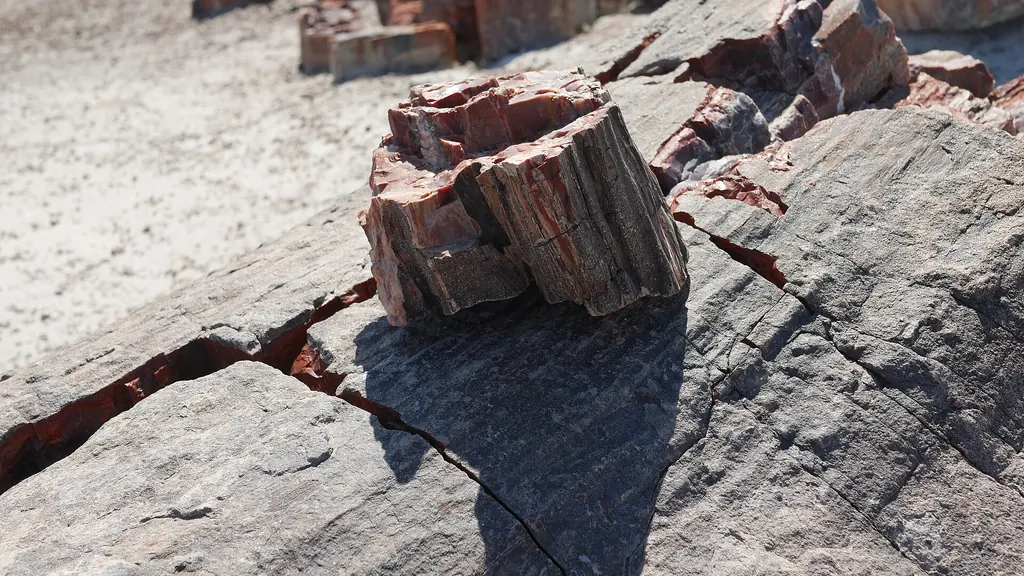
Petrified wood forms when a fallen tree is buried quickly by mud or volcanic ash, so it doesn't rot. Groundwater full of dissolved silica soaks through the wood, and over time, cell by cell, minerals replace the wood. The tree becomes stone, mostly quartz, chalcedony or opal, but keeps its shape, rings and even bark.
How to identify petrified wood
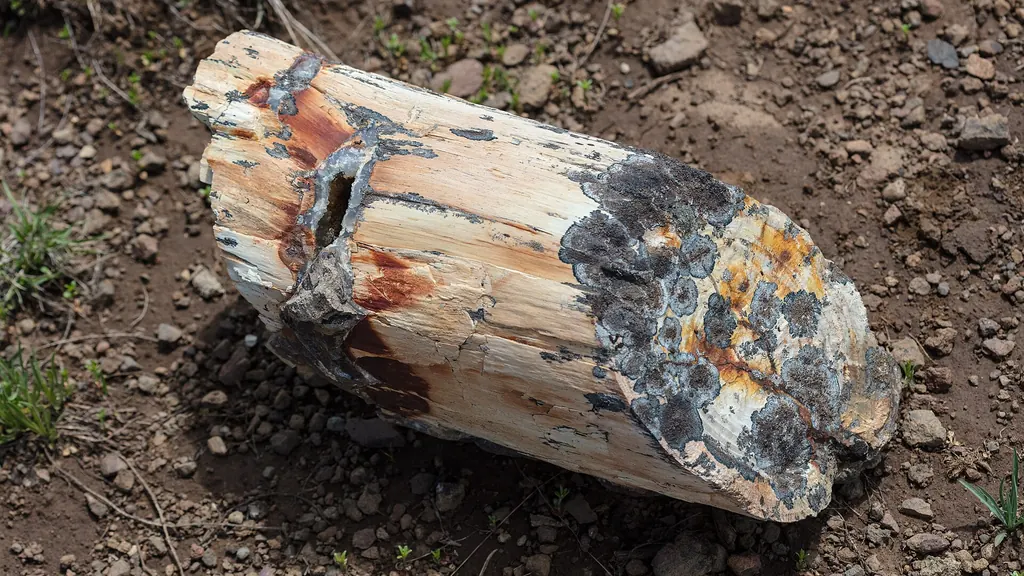
- Wood features: growth rings on the ends, grain along the sides, bark texture, knots
- Heavy and cold like any stone, much heavier than wood
- Very hard: about 7, a steel knife won't scratch it
- Glassy break: broken ends look like glass, not splinters
- Colors from iron and other minerals: red, yellow, brown, black, white, sometimes blue or purple
Look-alikes: regular old wood is light and soft; layered jasper or chert can have stripes, but no rings, knots or bark pattern; fossil bone has a spongy honeycomb pattern instead of rings (see our dinosaur bone guide).
Where to find it (legally)
Petrified wood is found worldwide, often in old volcanic and river deposits. Famous areas include Arizona, Utah, Wyoming, Oregon, Washington, Nevada and Texas in the USA, plus Madagascar, Indonesia, Argentina and Egypt.
| Where | Can you collect? |
|---|---|
| National parks (like Petrified Forest) | No. It's illegal and heavily fined. |
| US Bureau of Land Management land | Usually yes, for personal use: 25 lb plus one piece a day, 250 lb a year. No selling. |
| Private land and fee-dig sites | Yes, with the owner's permission |
| Other countries | Rules vary; some ban export entirely |
The petrified wood sold legally in shops comes from private land and licensed sources. Always check local rules before you collect.
What petrified wood is worth
| Item | Rough value |
|---|---|
| Rough chunks | About $1 to $5 per pound |
| Small polished pieces or tumbled stones | About $5 to $20 |
| Polished slice or round | About $20 to a few hundred dollars |
| Opalized wood or rare colors (blue, purple) | Often several times more |
| Large colorful polished logs and tables | Thousands of dollars or more |
Value goes up with bright, varied colors, sharp ring and bark detail, few cracks, and size. A clean polish shows off the colors, so many collectors cut and polish their best finds.
Prices are rough guides.
How wood turns to stone
Petrified wood forms when a tree is buried quickly, usually in volcanic ash, mud or river sand, before it can rot. Groundwater rich in dissolved silica (often from volcanic ash) seeps through the buried log. Over thousands to millions of years, the silica fills every cell and pore, and as the original wood slowly breaks down, more silica takes its place. The result is a log made of quartz, chalcedony or opal that keeps the tree's rings, bark and even cell walls.
The colors come from traces of other elements: iron gives reds, yellows and browns, manganese gives pinks and blacks, and copper, chromium or cobalt can give rare greens and blues.
Petrified wood vs look-alikes
| Look-alike | How to tell it apart |
|---|---|
| Old dry wood or driftwood | Wood is light, soft and a knife cuts it. Petrified wood is heavy, cold and scratches glass |
| Banded agate | Agate bands are smooth curves. Wood shows growth rings, bark texture and long grain |
| Fibrous rocks (some schist, tiger's eye) | No rings or bark; layers are flat or shimmery rather than woody |
| Coalified wood (lignite, jet) | Black, light, soft, and may burn. Petrified wood doesn't burn and is much harder |
Polishing and caring for it
Because it's mostly quartz (hardness about 7), petrified wood polishes to a glassy shine that shows off the rings. Small pieces tumble well. Large slabs and rounds need a lapidary saw and flat lap, which many rock clubs let members use. Pieces with soft, crumbly or punky areas can be stabilized with thin epoxy before cutting.
To clean a field find, soak it in water with a little dish soap and scrub with a soft brush. Don't use strong acids, which can attack any calcite in the cracks.
Famous petrified forests
- Petrified Forest National Park, Arizona: about 225 million years old, with whole logs lying on the ground. Taking any piece is illegal.
- Ginkgo Petrified Forest, Washington: over 50 kinds of trees, including ginkgo.
- Lesbos Petrified Forest, Greece: trees still standing upright where volcanic ash buried them.
- Chemnitz, Germany: a fossil forest buried by an eruption about 290 million years ago, dug up under the city.
Found a stone log?
Snap a photo with RockFinder to check if it's petrified wood, jasper or something else.
Questions people ask
How can you tell if wood is petrified?
Petrified wood is heavy and cold like stone, can't be scratched by a steel knife, and won't burn or float. It still shows wood features: growth rings, bark texture, knots and grain. A broken edge looks glassy instead of splintery.
Is it legal to collect petrified wood?
It depends where. Taking petrified wood from Petrified Forest National Park and other parks is illegal. In the USA, the Bureau of Land Management allows personal collecting on most of its land, up to 25 pounds plus one piece per day and 250 pounds per year. On private land you need the owner's permission.
How much is petrified wood worth?
Rough pieces usually sell for about $1 to $5 per pound. Polished slices and bookends sell for $20 to a few hundred dollars. Large, colorful polished rounds, opalized wood or pieces with perfect detail can sell for thousands.
How long does it take for wood to petrify?
It usually takes thousands to millions of years. Most petrified wood in shops is tens of millions to over 200 million years old. In hot springs with lots of silica, wood can start to mineralize much faster.
Keep reading
Chalcedony: the glowing stone hiding on beaches and riverbanks
Hold it up to the sun and it glows. The beach stone with a hundred names.
Agate: how to identify it and what it's worth
Banded stones that glow with a flashlight, from beach pebbles to $1,000 finds.
Is my rock valuable? How to tell if a rock is worth money
What makes a rock worth something, and how to check before you sell.