
How to tell if a rock is a meteorite
Real meteorites are rare, and most suspected ones turn out to be slag or iron ore. A few simple tests tell you which kind you have, and whether it's worth getting checked.
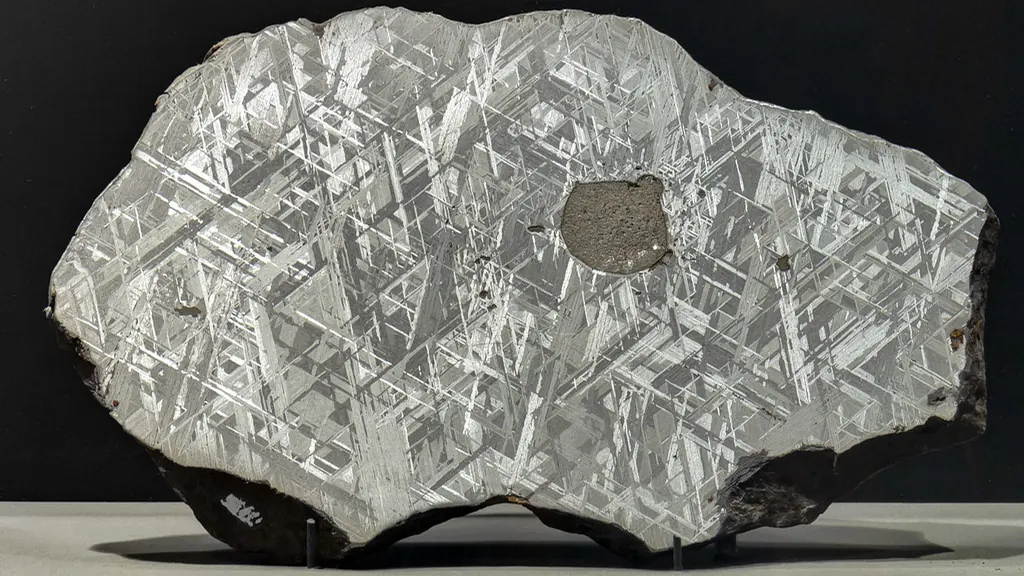
Every year thousands of people pick up a dark, heavy rock and wonder if it fell from space. A few of them are right. Meteorites are pieces of asteroids (and very rarely the Moon or Mars) that survived the fiery trip through our atmosphere. They look different from Earth rocks in ways you can check yourself.
The 6 tests
1. Does a magnet stick?
Almost all meteorites contain iron-nickel metal, so a strong magnet (like a fridge or neodymium magnet) sticks or at least tugs. Iron meteorites grab it hard; stony ones pull more weakly. No pull at all usually means it's not a meteorite. But plenty of Earth rocks are magnetic too, so a pass doesn't prove anything on its own.
2. Is it unusually heavy?
Meteorites feel heavy for their size, because of the metal inside. Iron meteorites feel like a chunk of steel. Stony meteorites are about a third heavier than a normal rock of the same size.
3. Does it have a fusion crust?
While falling, the outside of a meteorite melts and then hardens into a thin black skin, often under a millimeter thick, like a coat of black paint. Fresh ones may show tiny flow lines. Older meteorites rust, so the crust turns brown.
4. Thumbprints, not bubbles
Many meteorites have smooth, shallow dents that look like thumbprints pressed into clay. These are called regmaglypts. What meteorites almost never have is bubbles or holes. A rock full of gas holes is far more likely to be slag or volcanic rock.
5. The streak test
Rub a corner on the unglazed back of a white tile. Most meteorites leave little or no streak, or a faint grey. A black streak suggests magnetite; a red-brown streak suggests hematite. Both are common look-alikes. See our magnetite guide.
6. Look inside a ground corner
File or grind a small window on one corner. Stony meteorites usually show shiny metal flecks scattered through a grey interior, and often tiny round grains called chondrules. Iron meteorites are solid shiny metal inside.
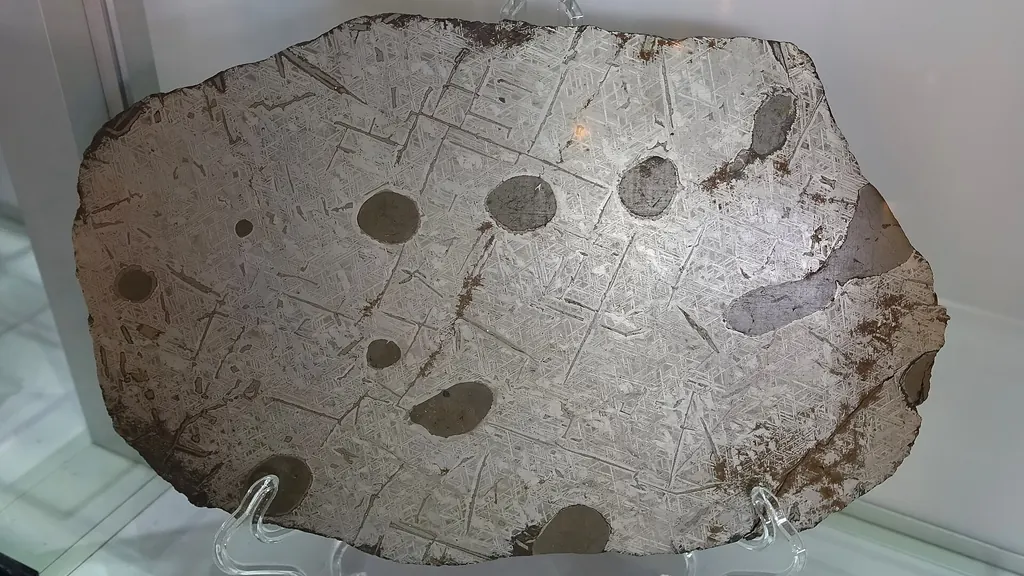
The usual meteor-wrongs
| Look-alike | How to spot it |
|---|---|
| Slag (from smelting or furnaces) | Bubbly, glassy or shiny inside; found near old industrial sites, railways |
| Magnetite | Very magnetic, but leaves a black streak; no metal flecks inside |
| Hematite | Leaves a red-brown streak; weakly or not magnetic |
| Basalt | Dark and fine-grained, often with small holes; not very heavy |
| Iron concretions | Rusty, often round or lumpy, with layered or sandy insides |
What meteorites are worth
| Type | Rough value |
|---|---|
| Common stony meteorite (ordinary chondrite) | Roughly $0.50 to a few dollars per gram |
| Common iron meteorite | Often under $1 per gram for big, well-known finds |
| Fresh fall with full black crust | Several times more than weathered pieces |
| Pallasite (metal with green olivine crystals) | Tens of dollars per gram |
| Lunar or Martian meteorite | Hundreds of dollars per gram or more |
A meteorite that has been officially classified (tested by a lab and given a name) is usually worth much more than an unverified rock. Many sellers online offer "meteorites" that are really slag, so buyers expect proof.
Prices are rough guides and vary a lot by type, size and condition.
Before you celebrate
- Don't clean it with acid or a wire brush, and keep it dry. Rust damages meteorites.
- Write down where you found it. The exact location matters for classification.
- Check who owns it. Rules differ by country. In some, meteorites belong to the state; on public land, there may be collecting rules.
- Contact a meteorite lab or museum with clear photos and your test results before paying anyone for analysis.
Want a quick first opinion?
Snap a photo with RockFinder. It will tell you if your rock looks like a meteorite or a common look-alike, and which test to try next. For other valuable finds, read Is my rock valuable?
Questions people ask
How can I tell if my rock is a meteorite at home?
Most meteorites stick to a strong magnet, feel unusually heavy, have a thin black or rusty-brown crust, and have no bubbles or holes. A streak test on a white tile should leave little or no mark. If it passes all of these, it's worth getting tested by a lab.
What rocks are mistaken for meteorites?
The most common 'meteor-wrongs' are industrial slag (often bubbly), magnetite (leaves a black streak), hematite (leaves a red-brown streak), dark basalt and iron-rich concretions.
How much is a meteorite worth?
Common stony meteorites sell for very roughly $0.50 to a few dollars per gram, common irons for less per gram. Rare types like pallasites can bring tens of dollars per gram, and lunar or Martian meteorites hundreds per gram. A newly found, officially classified meteorite is usually worth more than an unclassified one.
Who can confirm if a rock is a meteorite?
University meteorite labs, natural history museums and some geology departments will look at a suspected meteorite, often for free. They usually ask for photos and test results first. A confirmed meteorite can be officially named and classified.
Keep reading
Is my rock valuable? How to tell if a rock is worth money
What makes a rock worth something, and how to check before you sell.
Magnetite: the rock that grabs your magnet
The mineral that made the first compass, and fools meteorite hunters daily.
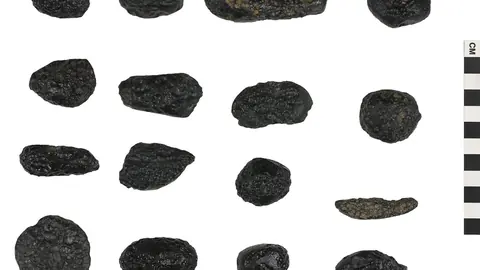
Tektite: glass splashed across the Earth by asteroid impacts
Asteroid splash-glass that rained down across continents. You can own a piece.
More guides
- Rockhounding: how to start hunting for rocks, gems and fossils
- Gemstone identification: 7 tests you can do at home
- Feldspar: the most common mineral you've never noticed
- Chert: the rock that made the Stone Age possible
- Shale: the crumbly rock that holds Earth's best-kept secrets
- Pumice: the rock that floats