
Agate: how to identify it and what it's worth
Agates hide in plain sight on beaches and gravel roads. Shine a flashlight through one and its secret bands light up. Here's how to find them and tell a pebble from a prize.
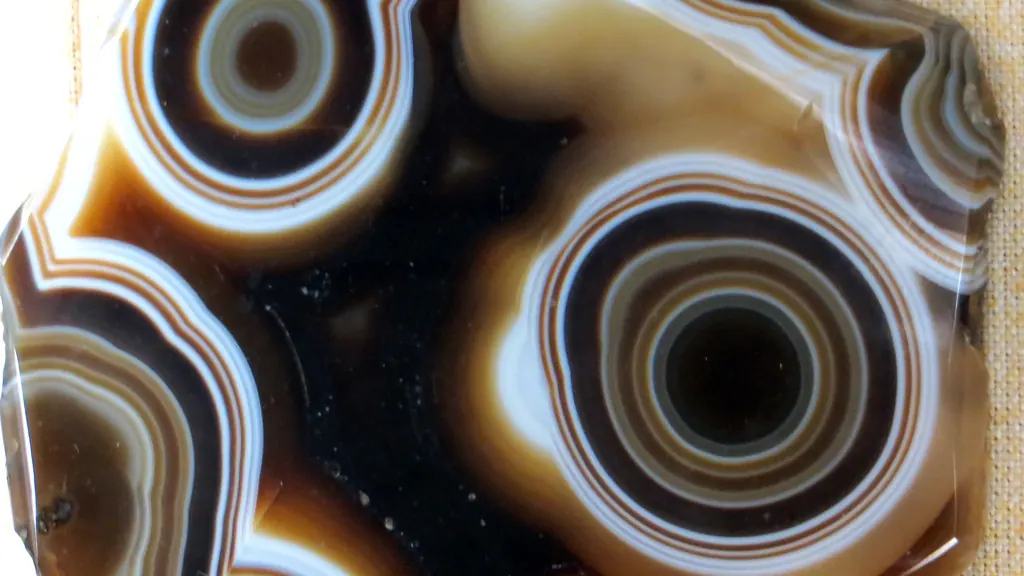
Agate is a banded form of chalcedony, a quartz made of crystals too small to see. It forms when silica-rich water seeps into holes in rock, often old gas bubbles in lava, and deposits thin layers one after another. Each layer becomes a band. When the surrounding rock wears away, the hard agate survives and ends up on beaches and in gravel.
How to identify agate
- Translucent glow: shine a flashlight through the edge. Agate lights up like wax; most other rocks stay dark.
- Bands or curved lines, often following the shape of the stone
- Waxy or glassy shine, especially when wet
- Hard: about 6.5 to 7, a steel knife won't scratch it
- Smooth, curved fracture (like broken glass) on chipped edges
- Pitted rind: many have an orange-peel-like outer skin
Tip from collectors: search right after rain or on wet beaches with the sun behind you. Wet agates glow.
Famous types of agate
| Type | What it looks like | Where |
|---|---|---|
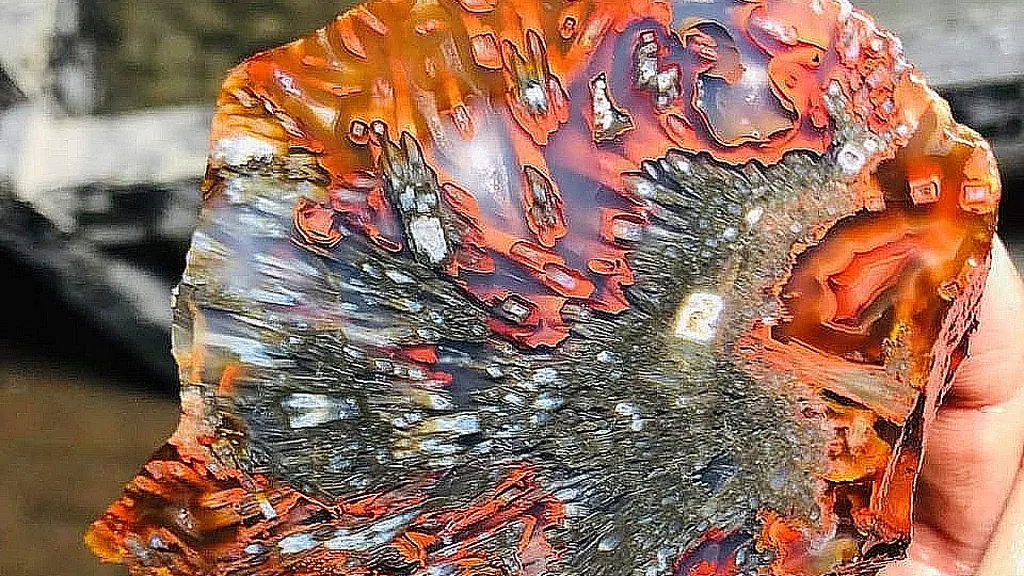
| Lake Superior agate | Red, orange and white bands from iron | Minnesota, Wisconsin, Michigan |
| Moss agate | Green or black plant-like patterns, not bands | Montana, India |
| Fire agate | Rainbow flashes under a brown surface | Arizona, Mexico |
| Crazy lace agate | Twisting, lacy bands | Mexico |
| Botswana agate | Fine grey, pink and white bands | Botswana |
| Laguna agate | Very bright, tight bands in red and yellow | Mexico |
Agate vs look-alikes
Jasper is the same material but opaque: no glow with a flashlight. Chert is dull and usually one color. Banded calcite or onyx is soft enough to scratch with a knife and fizzes in vinegar. Glass is too perfect, often with bubbles, and has no bands.
What agates are worth
| Find | Rough value |
|---|---|
| Small beach agate or tumbled stone | Under $1 to a few dollars |
| Nice Lake Superior agate, thumb size | About $10 to $50 |
| Large or very colorful Lake Superior agate | Hundreds of dollars |
| Polished Brazilian slice, natural color | About $5 to $40 |
| Fine Laguna or fire agate | Hundreds to thousands of dollars |
| Record-size or perfect specimens | Thousands of dollars or more |
What adds value: size, bright natural colors, sharp complete bands, rare patterns (like "eyes" or scenes), and no cracks. Don't polish or tumble a big, special agate before showing it to a collector: some people prefer them natural.
Prices are rough guides.
What does an agate look like on the outside?
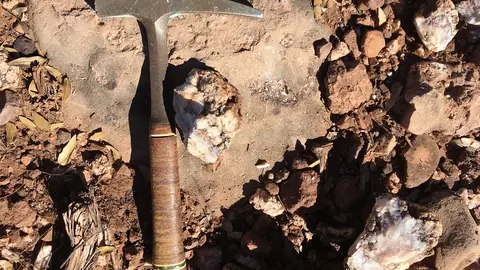
Most agates don't look special until they're cut. Agate forms inside holes in old lava and other rocks, so the outside is the cast of that hole, plus a crust of whatever was around it. Here's what to look for on a rough one:
- A lumpy, pitted rind. The outside is often bumpy, dimpled or pock-marked, sometimes with a chalky or rusty crust.
- A waxy shine on broken spots. Where it's chipped, agate looks like candle wax, not dull like ordinary stone.
- Smooth, curved fractures. Agate breaks like thick glass, leaving shell-shaped curves and sharp edges.
- Bands at the edges. Look along chips and corners for thin, parallel lines that follow the shape of the stone.
- It glows. Press a small flashlight against it: agate lets light through and glows orange, red or white. Most look-alikes stay dark.
- Earthy colors outside, brighter inside. Rusty orange, red, brown, tan, grey or white on the surface; the best colors are often inside.
Beach and river agates are tumbled smooth, so the rind is gone. They look frosted when dry and come alive when wet: hunt on a damp beach with the sun behind the stones so they glow. Lake Superior agates are usually rusty red to orange, with bands visible on a broken face and a pitted surface.
Types of agate: how to tell them apart
- Banded (fortification) agate: sharp, nested bands like the walls of a fort
- Moss agate: no bands, but green or black plant-like threads inside clear stone
- Fire agate: brown, with rainbow flashes just under the surface
- Crazy lace agate: tight, wiggly bands in cream, red and grey
- Blue lace agate: soft sky-blue and white bands
- Plume agate: feathery shapes floating inside
Is it an agate?
Snap a photo with RockFinder, then try the flashlight test at home to confirm.
Questions people ask
How do you identify a rough agate?
Look for a waxy shine, translucent edges that glow when you shine a flashlight through them, and curved bands or lines. Agates are hard (about 7), so they won't be scratched by steel, and broken edges have smooth, shell-shaped curves. Many have a pitted, orange-peel outer rind.
Where can I find agates?
Beaches, river gravels, gravel roads and old lava areas. Famous spots include the Lake Superior region, Montana's Yellowstone River, Oregon and Washington beaches, Botswana, Brazil and Mexico.
Are agates worth any money?
Most small agates are worth a few dollars or less. Good Lake Superior agates sell for $10 to $100, larger or very colorful ones for hundreds, and exceptional specimens for thousands. Rare types like Mexican Laguna and fire agate can be worth much more.
How can you tell if an agate is dyed?
Natural agates are mostly earthy colors: white, grey, tan, red, orange and brown. Bright pink, purple, electric blue or neon green slices are almost always dyed. Dye often collects in cracks and looks stronger along the bands' edges.
What does an agate look like on the outside?
A rough agate usually looks like a lumpy, pitted, dull rock, often brown, grey or rusty orange, sometimes with a chalky crust. Look for a waxy shine where it's chipped, thin bands at the edges, and a glow when you shine a flashlight through it.
What does a raw agate look like?
Raw agate is a rounded or knobby nodule with a rough rind. Broken surfaces look waxy and translucent, with curved fractures and often visible bands. Beach agates are smoother and frosted, and glow when wet in sunlight.
Keep reading
Chalcedony: the glowing stone hiding on beaches and riverbanks
Hold it up to the sun and it glows. The beach stone with a hundred names.
Geodes: how to find them, open them and what they're worth
Plain on the outside, a crystal cave inside. How to find, open and value them.
Rockhounding: how to start hunting for rocks, gems and fossils
Treasure hunting for real. Where to go, what to bring, and what you might find.