
Trilobite fossils: what they are and where to find them
Trilobites were sea creatures that crawled the ocean floor for about 270 million years, long before the dinosaurs. Their fossils are some of the easiest to recognize and, in a few places, you can still dig your own.
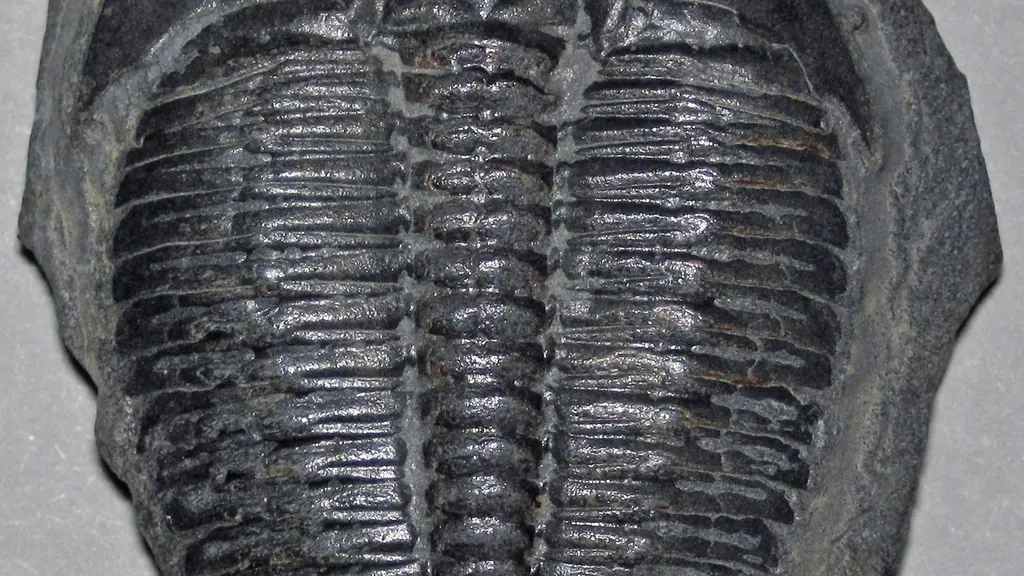
Trilobites are some of the first animals with eyes, and they were incredibly successful: more than 20,000 species have been named, from fingernail-sized to over 70 cm long. Because their shells were hard, they fossilized well, and they're one of the fossils kids and collectors most love to find.
How to identify a trilobite fossil
- Three lobes: a raised middle strip with a flatter lobe on each side, running from head to tail.
- Three parts from front to back: a curved head shield (cephalon), a middle of many segments (thorax), and a tail plate (pygidium).
- Segments: the middle looks like a pill bug or woodlouse, with ribs crossing the body.
- Eyes: on many species, two crescent-shaped eyes sit on the head shield.
- The rock: usually dark grey shale or limestone. Often you'll find only a head, a tail or a few segments, because trilobites shed their shells as they grew.
Trilobite look-alikes
| What you found | How it differs |
|---|---|
| Brachiopod shell | Fan-shaped with ribs spreading out, no head or segments |
| Crinoid stem | Round discs stacked like coins, with a hole in the middle |
| Horseshoe crab fossil | Much rarer; one big rounded shield and a long spike tail |
| Concretion or rock shape | No repeating segments, no symmetry |
Not sure if it's a fossil at all? See how to tell if a rock is a fossil.
Where to find trilobites in the US
- House Range, Utah: the Wheeler Shale is the world's main source of Elrathia kingii. Commercial quarries near Delta let you dig and keep what you find for a fee.
- New York: Devonian rocks in central and western New York produce Phacops and Eldredgeops, including some fee-dig sites.
- Ohio and Indiana: Ordovician limestone and shale around Cincinnati is full of fossils, with Isotelus and Flexicalymene among the trilobites.
- Oklahoma and Pennsylvania: both have trilobite-bearing rocks, mostly on private land.
Collecting is not allowed in national parks and many state parks. On private land, get permission. On public BLM land, common invertebrate fossils can usually be collected in small amounts for personal use. See is it legal to take rocks?
How to split shale for trilobites
- Look for dark, flat-splitting shale in a known fossil layer.
- Wear safety glasses. Gently tap the edge of a slab with a rock hammer or slide a flat chisel into the layers.
- Open the slab like a book. A trilobite often shows as a dark shape on one side and a mold on the other.
- Wrap finds in paper; shale is fragile and crumbles if it dries out quickly.
What trilobites are worth
| Type | Typical price |
|---|---|
| Elrathia kingii, Utah, 2 to 3 cm | $10 to $40 |
| Flexicalymene or Phacops, complete | $40 to $200 |
| Enrolled (rolled-up) specimens | $50 to $300 |
| Rare spiny species, expert preparation | $500 to several thousand |
Prices are rough guides. Size, completeness and preparation quality matter most.
Watch out for fakes
Many cheap trilobites, especially from Morocco, are resin casts set into real rock, or real fossils with painted or carved "repairs". Signs of a fake: no clear boundary between fossil and rock, tiny air bubbles, a plastic shine, a fossil that feels light, or the exact same specimen sold many times. Real ones aren't expensive in common species, so buy from sellers who describe the preparation honestly.
Found something with segments?
Snap a photo with RockFinder to check whether it looks like a trilobite, a brachiopod, a crinoid or just an interesting rock.
Questions people ask
What is a trilobite?
A trilobite is an extinct sea animal related to crabs, insects and horseshoe crabs. Trilobites had a hard shell, jointed legs and, in many species, compound eyes. They lived from about 521 to 252 million years ago and died out in the great extinction at the end of the Permian period.
Where can I find trilobite fossils?
In the US, the best-known place is the House Range in western Utah, where pay-to-dig quarries let you split shale and keep what you find. Trilobites also turn up in New York, Ohio, Oklahoma and Pennsylvania. Always check collecting rules before digging.
How much is a trilobite fossil worth?
Common Elrathia trilobites from Utah sell for about $10 to $40. Larger or better-prepared ones go for $50 to a few hundred dollars. Rare spiny species from Morocco or Russia with fine preparation can sell for thousands.
How can you tell if a trilobite is fake?
Many cheap Moroccan trilobites are cast in resin or heavily 'restored'. Warning signs: the fossil looks the same color and texture as the rock with no natural boundary, there are air bubbles, it's lighter than stone, or identical specimens are sold in bulk. Buy expensive pieces from sellers who state the preparation.
Keep reading
How to tell if a rock is a fossil
Patterns, symmetry and the right kind of rock: how to spot a fossil.
Shale: the crumbly rock that holds Earth's best-kept secrets
The world's most boring-looking rock is a fossil vault. Here's how to open it.
Crinoids: the 'sea lily' fossils that look like stacks of tiny coins
Fossil Cheerios: the sea lilies that once carpeted the ocean floor.