
Slag vs meteorite: how to tell them apart
Slag is the number one 'meteorite' people find. It's heavy, dark, often magnetic and looks like it came from somewhere hot, because it did: a furnace. Here's how to tell the difference in a few minutes.
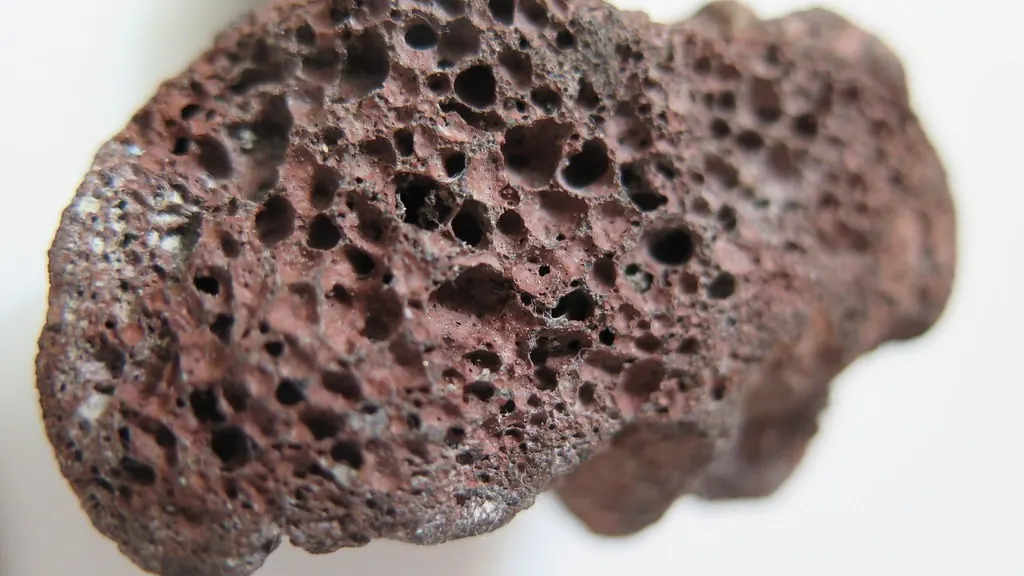
Every year, meteorite labs get sent thousands of "meteorites" that turn out to be slag, the waste from metal furnaces. It's an easy mistake: slag is dark, heavy, often magnetic and looks melted. The good news is that a few simple checks sort most finds out quickly.
Side by side
| Clue | Slag | Meteorite |
|---|---|---|
| Bubbles / holes | Common, round gas holes, inside and out | None (only shallow thumbprint dents) |
| Glassy look | Often glassy, shiny or with colored glass | Not glassy inside; crust is thin and matte to slightly shiny |
| Shape | Drips, swirls, flow lines, flat poured sheets | Irregular, rounded edges, sometimes cone-shaped |
| Crust | Same material all the way through | Thin dark fusion crust that looks different from the inside |
| Inside | Glassy or bubbly, sometimes rusty iron blobs | Grey with shiny metal flecks, often tiny round grains (chondrules) |
| Magnet | Sometimes | Usually yes (about 95%) |
| Where found | Near tracks, roads, old mines, smelters, beaches near industry | Anywhere; most found in deserts and on ice |
Test 1: Look for bubbles
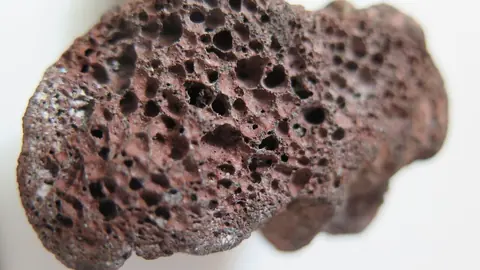
This is the most useful test. Gas bubbles form when molten material cools quickly while gas escapes, which happens in furnaces and volcanoes. Meteorites don't form that way: they're solid rock that only melts on the very outside for a few seconds while falling. If your rock has round holes, especially on a broken face, it's almost certainly slag or volcanic rock like scoria.
Test 2: Check the crust
Look for a broken or chipped edge. A meteorite's fusion crust is thinner than a fingernail and clearly different from the inside, which is usually lighter grey. Slag looks the same all the way through, or is glassy inside.
Test 3: File a corner
Grind a small corner on a file or sidewalk. Most stony meteorites show bright metal flecks scattered through grey stone. Slag shows glass, bubbles, or sometimes a solid lump of rusty iron, but not evenly scattered flecks.
Test 4: Streak and weight
Rub it on an unglazed tile. A red-brown streak means hematite; black means magnetite. Most meteorites leave little or no streak. Then measure the weight properly with our specific gravity calculator: stony meteorites come out around 3.0 to 3.7, iron meteorites 7.5 to 8. Slag varies a lot, but bubbly slag is often lighter than it looks.
Where did you find it?
Location tells you a lot. Slag was dumped near smelters and railways and spread on roads and paths as gravel. If you find several similar dark, bubbly rocks in one area, especially near tracks or an old industrial site, it's almost certainly slag. Meteorites are rare: on most land, you'd be lucky to find one in a lifetime of searching. They're found most often in deserts and on Antarctic ice, where dark rocks stand out.
Why so many people find slag
Slag is the waste left over when metal is smelted from ore. For over a century it was dumped near furnaces, spread on roads and railway beds as fill, used for driveways and even sold for gardens. That means slag turns up almost anywhere, often miles from the furnace. It's heavy, dark, sometimes magnetic and can have rusty metal inside, which makes it look a lot like a meteorite. Museums and university meteorite labs say slag is the most common "meteorite" people send them.
Other common "meteor-wrongs"
| Look-alike | How to tell |
|---|---|
| Magnetite | Black streak, very magnetic, no metal flakes when filed |
| Hematite | Red-brown streak, only weakly magnetic or not at all |
| Basalt | Dark grey inside, not much heavier than other rocks, rarely magnetic |
| Iron concretions | Sandy or layered inside, rusty brown, light |
| Manufactured iron | Shiny steel throughout, machined shapes or cast textures |
What a lab looks for
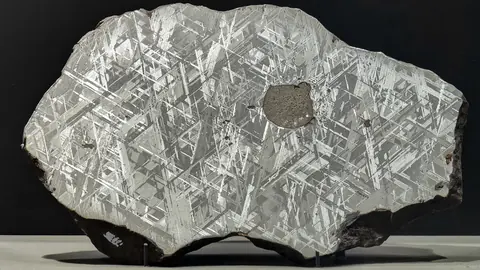
If your rock passes the home tests, a meteorite lab can confirm it. They look for chondrules (tiny round grains found only in stony meteorites), a specific nickel content in the metal (most meteoritic iron has 5 to 30 percent nickel, while slag and steel have little), and patterns like the Widmanstätten crisscross that appears in etched iron meteorites. Many university labs will test a small sample for free or a modest fee.
Still not sure?
Try our meteorite checker, read the full meteorite identification guide, or snap a photo with RockFinder. If your rock passes every test, contact a university meteorite lab with clear photos before sending anything.
Questions people ask
What is slag?
Slag is the glassy waste left when metal ore is melted to make iron, copper, lead or other metals. Impurities float to the top of the melt and are poured off, cooling into a dark, bubbly, often glassy rock-like material. It was dumped by the ton near furnaces and used as fill for railways and roads.
Can slag be magnetic?
Yes. Slag from iron making often contains bits of iron and iron oxides, so it can be weakly to strongly magnetic. That's why the magnet test alone can't tell slag from a meteorite.
Do meteorites have holes in them?
Meteorites don't have gas bubbles. They can have shallow, rounded dents like thumbprints in clay (regmaglypts), and iron meteorites can have deep pits where minerals weathered out. Round bubbles inside the rock, especially when broken open, point to slag or volcanic rock.
Is slag worth anything?
Usually not. Some colorful slag glass is collected and polished as a curiosity (sometimes sold as 'Leland blue' or 'slag glass'), but ordinary furnace slag has no real value.
Keep reading
How to tell if a rock is a meteorite
Six tests to tell a real meteorite from a 'meteor-wrong', and what they're worth.
Why is my rock magnetic?
Magnetite, slag or a meteorite? What makes a rock stick to a magnet.
Scoria: the bubbly lava rock in every garden center
The lava rock in your garden, born in fountains of glowing froth.
More guides
- Crinoids: the 'sea lily' fossils that look like stacks of tiny coins
- Fulgurite: lightning, frozen in glass
- Halite: the one mineral you're allowed to lick
- How to clean rocks and crystals safely
- Unakite: the pink-and-green rock that looks like a watermelon
- Sunstone: the gem that sparkles like it's full of glitter