
Fulgurite: lightning, frozen in glass
When lightning hits sand, it can melt a path into the ground in a fraction of a second. Dig it up and you're holding the exact shape of a lightning bolt.
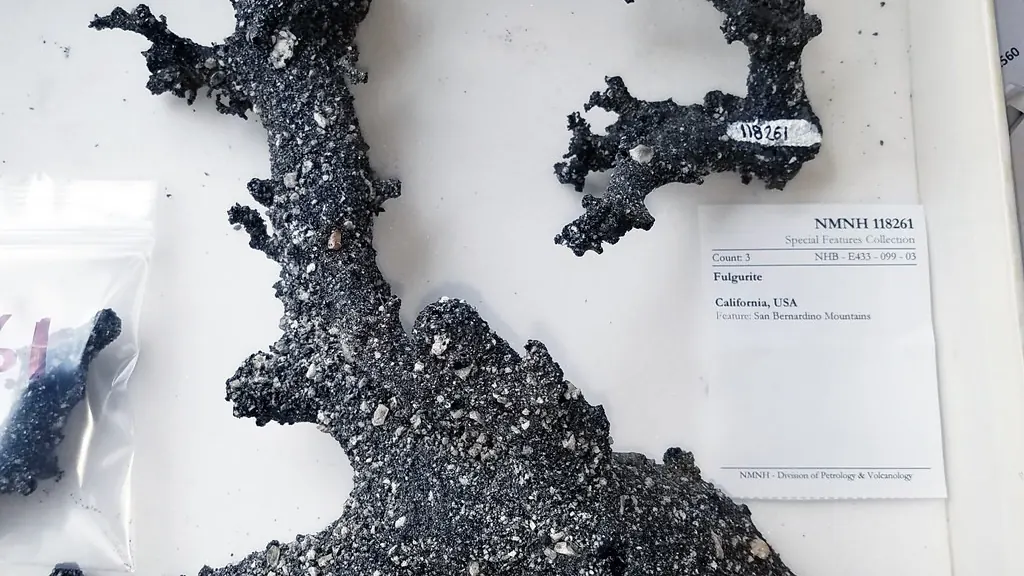
A lightning bolt carries enormous energy and can heat the air around it to about 30,000°C, hotter than the surface of the sun. When it strikes sand, that heat melts a path into the ground in a fraction of a second. The molten sand cools into glass, leaving behind a hollow, branching tube in the exact shape of the strike.
That's a fulgurite, from the Latin fulgur, "lightning." People call them "petrified lightning," and they're one of the strangest things you can pull out of the ground.
How fulgurites form
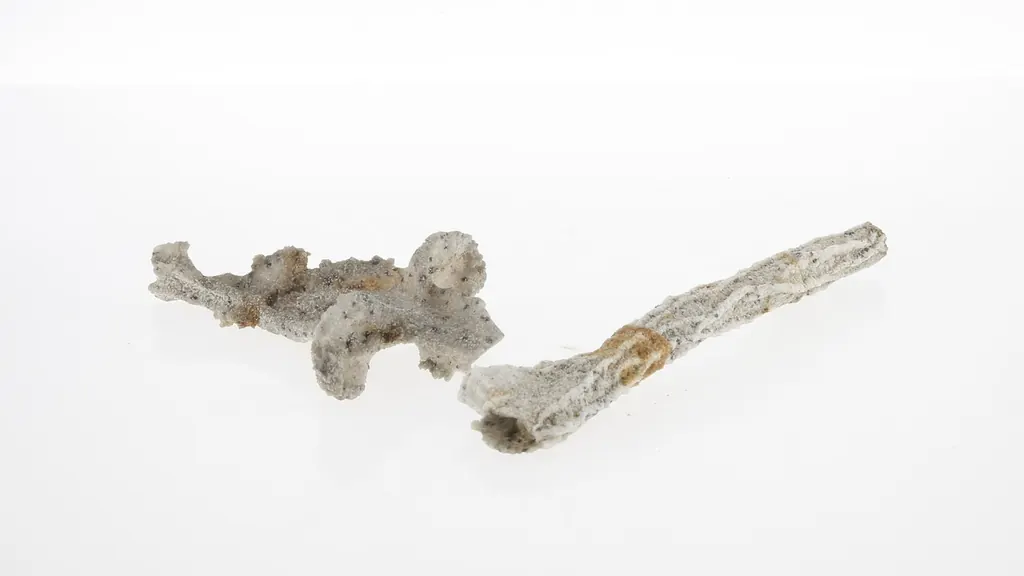
When lightning enters sand, it spreads out and branches, like roots. The sand closest to the path melts into glass, while the vapor and heat push outward, leaving the center hollow. Grains just a little farther out stick to the outside without fully melting, which is why fulgurites look like sandy roots on the outside and smooth glass on the inside.
How to identify a fulgurite
- Hollow tubes, usually a few millimeters to a few centimeters wide
- Branching like tree roots, sometimes twisted
- Rough, sandy outside with stuck-on grains
- Glassy, shiny inside, often with bubbles
- Colors: tan, white, grey, black or green depending on the sand
- Light and fragile: they break easily
Types of fulgurites
| Type | What it looks like |
|---|---|
| Sand fulgurite | Hollow branching glass tubes in sand |
| Rock fulgurite | Glassy, bubbly crusts on rock surfaces, often on mountain peaks |
| Clay or soil fulgurite | Thicker, denser, more solid tubes |
Record-breakers
Most fulgurites are short and broken, but some are huge. Excavated fulgurites reaching several meters long have been found, including one in Florida reported at about 5 meters. Digging one out intact is very hard because they crumble so easily.
Scientists study fulgurites because they trap tiny bubbles of air and soil from the moment of the strike, and some contain rare minerals that otherwise only form in meteorite impacts.
Fakes and look-alikes
- Man-made fulgurites: made by running high-voltage electricity into sand, or from power lines falling on the ground. Similar look, but not natural
- Root casts: mineral tubes formed around plant roots, without a glassy interior
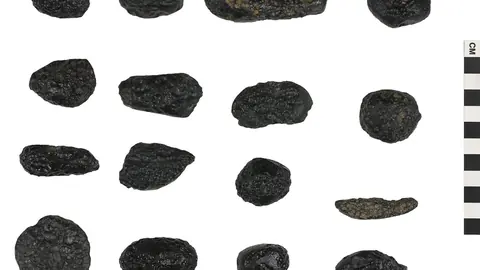
- Tektites: solid glass shapes from meteorite impacts, not hollow tubes
What are fulgurites worth?
| Item | Rough value |
|---|---|
| Small fragments | About $5 to $30 |
| Larger, branching pieces | About $30 to a few hundred dollars |
| Rock fulgurites | About $10 to $100 |
| Very large, intact excavated fulgurites | Thousands of dollars, mostly museum pieces |
Prices are rough guides. Never look for fulgurites during a storm: being where lightning strikes is the one way to guarantee you won't find one.
Where to find fulgurites
Fulgurites form where lightning hits dry sand or soil, so the best places are sandy areas with frequent thunderstorms: Florida, the Carolinas, Michigan dunes, the Sahara and Libyan desert, Brazil and Australia. Some people hunt them after storms on beaches and golf course sand traps. Look for small grey or tan tubes sticking out of the sand. Because they're fragile, dig them out slowly with your hands, a plastic trowel or a soft brush, working down along the tube.
Rock fulgurites form where lightning strikes bare rock on mountain summits, leaving a thin, glassy, bubbly coating rather than a tube.
What's inside a fulgurite?
A sand fulgurite is a tube of natural glass called lechatelierite: quartz that melted at over 1,700 °C and cooled too fast to crystallize. The inside is usually smooth and shiny, and the outside is rough with half-melted sand grains stuck to it. Scientists study fulgurites to learn about ancient climates (they record where thunderstorms happened) and have even found rare minerals inside, including some that formed only under extreme heat and pressure.
Caring for fulgurites
- Store them in a padded box or on cotton. They snap easily.
- Don't wash them under a strong tap. Brush off loose sand with a soft paintbrush.
- Long pieces can be glued with clear glue if they break. Many collectors glue them back together, which is fine as long as you mention it if you sell one.
Weird glassy tube?
Snap a photo with RockFinder to see if you've found a fulgurite, a root cast or something else.
Questions people ask
What is a fulgurite?
A fulgurite is a tube or crust of natural glass made when lightning strikes sand, soil or rock. The electricity heats the ground well above the melting point of quartz in a split second, fusing it into glass along the path of the strike.
How do you identify a fulgurite?
Sand fulgurites are hollow, branching tubes with a rough, sandy outer surface and a smooth, glassy, often bubbly inner surface. They're light and fragile. Rock fulgurites are thin glassy crusts on rock surfaces.
Where can you find fulgurites?
They're found in sandy places with lightning: beaches, dunes and deserts. Florida, the Sahara and Australian deserts are known spots. They're also found on mountain peaks as glassy coatings on rock.
How much is a fulgurite worth?
Small pieces sell for about $5 to $30. Larger, branching pieces cost tens to hundreds of dollars, and huge excavated fulgurites several meters long are museum pieces.
Keep reading
Tektite: glass splashed across the Earth by asteroid impacts
Asteroid splash-glass that rained down across continents. You can own a piece.
Pumice: the rock that floats
Volcanic foam that floats, crosses oceans, and smooths your feet.
Quartzite: the toughest rock on the beach
Sandstone, baked until it's nearly indestructible. Here's how to spot it.
More guides
- Types of rocks: the 3 kinds, and how to tell which one you're holding
- The Mohs hardness scale: test any rock with a fingernail, a coin and a knife
- Rockhounding: how to start hunting for rocks, gems and fossils
- Gemstone identification: 7 tests you can do at home
- Feldspar: the most common mineral you've never noticed
- Chert: the rock that made the Stone Age possible