
Scoria: the bubbly lava rock in every garden center
That red or black 'lava rock' in garden beds and gas grills is scoria. It's frozen lava froth, blasted out of volcanoes in glowing blobs.
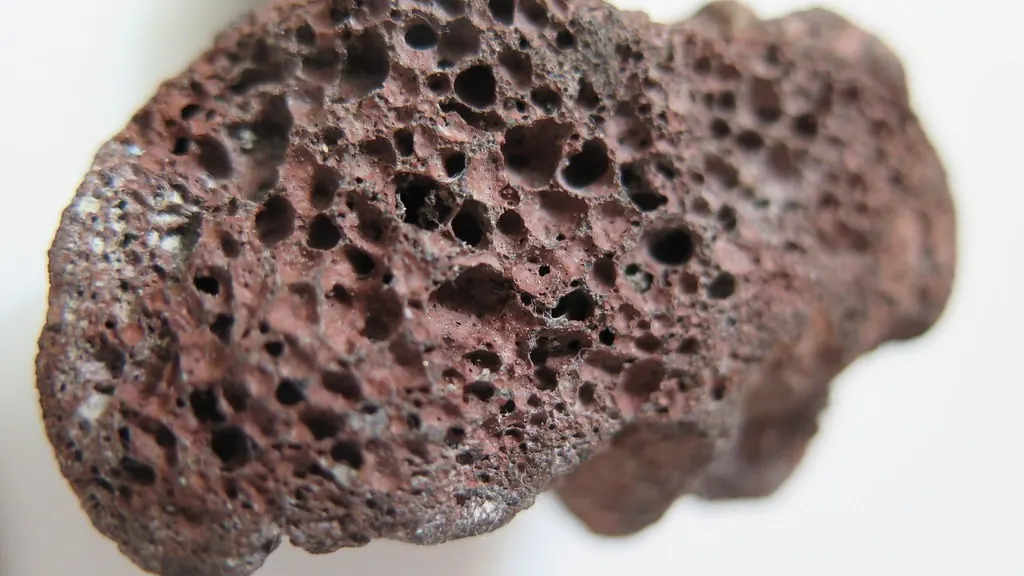
Walk into any garden center and you'll find bags of rusty red or black "lava rock." Pick up a piece: it's rough, full of holes and surprisingly light. That's scoria, and every piece was once a blob of glowing, bubbling lava flung out of a volcano.
How scoria forms
Scoria comes from basaltic eruptions, the kind with fountains of lava shooting into the air, like in Hawaii or Iceland. As molten blobs fly through the air, the gas dissolved in them expands into bubbles. The blobs cool and harden before the bubbles can escape, freezing the froth in place.
The pieces pile up around the vent, building a cinder cone: a steep, cone-shaped hill. Famous cinder cones include Parícutin in Mexico, which grew out of a farmer's cornfield in 1943, rising over 300 meters by the end of its first year.
How to identify scoria
- Color: black, dark grey, reddish brown or bright brick red
- Full of holes (vesicles), usually larger than in pumice
- Rough and sharp, will scrape your skin
- Lighter than it looks, but sinks in water
- Sometimes contains green olivine crystals
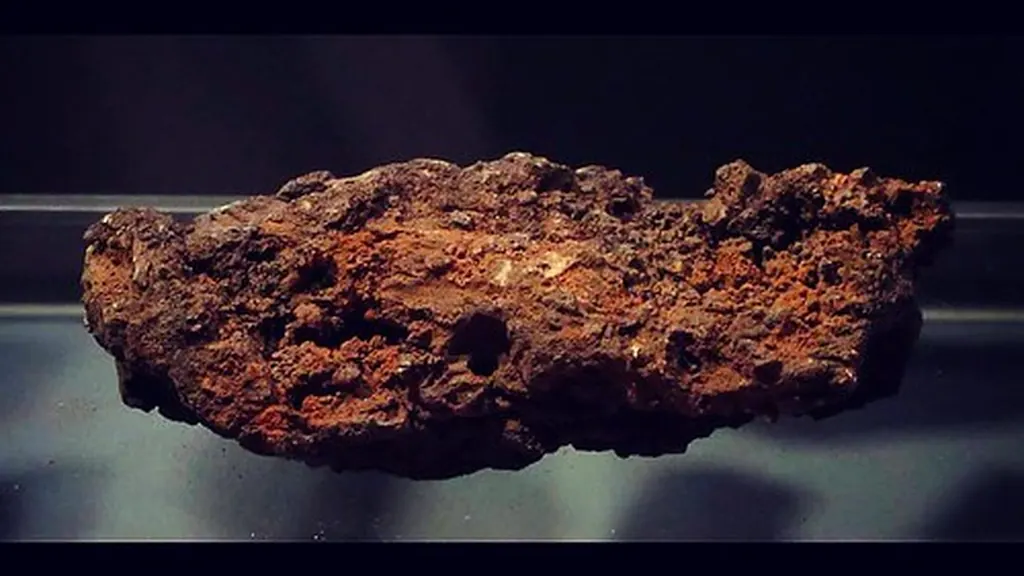
Red scoria is colored by iron that oxidized (basically rusted) while the rock was still hot, often near the vent.
Scoria vs look-alikes
| Rock | How it differs |
|---|---|
| Pumice | Pale, tiny bubbles, floats |
| Vesicular basalt | Heavier, fewer holes; scoria is mostly holes |
| Slag | Human-made from smelting; often glassy, shiny, with rusty metal blobs and weird colors |
| Lava bomb | A larger blob, often spindle-shaped, with a crust |
Scoria in everyday life
- Landscaping and gardens: it drains well, holds a bit of moisture and doesn't decompose
- Gas grills: "lava rocks" spread heat evenly
- Roads and lightweight concrete
- Saunas: it handles repeated heating well
- Moai: the red "hats" (pukao) on Easter Island's famous statues are carved from red scoria
What's scoria worth?
| Item | Rough value |
|---|---|
| Scoria you find | Essentially nothing |
| Bag of landscaping lava rock | About $5 to $15 |
| Bulk scoria by the ton | Roughly $50 to $150 per ton, delivered prices vary |
| Scoria with olivine crystals or a perfect lava bomb | About $10 to $100 as a specimen |
Prices are rough guides. Don't collect scoria in national parks or protected volcanic areas.
Where to find scoria
Scoria forms around cinder cones, the small, steep volcanoes built from blobs of frothy lava thrown out during eruptions. Good places to see it:
- Sunset Crater in Arizona and the San Francisco volcanic field near Flagstaff
- Craters of the Moon in Idaho and Lava Beds in California
- Hawaii, the Canary Islands, Iceland, Mexico's Paricutin, and the Auvergne volcanoes in France
- Garden centers everywhere, where it's sold as "lava rock"
Collecting is banned in national parks and monuments, so admire it there and collect only where it's allowed.
Red scoria vs black scoria
Fresh scoria is usually black or dark grey. Red and reddish-brown scoria got its color from iron oxidizing while the rock was still hot and exposed to air, often near the vent of the volcano. Both are the same rock with the same chemistry. Red scoria is popular for landscaping and even running tracks. In parts of the American West it's used as road gravel, which gives some roads their red color.
A quick home test
- Drop it in water. Scoria sinks (sometimes slowly). Pumice floats.
- Look at the holes. Scoria has bigger, rounder, separated bubbles. Pumice is a mass of tiny bubbles and glassy fibers.
- Feel the weight. Scoria is lighter than solid basalt of the same size, but much heavier than pumice.
- Check for rust and glass. Slag from furnaces can look similar, but it often has a glassy, colorful shine, rusty metal bits and perfectly round bubbles. Scoria is dull and rough.
Bubbly dark rock?
Snap a photo with RockFinder to see if it's scoria, basalt, pumice or slag.
Questions people ask
How do you identify scoria?
Scoria is dark red, reddish brown, dark grey or black, full of rounded gas holes (vesicles) a few millimeters or larger, rough and sharp to the touch, and lighter than solid rock. Unlike pumice, it usually sinks in water.
What is the difference between scoria and pumice?
Scoria is dark, has bigger bubbles with thicker walls and usually sinks. Pumice is pale, has tiny bubbles with very thin walls and often floats. Scoria comes from basalt magma; pumice from silica-rich magma.
Is scoria the same as lava rock?
Mostly, yes. 'Lava rock' sold for landscaping and grills is usually scoria, sometimes called cinder. Lava rock can also mean other volcanic rocks like basalt.
Is scoria worth anything?
Scoria is cheap, sold by the bag or ton for landscaping. It's valuable as a material, not a collectible. Scoria containing olivine crystals or from famous volcanoes has small specimen value.
Keep reading
Pumice: the rock that floats
Volcanic foam that floats, crosses oceans, and smooths your feet.
Rhyolite: the rock of supervolcanoes
Yellowstone's rock. Granite's volcanic twin, and home of the thunderegg.
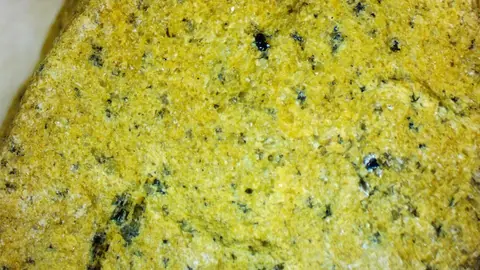
Olivine: the green gem that comes up from Earth's mantle
Green crystals from the Earth's mantle, a green beach in Hawaii, and peridot.
More guides
- Shale: the crumbly rock that holds Earth's best-kept secrets
- Chalcedony: the glowing stone hiding on beaches and riverbanks
- Quartzite: the toughest rock on the beach
- Magnetite: the rock that grabs your magnet
- Chalcopyrite: the other fool's gold (and the world's copper)
- Dinosaur bone: how to tell if you've found a piece of a dinosaur