
Is it a meteorite? Free checker
Answer eight quick questions about your rock. The checker scores it the way meteorite labs screen finds, and tells you which answers point toward a meteorite and which point to a 'meteor-wrong'.
1. Does a strong magnet stick to it? Use a fridge magnet or, better, a neodymium magnet.
2. Is it heavier than a normal rock the same size?
3. Does it have a thin, dark outer skin? A fusion crust is black or brown, thinner than a fingernail, and looks different from the inside.
4. Does it have round holes or gas bubbles?
5. What color streak does it leave on the back of a tile?
6. If you file a small corner, do you see shiny metal flecks?
7. Can you see layers, stripes or clear crystals (like quartz)?
8. Is it rusty-looking or glassy and shiny all over?
How the checker scores your rock
Meteorite labs get thousands of "meteor-wrongs" every year: slag from old furnaces, hematite, magnetite, basalt and concrete. Most can be ruled out with a few simple checks, which is what this tool does.
- Magnet: nearly all meteorites have some iron-nickel metal. No pull at all is a strong sign it's not one.
- Weight: metal makes meteorites feel heavy for their size. Use our specific gravity calculator for a real number.
- Fusion crust: burning through the air melts a thin, dark skin onto the outside.
- No bubbles: bubbles and holes are the number one sign of slag or volcanic rock.
- Streak: red-brown means hematite; black means magnetite.
- Metal flecks: filing a small corner of a stony meteorite usually shows shiny metal grains.
Learn more in our full meteorite identification guide.
Questions people ask
What is the easiest test for a meteorite?
The magnet test. About 95% of meteorites contain iron-nickel metal and attract a strong magnet. If a magnet doesn't stick at all, it's very unlikely to be a meteorite. But many Earth rocks and slag are magnetic too, so a magnet alone doesn't prove anything.
Do meteorites have holes or bubbles?
No. Gas bubbles (vesicles) are the most common sign that a rock is slag or volcanic rock, not a meteorite. Meteorites can have shallow thumbprint-like dents called regmaglypts, which are different from round holes.
What streak does a meteorite leave?
Most meteorites leave no streak or a faint grey to brownish streak on an unglazed tile. A red or reddish-brown streak points to hematite; a black streak points to magnetite. Both are common meteor-wrongs.
Where can I get a meteorite confirmed?
Only a lab test can confirm a meteorite, usually by checking the nickel content and the minerals inside. Many universities and meteorite collections run free or low-cost identification programs. Contact them with clear photos first.
Read next
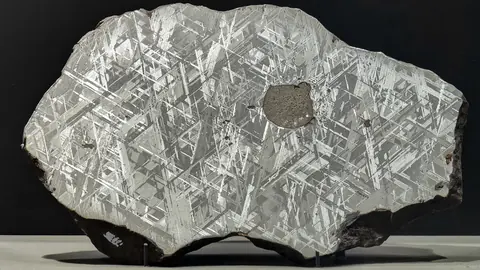
How to tell if a rock is a meteorite
Six tests to tell a real meteorite from a 'meteor-wrong', and what they're worth.
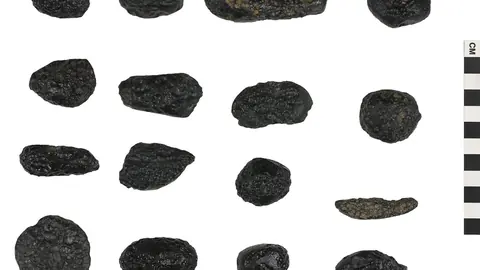
Tektite: glass splashed across the Earth by asteroid impacts
Asteroid splash-glass that rained down across continents. You can own a piece.
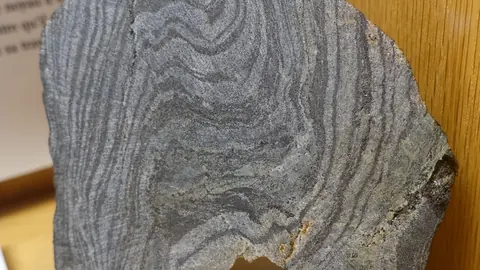
Magnetite: the rock that grabs your magnet
The mineral that made the first compass, and fools meteorite hunters daily.
More free tools
- Specific gravity calculatorWeigh it in air and water, get its density and what it matches.
- Hardness test helperWhat scratches it? Get the Mohs hardness and matching minerals.
- Streak test identifierPick your streak color, see which minerals match.
- Gold nugget value calculatorWeight, purity and today's price in, nugget value out.