
Sunstone: the gem that sparkles like it's full of glitter
Tilt a sunstone in the light and it flashes with a thousand tiny copper mirrors. In Oregon, you can dig it up yourself for free.
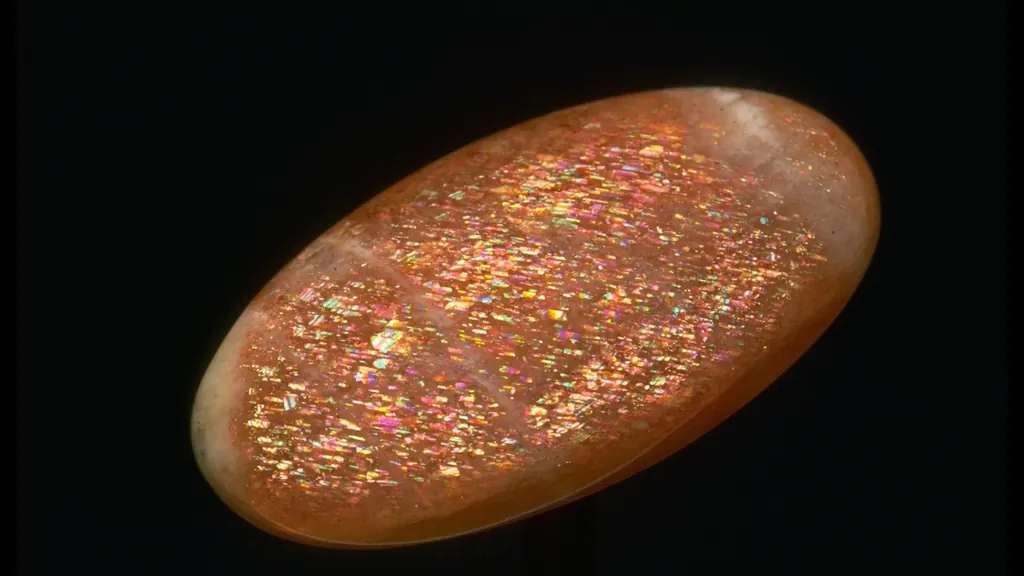
Hold a sunstone up to a lamp and rock it back and forth. At just the right angle, the whole stone lights up with glittering sparks, as if someone sealed sunlight and copper glitter inside. That flash has a fancy name, aventurescence, and it's what makes sunstone one of the most fun gems to find.
What sunstone is
Sunstone is a type of feldspar. The sparkle comes from tiny, flat flakes of other minerals lined up inside: copper in Oregon sunstone, and hematite or goethite in most other sunstones. When light hits the flakes at the right angle, they all reflect at once.
How to identify sunstone
- Glittery flash when tilted, from tiny flat flakes
- Colors: pale yellow, peach, orange, red; Oregon stones can be green or blue too
- Glassy shine, transparent to translucent
- Hardness about 6 to 6.5, scratches glass weakly
- Flat cleavage faces on broken rough pieces
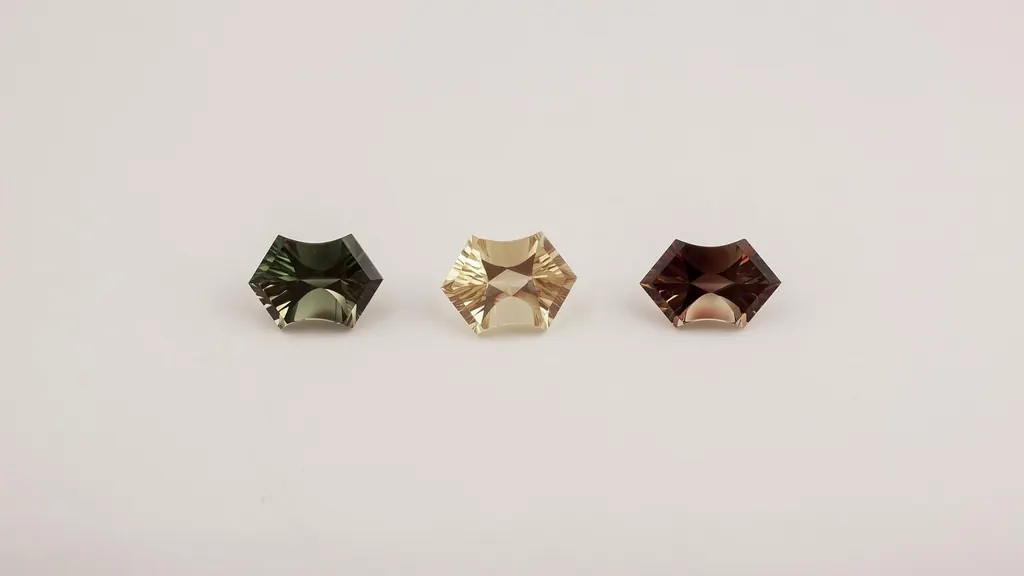
Oregon sunstone: America's dig-it-yourself gem
Oregon sunstone is unusual: its color and sparkle come from copper, and it's found in ancient basalt lava flows in the high desert. It's Oregon's state gemstone.
At the Oregon Sunstone Public Collection Area, run by the Bureau of Land Management, visitors can collect sunstones for free, for personal use. Families walk the desert floor and pick up glinting yellow and orange crystals. Nearby private mines offer fee digs for the rarer red and green stones.
Sunstone vs goldstone
| Sunstone | Goldstone | |
|---|---|---|
| Origin | Natural gem | Man-made glass |
| Sparkles | Irregular flakes, flash at certain angles | Uniform tiny sparkles visible from all angles |
| Color | Varies, often patchy | Even red-brown, blue or green |
| Price | Varies widely | A few dollars |
Goldstone is sometimes sold as "sunstone." It's pretty, but it's glass.
Viking legend
Old Norse sagas mention a "sunstone" (sólarsteinn) used to find the sun on cloudy days. Researchers think this may have been Iceland spar, a clear calcite, not today's sunstone. But the legend helped make the name famous.
What's sunstone worth?
| Item | Rough value |
|---|---|
| Small pale Oregon sunstones from the public area | Free to collect; a few dollars each |
| Indian and African sunstone, tumbled or beads | About $1 to $10 |
| Cut orange Oregon sunstone | About $20 to $100+ per carat |
| Fine red, green or color-change Oregon sunstone | Hundreds to thousands of dollars per stone |
Some red "andesine sunstone" sold online has been shown to be pale feldspar artificially colored with copper. Buy expensive stones from reputable dealers.
Prices are rough guides.
Why sunstone sparkles
Sunstone is a feldspar with tiny, flat crystals of copper or hematite inside, all lined up in the same direction. When light hits those plates at the right angle, they flash together. Gemologists call this effect aventurescence. In Oregon sunstone, the inclusions are pure native copper, and when they're large enough the stone flashes like a spray of tiny mirrors. In sunstone from India, Norway and Tanzania, the sparkle usually comes from hematite.
Where to find sunstone
- Oregon: the Sunstone Public Collection Area near Plush lets anyone dig for free, and several private mines offer fee digging. It's Oregon's state gem.
- Norway (Tvedestrand) and Sweden, historic sources of hematite sunstone
- India (Andhra Pradesh and Tamil Nadu), the main source of commercial beads and cabochons
- Tanzania, Madagascar, Canada and Russia
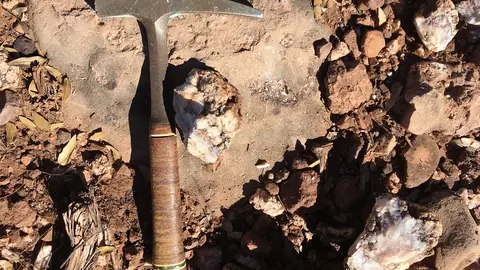
At Plush, the crystals weather out of basalt lava flows and lie on the ground, so most collectors simply walk slowly and look for glassy, yellow-to-red chips glinting in the sun.
Step-by-step: is it real sunstone?
- Tilt it under a single light. Real sunstone flashes in patches as you turn it. Goldstone glitters everywhere at once, from every angle.
- Look with a magnifier. Goldstone shows tiny triangles and hexagons of copper, all the same size. Natural inclusions vary in size and shape.
- Check the color. Natural stones range from pale straw to orange, red and rarely green. Very evenly colored, glassy orange with perfect glitter is usually glass.
- Check the hardness. Sunstone (6 to 6.5) scratches glass with some effort. Goldstone is glass and won't.
Caring for sunstone
Feldspar has cleavage, so a hard knock can split it. Clean with warm soapy water, avoid ultrasonic cleaners and steam, and store it apart from harder gems.
Sparkly orange stone?
Snap a photo with RockFinder to find out if it's sunstone, goldstone or something else.
Questions people ask
How do you identify sunstone?
Sunstone is a feldspar gem, usually pale yellow, orange, red or green, that shows a glittering metallic flash (called aventurescence) when tilted in light. It's about 6 to 6.5 on the Mohs scale and has flat cleavage faces when broken.
What is the difference between sunstone and goldstone?
Goldstone is man-made glass with copper glitter: the sparkles are perfectly even, tiny and triangular or star-like, and it's often reddish-brown. Natural sunstone has irregular, plate-like flakes that flash only at certain angles.
Where can I find sunstone?
Oregon is famous for it. The Oregon Sunstone Public Collection Area near Plush is free to visitors, and private mines offer fee digs. Sunstone is also found in Norway, India, Tanzania and Australia.
Is sunstone valuable?
Small pieces and Indian sunstone are inexpensive, a few dollars each. Clean, colorful Oregon sunstone, especially red, green or color-change stones with copper 'schiller', can sell for hundreds to thousands of dollars per stone when cut.
Keep reading
Feldspar: the most common mineral you've never noticed
Half the Earth's crust, your coffee mug, and moonstone. Meet feldspar.
Gemstone identification: 7 tests you can do at home
Sapphire or blue glass? Seven at-home tests that catch most fakes.
Rockhounding: how to start hunting for rocks, gems and fossils
Treasure hunting for real. Where to go, what to bring, and what you might find.