
Specific gravity calculator
Weigh your rock twice, once in air and once hanging in water, and this calculator tells you how dense it is and what it could be. It's one of the best ways to tell gold from pyrite, or a meteorite from an ordinary rock.
You need a kitchen scale (0.1 g is best), a cup of water and a thread. Use the same unit for both numbers.
How to measure specific gravity at home
The tare method is the easiest with a normal kitchen scale:
- Weigh the dry rock. Write it down. That's the weight in air.
- Put a cup of water on the scale and press tare so it reads zero.
- Tie the rock with a thin thread and lower it into the water until it's fully covered. Don't let it touch the bottom or the sides, and hold the thread still.
- Read the scale. That number is the weight of the water the rock pushes aside. Enter it above.
Shake off air bubbles before you read the scale. For porous rocks like sandstone or pumice, the result will be lower than the true value because water soaks in.
Common specific gravities
| Material | Specific gravity |
|---|---|
| Pumice | Under 1 (floats) |
| Amber | 1.05 to 1.1 |
| Opal | 1.9 to 2.3 |
| Obsidian, glass | 2.3 to 2.6 |
| Quartz, agate, chert, granite | 2.6 to 2.75 |
| Calcite, limestone, marble | 2.7 |
| Basalt | 2.9 to 3.1 |
| Stony meteorite | 3.0 to 3.7 |
| Pyrite | 4.9 to 5.2 |
| Hematite, magnetite | 4.9 to 5.3 |
| Galena | 7.4 to 7.6 |
| Iron meteorite | 7.5 to 8 |
| Native copper | 8.9 |
| Native silver | 10.5 |
| Natural gold | 15 to 19.3 |
See also our guides on gold vs pyrite and meteorite identification.
Questions people ask
What is specific gravity?
Specific gravity (SG) is how heavy something is compared with the same volume of water. Water is 1. Quartz is about 2.65, so a piece of quartz weighs 2.65 times as much as the same amount of water. Gold is about 19.3.
How do I weigh a rock in water?
Put a cup of water on a kitchen scale and press tare (zero). Hang the rock from a thread so it is fully under water but not touching the bottom or sides. The number the scale shows is the weight of the water pushed aside. Enter it as the 'water' value and choose the 'tare method' option.
What specific gravity is a meteorite?
Stony meteorites are usually about 3.0 to 3.7, heavier than most Earth rocks (2.6 to 3.0). Iron meteorites are about 7.5 to 8. Stony-iron meteorites fall in between, around 4.5 to 5.
How accurate is this at home?
A kitchen scale that reads to 0.1 g gives a useful answer for rocks over about 20 g. Small samples, air bubbles stuck to the rock, or a rock that soaks up water (like pumice or sandstone) make the result less accurate.
Read next
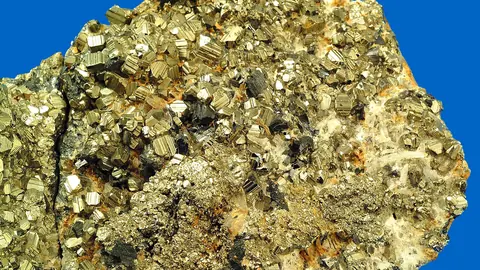
Gold or fool's gold? How to tell real gold from pyrite
Five quick tests to tell real gold from pyrite, and what each is worth.
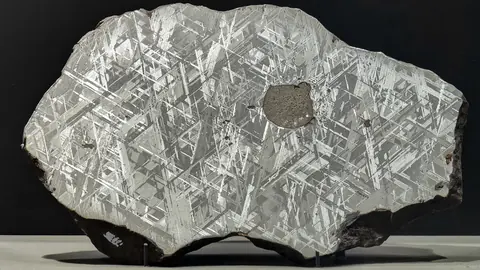
How to tell if a rock is a meteorite
Six tests to tell a real meteorite from a 'meteor-wrong', and what they're worth.
Is my rock valuable? How to tell if a rock is worth money
What makes a rock worth something, and how to check before you sell.
More free tools
- Is it a meteorite? checker8 quick questions, an instant meteorite score and what it means.
- Hardness test helperWhat scratches it? Get the Mohs hardness and matching minerals.
- Streak test identifierPick your streak color, see which minerals match.
- Gold nugget value calculatorWeight, purity and today's price in, nugget value out.