
Streak test identifier
Rub your rock across the unglazed back of a white tile and look at the color of the powder line. Pick that color below to see which minerals match. Streak is often more reliable than the rock's own color.
How to do a streak test
- Find a white tile and turn it over. You need the rough, unglazed side.
- Pick a fresh, unweathered corner of your rock.
- Press firmly and drag it across the tile in one line.
- Blow off loose grit and look at the color of the fine powder, in daylight if you can.
Streak works best on metallic and dark minerals. Most light-colored minerals (quartz, calcite, feldspar, gypsum) all leave a white streak, so use hardness to tell them apart.
Questions people ask
What do I use for a streak test?
The unglazed back of a white bathroom or kitchen tile works well, or a streak plate from a rock shop. Rub a corner of the rock firmly across it and look at the powder left behind.
Why is the streak a different color from the rock?
A rock's surface color changes with weathering, impurities and light. The powder shows the mineral's true color. Hematite can look silver-black but always leaves a red-brown streak; pyrite looks gold but leaves a greenish-black streak.
What if my rock leaves no streak?
Minerals harder than the tile (about 6.5), like quartz, topaz and corundum, scratch the tile instead of leaving powder. If you see a groove in the tile and white powder from the tile itself, your rock is very hard.
Read next
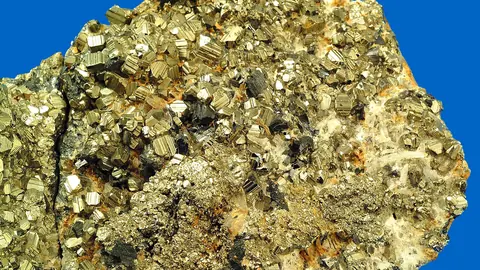
Gold or fool's gold? How to tell real gold from pyrite
Five quick tests to tell real gold from pyrite, and what each is worth.
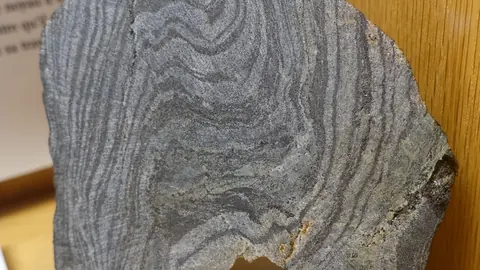
Magnetite: the rock that grabs your magnet
The mineral that made the first compass, and fools meteorite hunters daily.
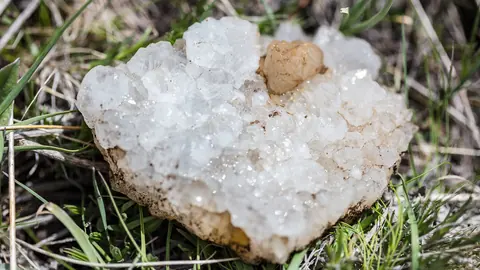
How to identify rocks: a simple step-by-step guide
Six tests you can do with a nail, a glass bottle and some vinegar.
More free tools
- Specific gravity calculatorWeigh it in air and water, get its density and what it matches.
- Is it a meteorite? checker8 quick questions, an instant meteorite score and what it means.
- Hardness test helperWhat scratches it? Get the Mohs hardness and matching minerals.
- Gold nugget value calculatorWeight, purity and today's price in, nugget value out.