
Bloodstone: the green stone spotted with 'blood'
Dark green with bright red spots, bloodstone looks like it came out of a fantasy novel. For two thousand years people believed it could stop bleeding, change the weather and make you invisible.
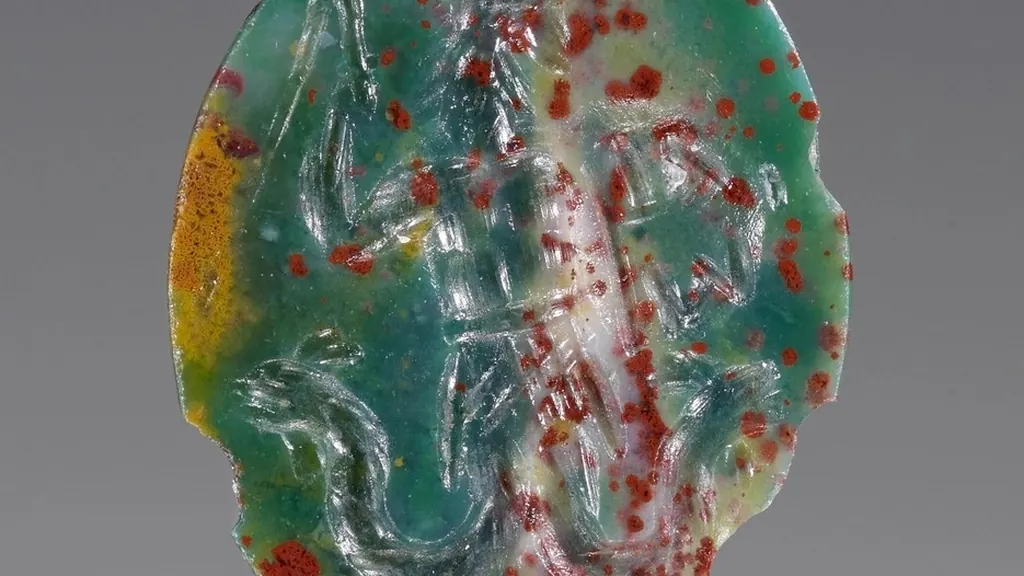
Imagine a deep forest-green stone flecked with drops of bright red. Medieval Christians believed the spots were the blood of Christ, which fell on green jasper at the crucifixion. Earlier, the ancient Greeks and Romans called it heliotrope, "sun-turner," and believed that dropping it in water would turn the sun red. Today we call it bloodstone, and it's one of the best-loved stones in the collector's tray.
What bloodstone is
Bloodstone is a variety of chalcedony, quartz made of microscopic crystals. The green comes from tiny inclusions of minerals like chlorite. The red spots are hematite, iron oxide, the same stuff that makes rust red.
How to identify bloodstone
- Dark green base, from deep forest green to blue-green
- Red spots or streaks, sometimes orange or yellow
- Hard: about 6.5 to 7, scratches glass
- Waxy to glassy shine when polished
- Slightly translucent on thin edges in the best pieces
- Smooth, curved fractures like flint
Real or fake?
| Item | Clue |
|---|---|
| Real bloodstone | Hard, natural irregular spots, green varies slightly |
| Dyed jasper or quartz | Unnatural color, dye in cracks |
| Glass or resin imitations | Bubbles, too-perfect pattern, softer, warms quickly |
| Green jasper without red | Same stone family, just no spots |
Bloodstone legends
- Roman writer Pliny the Elder recorded the claim that heliotrope, with a certain herb, could make the wearer invisible (he didn't believe it).
- Soldiers carried bloodstone in the belief that it would stop bleeding from wounds.
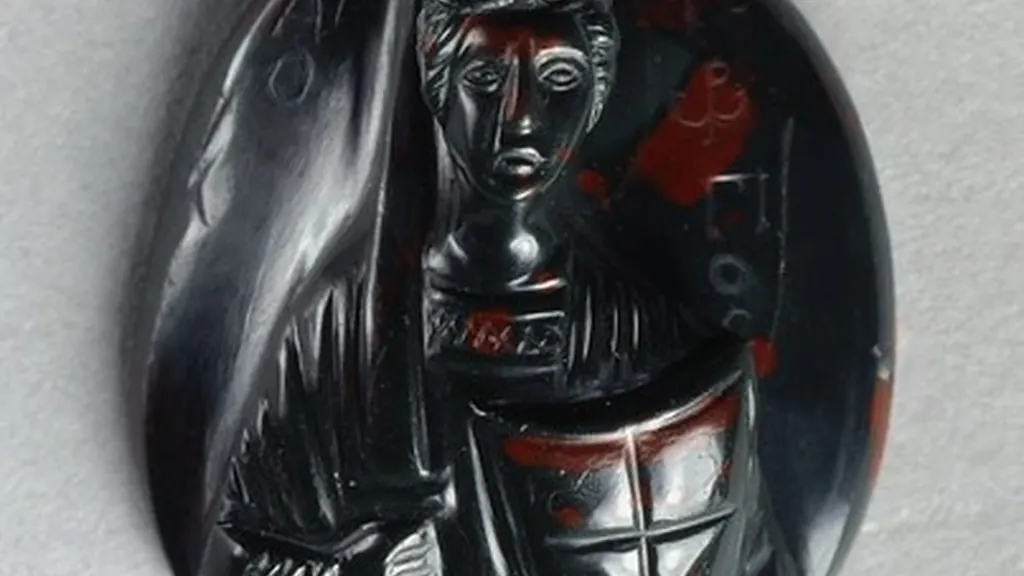
- Medieval carvers made bloodstone into religious cameos, often showing the crucifixion with the red spots used as drops of blood.
- It's the traditional birthstone for March, alongside aquamarine.
Where it's found
Most bloodstone today comes from India. It's also found in Brazil, Australia, China and the United States. In the US, rockhounds find it in parts of California, Oregon and Wyoming, often as rough pebbles in gravel.
What's bloodstone worth?
| Item | Rough value |
|---|---|
| Rough bloodstone | About $5 to $20 per pound |
| Tumbled stones | About $1 to $3 each |
| Cabochons and beads | About $5 to $50 |
| Signet rings and carvings | About $50 to hundreds of dollars |
| Antique carved bloodstone (seals, cameos) | Hundreds to thousands of dollars |
The best bloodstone has a rich, even green, slight translucency and bright red spots that aren't too crowded or too sparse.
Prices are rough guides.
How bloodstone forms
Bloodstone is a kind of chalcedony, the microcrystalline quartz family that also includes agate and jasper. It forms when silica-rich water fills cracks and holes in rock and slowly hardens. The dark green comes from tiny crystals of green minerals such as chlorite or hornblende, and the red spots are iron oxide (hematite) that collected in small patches. Most bloodstone forms in old volcanic rocks like the Deccan basalts of India.
Bloodstone vs look-alikes
| Stone | How to tell |
|---|---|
| Bloodstone (heliotrope) | Dark green with red spots, waxy luster, scratches glass |
| Plain green jasper | Green without red spots, often more opaque and lighter green |
| Nephrite jade | Oily luster, very tough, no red spots, feels heavier |
| Dyed or painted stone | Red dots sit on the surface or look too perfect and evenly spread |
| African "bloodstone" (seftonite) | Green and red but softer and more opaque. A different stone sold under the same name |
Caring for bloodstone
At hardness 6.5 to 7, bloodstone is tough enough for rings, pendants and men's signet rings, a traditional use. Clean it with warm soapy water and a soft brush. Avoid ultrasonic cleaners if the stone has visible cracks. Store it away from harder gems like diamonds and sapphires, which can scratch it.
Is it March's birthstone?
Yes. Bloodstone is a traditional birthstone for March, alongside aquamarine. Find the full list in our birthstones by month guide.
Green stone with red spots?
Snap a photo with RockFinder to see if it's bloodstone, unakite or jasper.
Questions people ask
How do you identify bloodstone?
Bloodstone is dark green, usually opaque to slightly translucent, with red or orange spots and streaks. It's very hard (about 6.5 to 7, it scratches glass), has a waxy to glassy polish, and breaks with smooth curved surfaces.
What is bloodstone made of?
Bloodstone is a type of chalcedony (microcrystalline quartz) colored green by tiny mineral inclusions like chlorite, with red spots of iron oxide (hematite). It's also called heliotrope.
What is the difference between bloodstone and jasper?
Both are forms of microcrystalline quartz. Bloodstone is specifically dark green with red spots and is often slightly translucent; jasper is fully opaque and comes in many colors and patterns.
Is bloodstone expensive?
No, most bloodstone is affordable: tumbled stones cost a few dollars and cabochons $5 to $50. Fine translucent pieces with bright, well-placed red spots, and antique carvings, cost more.
Keep reading
Chalcedony: the glowing stone hiding on beaches and riverbanks
Hold it up to the sun and it glows. The beach stone with a hundred names.
Unakite: the pink-and-green rock that looks like a watermelon
Pink and pistachio green. The granite that looks like watermelon.
Chert: the rock that made the Stone Age possible
Humanity's first steel. Sharper than a scalpel, and probably in your local creek.