
Obsidian: nature's sharpest glass
Obsidian is lava that cooled so fast it never had time to form crystals. The result is natural glass with an edge so fine that some surgeons have used it as a scalpel.
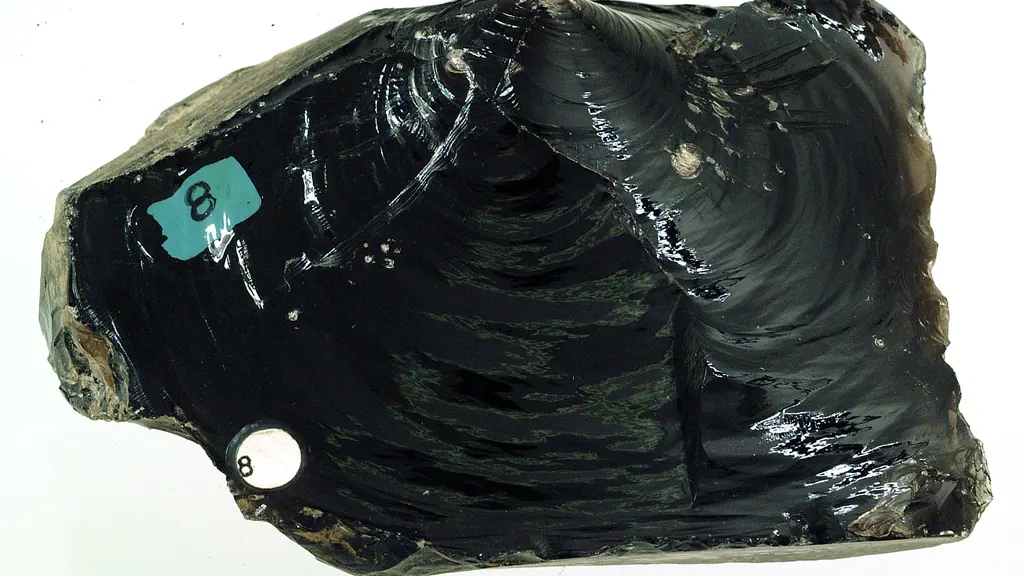
Pick up a piece of obsidian and it feels like a chunk of black bottle glass, because that's basically what it is. When thick, sticky lava pours out and cools almost instantly, its atoms freeze in place before they can line up into crystals. The result is natural glass.
People have prized it for at least a million years. Stone Age toolmakers chipped it into blades, the Aztecs edged their weapons with it, and today it's polished into jewelry and carvings. Here's how to recognize the real thing.
How to identify obsidian
- Glassy shine: smooth, bright and mirror-like, not dull or grainy
- Curved, shell-shaped breaks (conchoidal fracture) with ripple marks and very sharp edges
- Translucent edges: hold a thin edge up to a light and it glows smoky grey, brown or green
- Hardness about 5 to 5.5: it scratches a copper coin, but a steel file or quartz scratches it
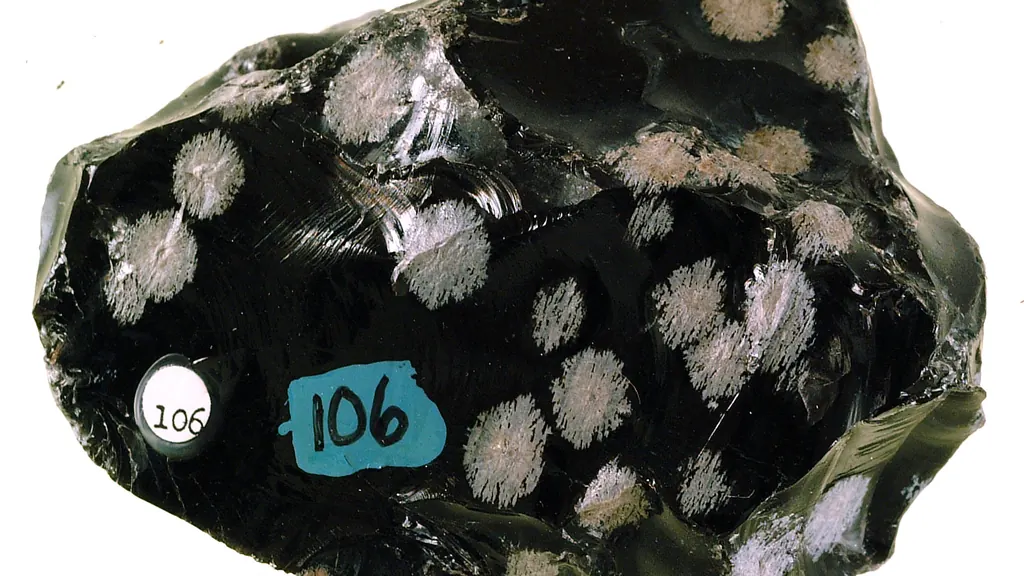
- No crystals or grains, though some types have white "snowflakes", red streaks or shimmering bands
- Found near young volcanoes, often next to pumice, which is basically frothy obsidian
Handle broken obsidian like broken glass. The edges really are sharp enough to cut deeply.
Types of obsidian
| Type | What it looks like |
|---|---|
| Black obsidian | Jet black and glossy, the classic kind |
| Snowflake obsidian | Black with white, flower-like spots of tiny cristobalite crystals |
| Mahogany obsidian | Black swirled with reddish-brown streaks of iron |
| Rainbow obsidian | Shows bands of purple, green and gold sheen when light hits it |
| Gold and silver sheen | A metallic shimmer from tiny gas bubbles and crystals lined up in the glass |
| Fire obsidian | Rare; thin layers inside flash rainbow colors like oil on water |
| Apache tears | Small rounded nodules that look black but glow brown when backlit |
Real obsidian vs fakes
Lots of "obsidian" in gift shops is man-made glass. Watch for:
- Bright colors. Natural obsidian is black, brown, grey or dark green. Electric blue, bright green, red or purple "obsidian" is almost always glass.
- Perfect clarity. Real obsidian is rarely see-through in thick pieces; thin edges are smoky, not crystal clear.
- Slag. Glassy black furnace waste can look like obsidian, but it's often full of bubbles, rusty patches or metal bits and may stick to a magnet. See slag vs meteorite.
Where to find obsidian
- Glass Buttes, Oregon: public BLM land where hobby collecting is allowed, with black, mahogany, rainbow and fire obsidian
- Davis Creek, California: national forest collecting areas (check current permit rules)
- Arizona and New Mexico: Apache tears in volcanic hills and washes
- Mexico, Iceland, Italy, Armenia, Turkey and Japan all have major obsidian flows
Many famous flows are protected. Obsidian Cliff in Yellowstone and the Big Obsidian Flow in Oregon are look-but-don't-take. Always check the rules before collecting.
Fun facts
- Obsidian doesn't last forever. Over millions of years it slowly turns into crystals, so most obsidian is geologically young, under about 20 million years old.
- Archaeologists can tell which volcano an obsidian tool came from by its chemistry, which reveals ancient trade routes.
- The Aztec macuahuitl was a wooden club edged with obsidian blades.
What's obsidian worth?
| Item | Rough value |
|---|---|
| Rough black obsidian | About $1 to $5 per pound |
| Apache tears | About $1 to $5 each |
| Polished stones and spheres | About $5 to $50 |
| Fine rainbow or sheen obsidian | About $10 to $100 per piece |
| Fire obsidian | About $20 to several hundred dollars |
Prices are rough guides and vary a lot by quality and size.
Shiny black rock?
Snap a photo with RockFinder to check whether it's obsidian, slag, tektite or something else.
Questions people ask
How can you tell if obsidian is real?
Real obsidian is glassy black, brown or grey, breaks with smooth shell-shaped curves, and its thin edges are translucent, often smoky grey or brown. Bright blue, green, red or purple "obsidian" sold in shops is almost always man-made glass.
Is obsidian rare?
No. Obsidian is common near young volcanoes, especially in Oregon, California, Mexico, Iceland, Italy, Armenia and Japan. Fine varieties like fire obsidian are rarer.
How much is obsidian worth?
Rough black obsidian sells for about $1 to $5 per pound. Apache tears cost a few dollars each, and polished pieces $5 to $50. Rare fire obsidian and fine rainbow obsidian can bring $20 to several hundred dollars.
Is obsidian really sharper than a scalpel?
Yes. A freshly broken obsidian edge can be only a few nanometers thick, many times finer than a steel scalpel, and it has been used in some surgeries. It's also brittle, so it chips easily.
Keep reading
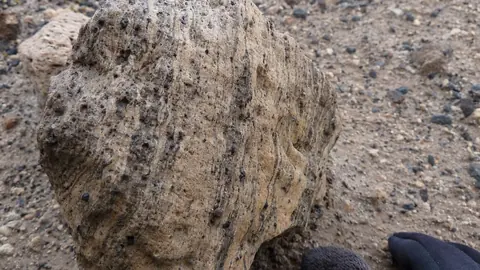
Pumice: the rock that floats
Volcanic foam that floats, crosses oceans, and smooths your feet.
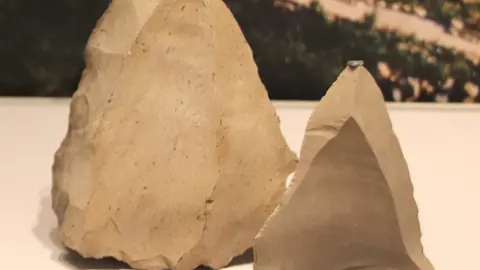
Chert: the rock that made the Stone Age possible
Humanity's first steel. Sharper than a scalpel, and probably in your local creek.
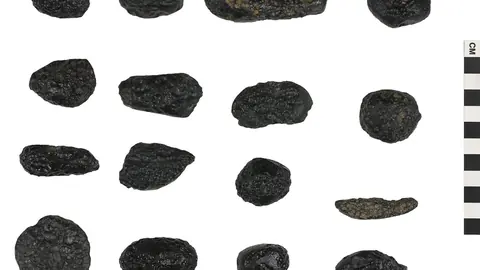
Tektite: glass splashed across the Earth by asteroid impacts
Asteroid splash-glass that rained down across continents. You can own a piece.
More guides
- Geodes: how to find them, open them and what they're worth
- Agate: how to identify it and what it's worth
- How to identify rocks: a simple step-by-step guide
- Common rocks and minerals you're likely to find
- Is my rock valuable? How to tell if a rock is worth money
- Limestone vs marble: how to tell them apart