
Jasper: the stone with pictures inside
Cut some jasper open and you'll find what look like desert landscapes, eyes or flowers painted in stone. It's one of the most colorful and easiest-to-find rocks for beginners.
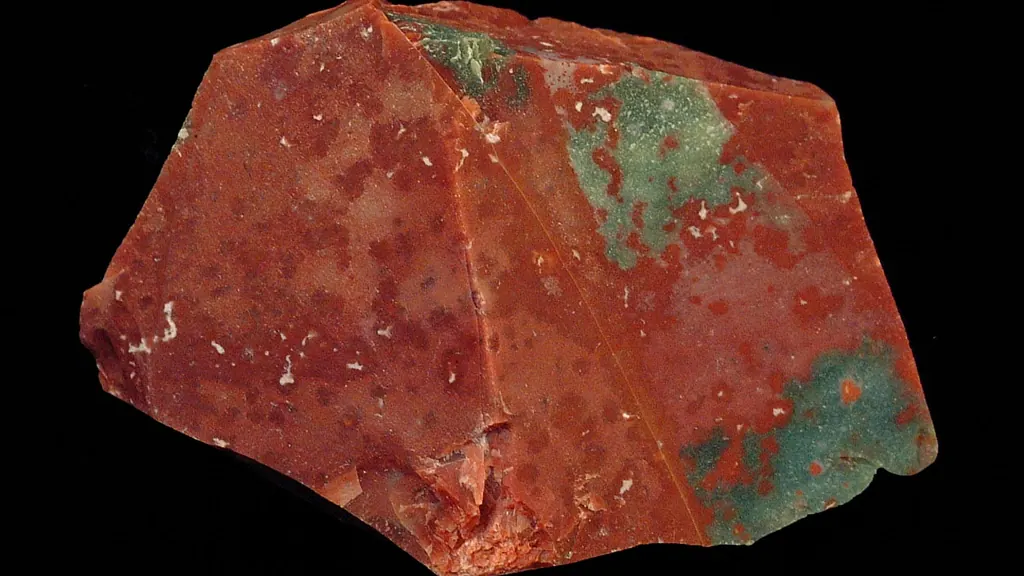
Jasper is the same basic material as chert and agate: quartz made of crystals far too small to see. What makes it special is color. Up to a fifth of a jasper can be other minerals, mostly iron oxides, which paint it brick red, mustard yellow, chocolate brown or green.
It's tough, takes a beautiful polish, and turns up in creek gravels almost everywhere, which makes it a favorite first find for new rockhounds.
How to identify jasper
- Opaque: shine a flashlight through a thin edge and almost no light gets through
- Hard: about 6.5 to 7, scratches glass and isn't scratched by a steel knife
- Smooth and waxy on broken surfaces, never grainy or sparkly
- Curved, shell-like fractures with fairly sharp edges
- Strong earthy colors: red, yellow, brown, green, often mixed
- Patterns: spots, swirls, orbs, stripes or picture-like scenes
Jasper vs agate vs chert
| Stone | How to tell |
|---|---|
| Jasper | Opaque, strongly colored, often patterned |
| Agate | Translucent and glows with a flashlight; usually banded |
| Chert | Opaque but dull grey, tan or brown; plain colors |
| Chalcedony | Translucent, usually one soft color |
| Hematite | Much heavier, metallic grey or rusty, red-brown streak |
Popular types of jasper
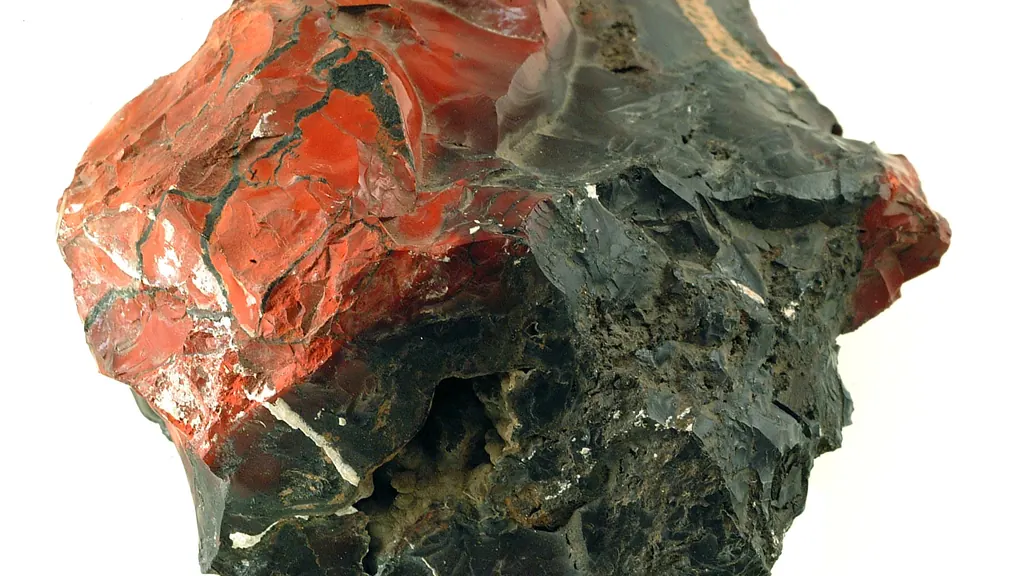
- Red jasper: solid brick red, colored by hematite. The most common kind.
- Picture jasper: tan and brown patterns that look like desert landscapes, from Oregon and Idaho.
- Ocean jasper: green, white and pink orbs, found on the coast of Madagascar.
- Poppy jasper: red "flowers" on a yellow or brown background, originally from Morgan Hill, California.
- Mookaite: purple, red, yellow and cream, from Western Australia.
- Bruneau jasper: brown with concentric rings, from a canyon in Idaho.
Some stones are sold as "jasper" but aren't: Dalmatian jasper is a speckled igneous rock, and bumblebee jasper is a volcanic rock that can contain arsenic minerals. Wash your hands after handling it and don't use it in water or drinks.
How to spot dyed or fake jasper
- Neon colors like hot pink, blue or purple usually mean dye. Natural jasper colors are earthy.
- "Sea sediment jasper" or "impression jasper" is often dyed, glued-together stone.
- Plastic feel: resin or glass fakes feel warm and light, and may show bubbles.
Where to find jasper
- Creek beds and gravel bars: jasper is hard enough to survive long trips downstream. Wet the gravel to make the colors pop.
- Desert washes in Oregon, Idaho, Nevada, Arizona and Texas
- Beaches, including Lake Superior and the Pacific Northwest coast
- Old volcanic areas, where silica-rich water filled cracks and cavities
What's jasper worth?
| Item | Rough value |
|---|---|
| Common rough jasper | About $2 to $10 per pound |
| Tumbled stones | About $1 to $3 each |
| Cabochons | About $5 to $50 |
| Fine picture jasper slabs | About $20 to $150+ |
| Rare or old-stock material | Can be much more to collectors |
Prices are rough guides. Pattern and polish matter far more than size.
How jasper forms
Jasper forms when silica-rich water soaks through sediment or volcanic ash and hardens into very fine-grained quartz. Whatever was mixed into the sediment, such as iron oxides, clay or bits of other minerals, gets trapped as color. Patterns form as the silica gel shrinks, cracks and refills, or as mud and ash layers are folded before they harden. Some famous picture jaspers formed from mud that was disturbed by earthquakes before it set.
Jasper in history
Jasper has been used for tools, seals and jewelry for thousands of years. It was carved into cylinder seals in ancient Mesopotamia, used for scarabs in Egypt, and was one of the twelve stones in the breastplate of the high priest described in the Bible. Native Americans used red jasper to make arrowheads and scrapers. The name comes from the Greek iaspis, meaning "spotted or speckled stone".
Tumbling jasper
Jasper is one of the best beginner tumbling rocks: it's hard, doesn't fracture easily and polishes to a bright shine. Pick pieces with no cracks or soft spots, tumble them with agate or quartz of similar hardness, and give each grit stage about a week in a rotary tumbler. Read our rock tumbling for beginners guide for the full process.
Colorful pebble?
Snap a photo with RockFinder to see whether it's jasper, agate, chert or something else.
Questions people ask
How do you identify jasper?
Jasper is opaque (light doesn't pass through), hard enough to scratch glass, smooth and waxy when broken, and usually red, yellow, brown or green, often patterned. It breaks with curved, shell-like fractures.
What is the difference between jasper and agate?
Both are fine-grained quartz. Agate is translucent and usually banded, so a flashlight makes it glow. Jasper is opaque, so the light doesn't pass through, and its patterns are usually spots, swirls or pictures.
Is jasper worth any money?
Common jasper is cheap: tumbled stones cost $1 to $3 and rough about $2 to $10 per pound. Fine picture jasper and rare kinds can sell for $10 to over $100 per slab or cabochon.
Where can you find jasper?
Creek and river gravels, desert washes and beaches, especially in Oregon, Idaho, California, Arizona, Texas and along Lake Superior. Look for bright red, yellow or green pebbles that are hard and waxy.
Keep reading
Chert: the rock that made the Stone Age possible
Humanity's first steel. Sharper than a scalpel, and probably in your local creek.
Agate: how to identify it and what it's worth
Banded stones that glow with a flashlight, from beach pebbles to $1,000 finds.
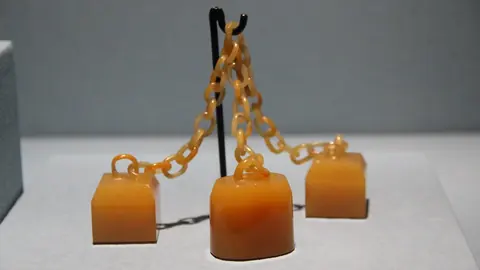
Chalcedony: the glowing stone hiding on beaches and riverbanks
Hold it up to the sun and it glows. The beach stone with a hundred names.
More guides
- Types of rocks: the 3 kinds, and how to tell which one you're holding
- The Mohs hardness scale: test any rock with a fingernail, a coin and a knife
- Rockhounding: how to start hunting for rocks, gems and fossils
- Gemstone identification: 7 tests you can do at home
- Feldspar: the most common mineral you've never noticed
- Shale: the crumbly rock that holds Earth's best-kept secrets