
How to find meteorites
Thousands of meteorites land on Earth every year, but most fall in oceans or vanish into fields and forests. Hunters find them by searching where dark rocks stand out, and by racing to fresh falls. Here's how they do it.
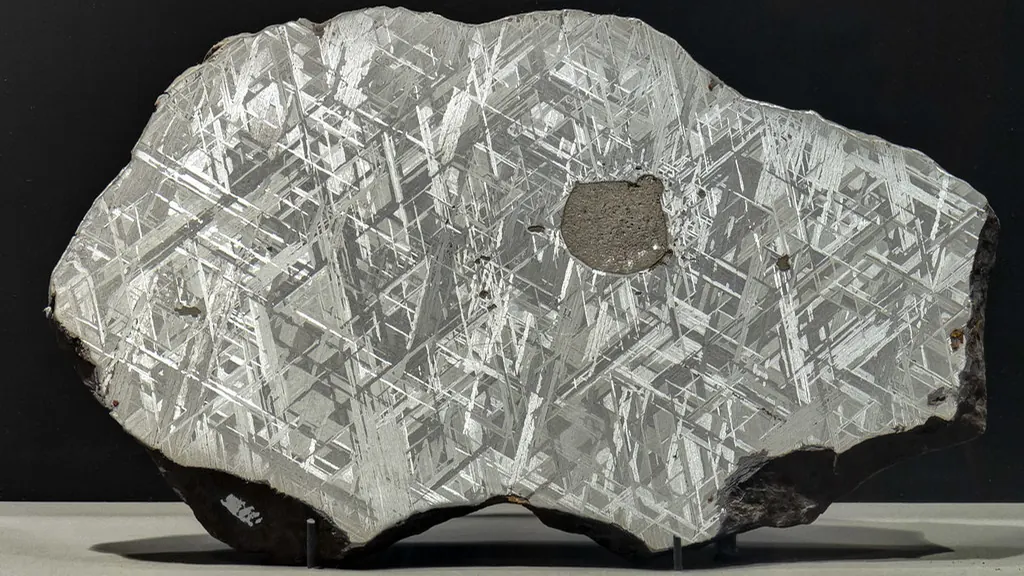
Meteorites fall everywhere on Earth, but finding one is hard. On most land they look like ordinary dark stones, get covered by soil and plants, and rust away within a few thousand years. So hunters focus on two things: places where meteorites survive and stand out, and fresh falls where they know roughly where to look.
Where to look
- Hot deserts: the Sahara, Atacama, Arabian deserts, Australia's Nullarbor Plain and the dry lake beds of the American Southwest. Little rain means slow rusting, and few plants mean nothing hides them.
- Antarctica: the ice carries meteorites to places where they collect on the surface. Most meteorites in collections were found there by research expeditions.
- Dry lake beds (playas): flat, light-colored and free of other rocks. A dark stone sitting on a playa is worth a look.
- Plowed fields: farmers have found many meteorites by turning up an unusually heavy stone.
- Strewn fields of known falls: areas where pieces of one meteorite are scattered. More are often found years later.
Chasing fresh falls
When a bright fireball breaks up, it can drop hundreds of stones along a path called a strewn field. Fireball reports from the public, camera networks and weather radar (which can catch falling meteorites) help map where pieces landed. Hunters then walk the area quickly, before rain rusts the fresh black crust. Fresh meteorites are easy to spot: jet-black fusion crust on a field of normal rocks.
What to bring
- A magnet cane: a strong neodymium magnet fixed to the end of a walking stick. Touch suspects as you walk; about 95% of meteorites will grab it.
- A metal detector: finds iron-rich meteorites buried a few inches down.
- GPS or phone: record the exact spot of every find. Location data matters to scientists and buyers.
- Plastic bags, labels, gloves, water, sun protection and a map of land ownership.
How to search
- Walk slow, straight lines a few meters apart, scanning the ground ahead.
- Look for dark, rounded or smoothed stones that don't match the local rocks.
- Test with the magnet. Pick up anything heavy and magnetic.
- Check for a thin crust, no bubbles, and no layers or quartz. Our meteorite checker takes a minute.
- Record the location, bag it, and don't clean or cut it yet.
The usual false alarms
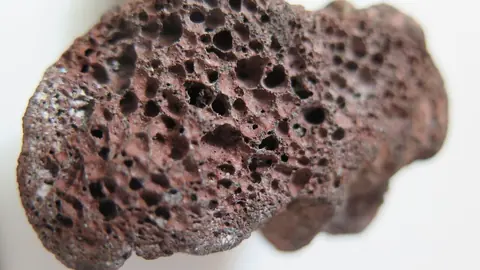
Expect to find a lot of slag, magnetite, hematite and dark basalt. Bubbles mean slag (see slag vs meteorite); a red-brown streak means hematite; a black streak means magnetite. Measuring density with our specific gravity calculator rules out many more.
Rules and ownership
Meteorites usually belong to whoever owns the land. Always get permission on private land, and agree on ownership before you search. On public land and in other countries, rules vary: some require permits, some claim meteorites as national property, and many ban export. Check before you hunt. See also is it legal to take rocks?
The odds, honestly
About 17,000 meteorites larger than a few grams land on Earth every year, but most fall into oceans or remote places. In a typical populated area, very few fresh meteorites fall each year. That's why most finds come from deserts and ice fields where they collect over thousands of years and stand out. Searching a backyard or farm field can work, but expect many false alarms for every real find.
Using a metal detector
About 95 percent of meteorites contain iron-nickel metal, so a metal detector helps a lot. Tips from experienced hunters:
- Use a detector with a ground-balance setting, as hot, mineralized soil gives false signals.
- Sweep slowly and in overlapping lines in areas known for finds, such as dry lake beds.
- Carry a strong magnet on a stick to quickly test dark rocks without bending down.
- Expect lots of nails, wire and slag. Keep notes of where you've searched.
Recording your find
If you think you've found one, photograph it where it lies with a scale (a coin or ruler), record the GPS location, and don't clean, cut or grind it. Scientists need the exact location and an undamaged sample. To be officially recognized and named, a meteorite has to be classified by a lab and approved by the Meteoritical Society. Many university and museum meteorite labs will check a sample for you.
Found one?
Read our full meteorite identification guide, then contact a university meteorite lab or collection with clear photos and the find location. A confirmed new meteorite is officially named and recorded, and that makes it much more valuable.
Questions people ask
Where is the best place to find meteorites?
Hot and cold deserts. In the Sahara, the Atacama in Chile, Australia's Nullarbor Plain, the dry lake beds of the American Southwest and the ice fields of Antarctica, meteorites survive for thousands of years and stand out against light ground. Fresh fall sites after a fireball are the other big opportunity.
How do meteorite hunters search?
They walk slow lines across open ground, scanning for dark, rounded stones that look out of place. Many carry a strong neodymium magnet on a walking stick (a 'magnet cane') to test suspects without bending down, and use metal detectors to find buried ones.
How do I find out about new meteorite falls?
Bright fireballs are reported by the public and tracked by fireball networks, the American Meteor Society, and radar and camera networks. When a big fireball drops meteorites, hunters use the trajectory and weather radar to map the 'strewn field' where pieces landed.
Who owns a meteorite I find?
Usually the landowner. On private land you need permission and often an agreement about ownership. Some public lands and some countries treat meteorites as government property or require permits, so check the rules first.
Keep reading
How to tell if a rock is a meteorite
Six tests to tell a real meteorite from a 'meteor-wrong', and what they're worth.
Slag vs meteorite: how to tell them apart
Bubbles, glass and flow marks vs fusion crust and metal: the quick tests.
Why is my rock magnetic?
Magnetite, slag or a meteorite? What makes a rock stick to a magnet.