
Chert: the rock that made the Stone Age possible
For two million years, chert was humanity's steel. Knives, arrowheads, scrapers and fire strikers were all made from it, and it's probably lying in a creek near you.
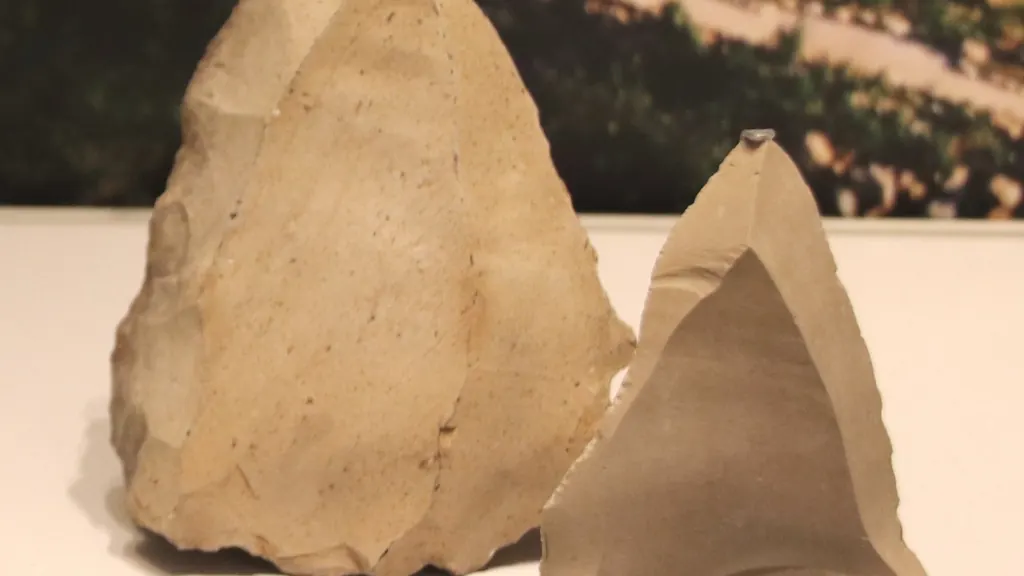
Long before bronze or iron, our ancestors had chert. Hit it the right way and it breaks into flakes with edges sharper than a steel razor. For about two million years, people used it for knives, spear points, arrowheads, scrapers and drills. Strike it against steel and it throws sparks, which made it the go-to fire starter until matches arrived.
Chert is still everywhere: in creek beds, plowed fields and limestone cliffs. Here's how to recognize it.
What chert is
Chert is a sedimentary rock made of microscopic quartz crystals, too small to see even with a magnifier. Most of it formed on ancient sea floors, where silica from sponge spicules and tiny plankton shells collected and hardened, often as nodules and layers inside limestone. It's a close cousin of chalcedony, jasper and agate.
Flint is simply the name usually given to dark chert nodules from chalk, like the black flints in England's white cliffs.
How to identify chert
- Very hard: about 7, scratches glass and a steel knife
- Smooth and waxy on fresh breaks, a bit like soap or porcelain
- Curved, shell-like fractures (called conchoidal) with sharp edges
- Opaque, or translucent only on thin edges
- Found in limestone areas as lumps and layers, often with a chalky white rind
- Sparks when struck hard with steel
Chert vs look-alikes
| Rock | How it differs |
|---|---|
| Flint | Same material; usually darker and from chalk |
| Jasper | Same family, but strongly colored red, yellow or patterned |
| Chalcedony / agate | Translucent, often banded |
| Obsidian | True volcanic glass: shinier, translucent black edges |
| Quartzite | Grainy, sugary texture, not smooth |
Is it an ancient tool?
Natural breaks are random. A piece shaped by people usually has:
- Rows of small, regular flake scars along one edge
- A bulb of percussion: a smooth bump where it was struck off a bigger stone
- A purposeful shape: a point, a scraper, a thin symmetrical blade
Lots of small chert flakes in one spot can mean an ancient workshop. Photograph it where it lies, note the location and contact a local museum or archaeology office. On public land, and in many countries, taking artifacts is illegal.
Fun facts
- Some of the oldest fossils on Earth, microbes around 3.5 billion years old, are preserved in chert.
- Gunflints, small squares of flint, fired muskets for over 200 years. Factories in England and France made them by the millions.
- Modern "flintknappers" still make chert tools for fun, and some surgeons have used obsidian and chert-like blades because they're so sharp.
What's chert worth?
| Item | Rough value |
|---|---|
| Ordinary chert or flint rocks | Essentially nothing |
| Knapping-quality chert | About $2 to $10 per pound |
| Colorful polished chert or "Mozarkite" | About $2 to $20 per piece |
| Modern replica arrowheads | A few dollars to tens of dollars |
| Authentic, legally owned ancient points | Tens to thousands of dollars, but fakes are common |
Prices are rough guides. Never dig at archaeological sites, and be very cautious buying "ancient" points online.
Smooth, hard and sharp-edged?
Snap a photo with RockFinder to see if you've found chert, flint, jasper or something else.
Questions people ask
How do you identify chert?
Chert is very hard (it scratches glass and steel), feels smooth and waxy, has a dull to slightly glassy shine, and breaks with curved, shell-like surfaces and sharp edges. It comes in grey, white, tan, brown, red, green and black.
What is the difference between chert and flint?
They're the same material: microcrystalline quartz. 'Flint' usually means the dark grey to black nodules found in chalk and limestone, while 'chert' is the general name for the rest, in any color.
Is chert worth any money?
Ordinary chert is worth almost nothing, but colorful varieties can be polished and sold cheaply. Good knapping-quality chert sells for a few dollars per pound. Authentic ancient tools can have collector value, but laws often restrict collecting and selling them.
Keep reading
Chalcedony: the glowing stone hiding on beaches and riverbanks
Hold it up to the sun and it glows. The beach stone with a hundred names.
Rockhounding: how to start hunting for rocks, gems and fossils
Treasure hunting for real. Where to go, what to bring, and what you might find.
Quartzite: the toughest rock on the beach
Sandstone, baked until it's nearly indestructible. Here's how to spot it.