
Fake tiger's eye: how to tell if yours is real
Tiger's eye is known for the silky band of light that rolls across it as you turn it. Most tiger's eye for sale is real, but glass 'cat's eye' beads and dyed stones are common in cheap jewelry.
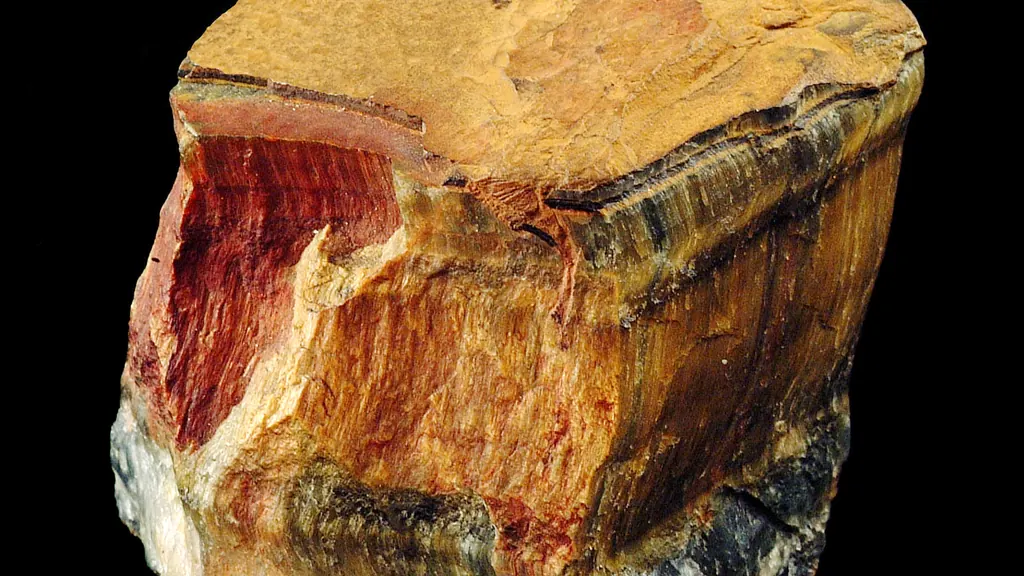
Tiger's eye is quartz that replaced a fibrous mineral while keeping its fibers. Light bouncing off those fibers creates the moving shine, called chatoyancy. Copying the color is easy; copying the fibers is not.
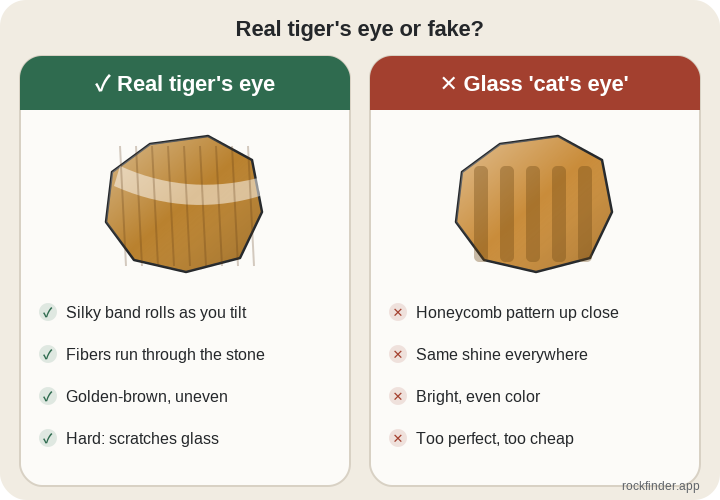
5 safe tests
1. The tilt test
Turn the stone slowly under one lamp. On real tiger's eye, the shine rolls across the bands and different stripes light up and go dark. On glass "cat's eye", there's usually one bright, sharp line that just slides across the bead.
2. The zoom test
Use a magnifier or your phone's zoom on the side of the stone. Real tiger's eye shows fine, parallel fibers, like silk threads. Fiber-optic glass shows a honeycomb or grid of tiny cells, especially at the edges and drill holes.
3. The color and band test
Natural tiger's eye has wavy, uneven bands of gold, honey and dark brown, often with black or blue-grey streaks. Perfectly even stripes, or bright pink, purple, green or electric blue, mean dye.
4. The touch test
Like all quartz, tiger's eye feels cold and stays cool. Glass warms up faster and plastic barely feels cool.
5. The scratch test
Tiger's eye is quartz (hardness about 7), so a rough edge will scratch an old glass jar. Use a hidden spot and wipe to check the line stays.
Real, treated or fake?
| Name | What it is | Natural? |
|---|---|---|
| Golden tiger's eye | The classic stone | Yes |
| Hawk's eye | Grey-blue tiger's eye | Yes |
| Red tiger's eye | Golden tiger's eye that was heated | Real stone, treated |
| Pink, purple, green, bright blue | Dyed tiger's eye | Real stone, dyed |
| Rainbow "cat's eye" beads | Fiber-optic glass | No |
Still not sure?
Snap a photo with RockFinder to see whether your stone looks like tiger's eye, jasper or glass.
Questions people ask
How can you tell if tiger's eye is real?
Tilt it under one light: real tiger's eye has a silky band of light that rolls across wavy golden-brown stripes, and the stripes vary in width and color. Zoom in and you'll see fine parallel fibers. Glass cat's eye beads have one very bright, perfect line and a honeycomb pattern when magnified.
Is red tiger's eye real?
Red tiger's eye is usually real golden tiger's eye that has been heated, which turns the iron in it red. It's still tiger's eye, just treated. Bright pink, purple or green tiger's eye is dyed.
What is blue tiger's eye?
Natural blue tiger's eye is called hawk's eye. It's a dark grey-blue with the same silky shine. Bright, electric blue 'tiger's eye' is usually dyed.
Is cat's eye the same as tiger's eye?
No. 'Cat's eye' is a name for any stone with a single line of light, which can be natural (like chrysoberyl) or glass. The cheap, brightly colored 'cat's eye' beads in shops are man-made fiber-optic glass.
Keep reading
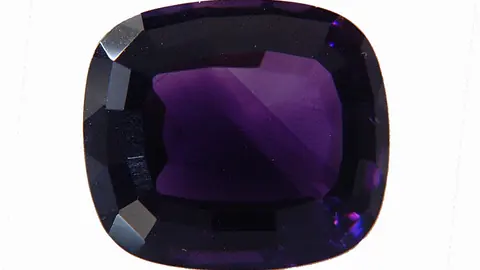
Real or fake? How to tell if your crystals are real
7 safe home tests to spot glass, dyed and plastic fakes, plus a guide for every popular stone.

How to tell if a rock is quartz
Six easy tests to tell quartz from calcite, glass and feldspar.
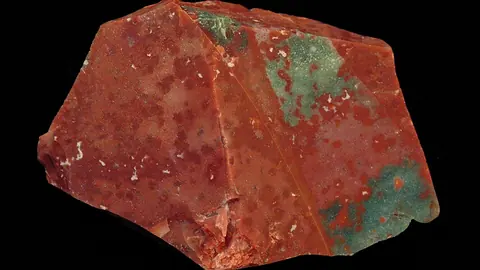
Jasper: the stone with pictures inside
Colorful, tough and everywhere, and some pieces hide landscapes inside.