
Fake lapis lazuli: how to tell if yours is real
Lapis lazuli is famous for its deep royal blue with golden flecks. That look is often copied with dyed stones and man-made materials. Here's how to tell real lapis from the imitations.
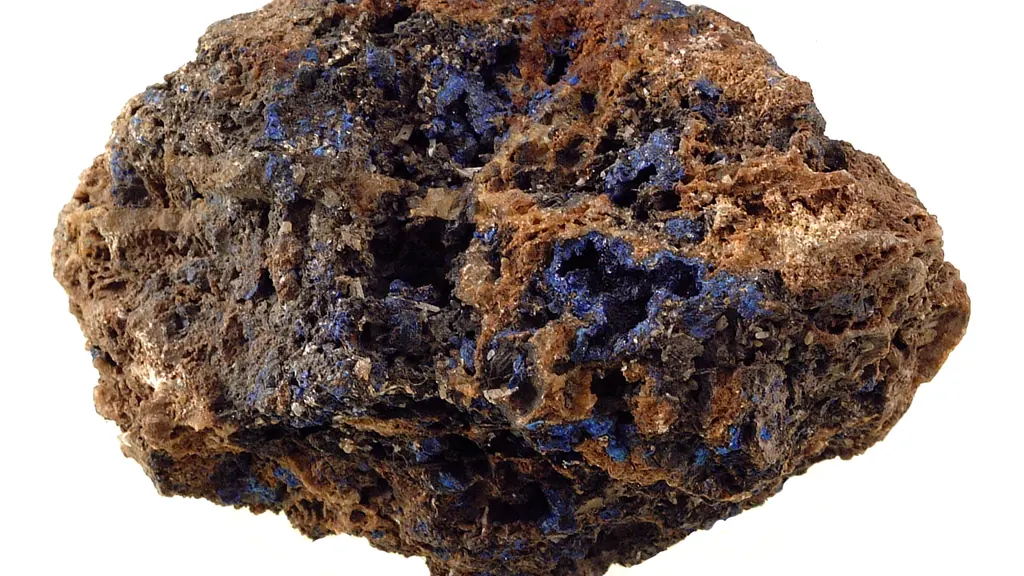
Lapis lazuli is a rock, not a single mineral: blue lazurite mixed with white calcite and golden pyrite. The best comes from Afghanistan, where it has been mined for thousands of years. Because the three ingredients mix naturally, real lapis is always a little irregular.
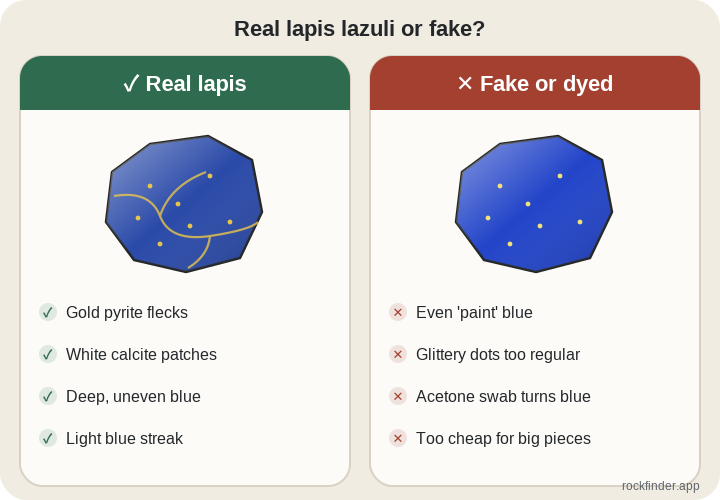
5 safe tests
1. The color test
Real lapis is a deep royal to violet blue that shifts slightly across the stone. Very flat, even, bright or inky blue with no variation is suspicious, and so is blue that looks darker in cracks and around drill holes.
2. The gold fleck test
Natural pyrite flecks are small, irregular and unevenly scattered, sometimes in little clusters or veins. Fakes may have neat glitter, round metallic dots, or no flecks at all.
3. The white patch test
White calcite streaks are normal in real lapis. Dyed fakes often have clear or glassy spots where dye didn't soak in, which you won't see in natural lapis.
4. The acetone swab
Dip a cotton bud in acetone nail polish remover and rub a hidden spot for 10 seconds. If the cotton turns blue, the stone is dyed. Some sellers wax or oil lapis to deepen the color, so a faint tint isn't always a fake, but strong blue is. Work in a ventilated room.
5. The weight and streak test
Real lapis has a specific gravity of about 2.7 to 2.9. Resin fakes feel light. On the back of a bathroom tile, real lapis leaves a light blue streak; dyed stones usually leave a white one. Only streak a hidden rough edge.
What fake lapis usually is
| Sold as lapis | What it really is | Giveaway |
|---|---|---|
| "Swiss" or "German" lapis | Dyed jasper or chalcedony | Streaky, clear spots, no pyrite |
| Blue beads with white veins | Dyed howlite or magnesite | Acetone turns blue, white streak |
| Even blue with glitter | Resin or glass | Light, warm, neat sparkles |
| "Reconstituted lapis" | Lapis powder and resin | Uniform, slightly plastic shine |
Still not sure?
Snap a photo with RockFinder to see whether your blue stone looks like lapis, azurite, sodalite or a dyed stone.
Questions people ask
How can you tell if lapis lazuli is real?
Look for deep blue that varies a little across the stone, small irregular golden flecks of pyrite, and sometimes white streaks of calcite. Then rub a hidden spot with a cotton bud dipped in acetone: if the cotton turns blue, the stone is dyed.
What is Swiss lapis?
'Swiss lapis' or 'German lapis' is jasper or chalcedony dyed blue. It isn't lapis lazuli and doesn't come from Switzerland. It's often streaky and may have colorless clear spots where the dye didn't take.
Does real lapis lazuli have gold in it?
The gold flecks are pyrite, often called fool's gold, not real gold. In natural lapis they're small and irregular. Fakes sometimes have neat, sparkly glitter or metallic flakes added to resin.
Is lapis with white spots fake?
No. White patches or streaks of calcite are normal in natural lapis. Lots of white lowers the value, which is why some stones are dyed to hide it, but white on its own is a sign of a natural stone.
Keep reading
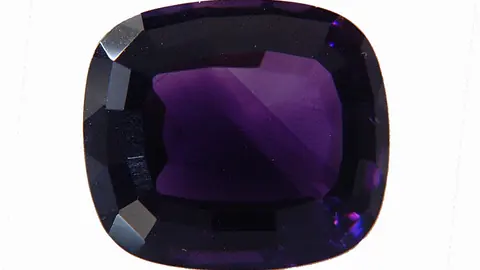
Real or fake? How to tell if your crystals are real
7 safe home tests to spot glass, dyed and plastic fakes, plus a guide for every popular stone.
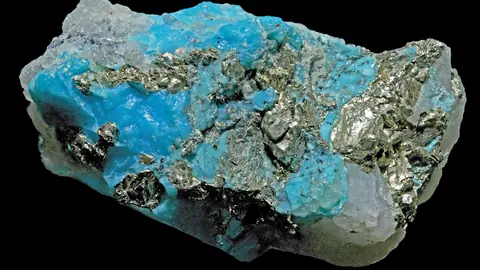
How to tell if turquoise is real
6 tests to spot dyed howlite, magnesite and plastic sold as turquoise.
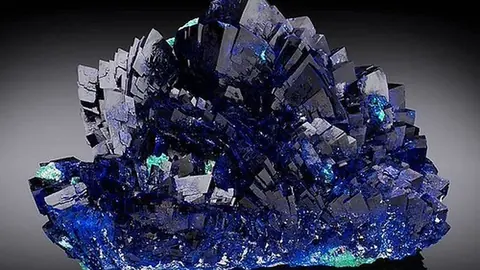
Azurite: the bluest stone in nature
The blue that painted Renaissance skies, and slowly turns into green malachite.
More guides
- Unakite: the pink-and-green rock that looks like a watermelon
- Sunstone: the gem that sparkles like it's full of glitter
- Where to sell rocks, minerals and crystals
- What is a rock with white lines through it?
- Bloodstone: the green stone spotted with 'blood'
- Petrified wood: how to identify it and what it's worth