
Basalt: the rock under every ocean
Basalt is the most common volcanic rock on Earth. It forms the floor of every ocean, built Hawaii and Iceland, and makes the dark patches you can see on the Moon.
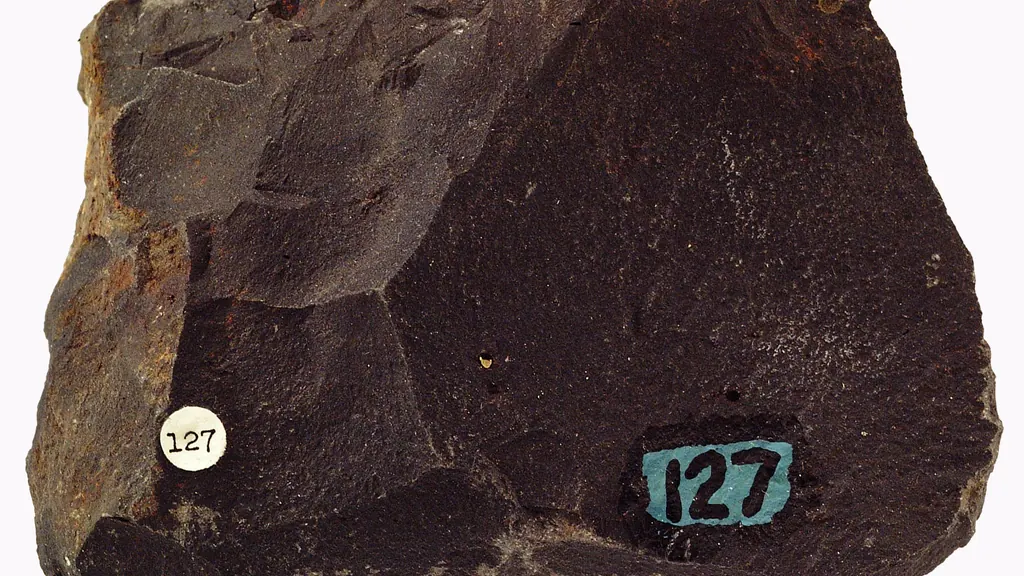
If you could drain the oceans, you'd be standing on basalt. This dark volcanic rock forms when runny lava, low in silica, erupts and cools. It's the most common volcanic rock on Earth, it built islands like Hawaii and Iceland, and the dark "seas" you see on the Moon are giant basalt lava plains.
Chances are you've walked on it too: crushed basalt is one of the most common road and railway stones in the world.
How to identify basalt
- Dark color: dark grey to black when fresh, often rusty brown on weathered surfaces
- Fine-grained: crystals too small to see, sometimes with a few green olivine grains or white feldspar specks
- Heavy: noticeably heavier than granite or sandstone of the same size
- Hard: about 6, resists a steel knife
- Gas holes: many pieces have small round holes called vesicles
- Not glassy: dull to slightly shiny, unlike obsidian
Basalt vs look-alikes
| Rock | How it differs |
|---|---|
| Scoria | Same lava, but full of bubbles, light and sponge-like |
| Andesite | Lighter grey, usually with visible white and black crystals |
| Gabbro | Same chemistry, but coarse with big visible crystals (cooled underground) |
| Obsidian | Glassy and shiny with sharp curved breaks |
| Iron meteorite | Much heavier, strongly magnetic, no gas holes (see meteorite tests) |
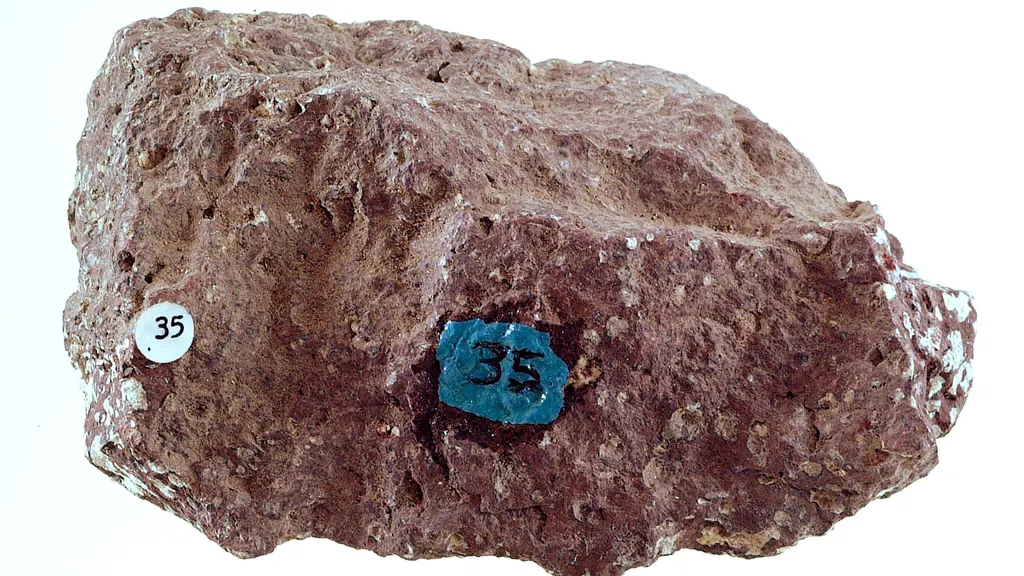
Basalt's hidden treasures
Gas bubbles in old basalt flows often fill in over millions of years. Depending on what seeped in, you can find:
- Agates: the famous Lake Superior agates formed inside holes in ancient basalt
- Zeolite crystals: delicate white, pink or green crystal sprays, prized in India and the Pacific Northwest
- Native copper: Michigan's Keweenaw Peninsula has copper-filled basalt
- Amethyst geodes: the giant ones from Brazil and Uruguay grew in basalt
Columns: basalt's party trick
When a thick flow cools slowly, it shrinks and cracks into tall, mostly six-sided columns. Famous examples include the Giant's Causeway in Northern Ireland, Fingal's Cave in Scotland, Devils Postpile in California and the Columbia River basalts in Washington and Oregon.
What basalt is used for
- Crushed stone for roads, railways and concrete
- Paving and building stone, including old cobblestones
- Rock wool insulation and basalt fiber, made by melting basalt and spinning it
- Molcajetes, the Mexican stone mortars, and massage "hot stones"
What's basalt worth?
| Item | Rough value |
|---|---|
| Ordinary basalt or crushed stone | Very cheap, sold by the ton |
| Landscaping basalt columns | About $100 to $1,000+ each |
| Basalt with zeolite crystals | About $10 to several hundred dollars |
| Agates from basalt | See what agates are worth |
Prices are rough guides.
Dark, heavy rock?
Snap a photo with RockFinder to check whether it's basalt, scoria, a meteorite or something else.
Questions people ask
How do you identify basalt?
Basalt is dark grey to black, fine-grained (no visible crystals or only a few small green olivine grains), heavy for its size, and hard. Many pieces have small round gas holes. It often weathers rusty brown on the outside.
What is the difference between basalt and scoria?
They're the same lava. Scoria is so full of gas bubbles that it looks like a sponge and is light. Basalt is mostly solid, with few or no holes, and is much heavier.
Is basalt worth any money?
Ordinary basalt is very cheap and mostly used as crushed stone. Basalt columns for landscaping can cost hundreds of dollars each, and basalt with agates or zeolite crystals inside has collector value.
Why does basalt form columns?
As a thick lava flow cools, it shrinks and cracks. The cracks link up in a hexagon-like pattern, the most efficient way to release the stress, creating tall six-sided columns like the Giant's Causeway.
Keep reading
Scoria: the bubbly lava rock in every garden center
The lava rock in your garden, born in fountains of glowing froth.
Andesite: the volcano rock named after the Andes
The real rock behind the Minecraft block, made by explosive mountain volcanoes.
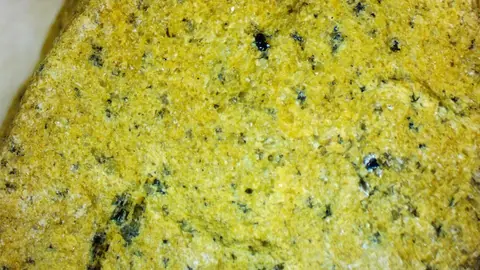
Olivine: the green gem that comes up from Earth's mantle
Green crystals from the Earth's mantle, a green beach in Hawaii, and peridot.