
Breccia: a rock made from the wreckage of other rocks
Breccia (say 'BRETCH-ee-uh') is a rock collage: jagged broken pieces glued back together. Every piece records something violent, a landslide, an earthquake, an eruption or even a meteorite impact.
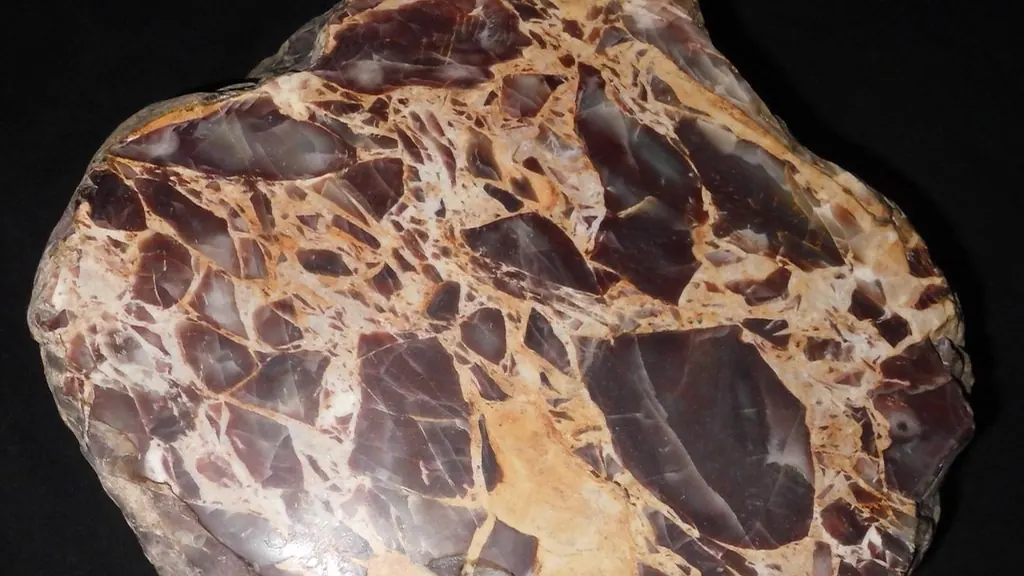
Imagine smashing a plate, then gluing the jagged pieces into a new shape with plaster. That's essentially what breccia is: a rock made of broken, sharp-edged chunks of other rocks, cemented back together. The name comes from an Italian word for rubble or broken stone.
Every breccia is the aftermath of something dramatic. Figuring out what broke it is the fun part.
How to identify breccia
- Angular fragments with sharp corners and edges
- Fragments bigger than sand: 2 mm up to boulders
- A finer matrix or cement filling the gaps
- Often colorful: different rock types and colors jumbled together
- Fragments don't line up; they point every which way
Breccia vs conglomerate
| Breccia | Conglomerate | |
|---|---|---|
| Fragments | Sharp and angular | Rounded pebbles |
| Traveled? | Barely moved | Tumbled by rivers or waves |
| Looks like | Broken glass in cement | Gravel in cement ("pudding stone") |
The many ways to make breccia
- Sedimentary breccia: rockfalls and landslides pile up at the foot of cliffs and get cemented
- Fault breccia: rocks grinding past each other along an earthquake fault shatter and re-cement
- Volcanic breccia: explosive eruptions shatter rock and lava, which then welds together
- Collapse breccia: cave roofs collapse and the rubble hardens
- Impact breccia: meteorite impacts shatter rock across whole regions
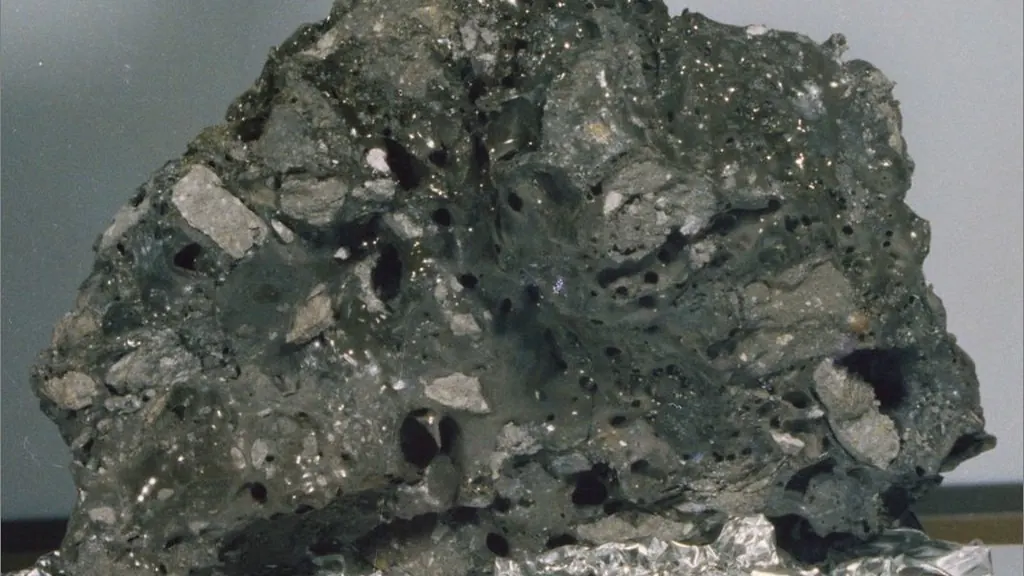
Most rocks brought back from the Moon by the Apollo astronauts are breccias, smashed and re-welded by billions of years of meteorite impacts. Some meteorites found on Earth are lunar breccias too.
Breccia in buildings
Breccia marbles, with bold angular patterns in red, gold, purple and white, have been prized for thousands of years. The Romans used them in floors and columns, and Italian varieties like Breccia Medicea and Breccia Pernice still decorate luxury buildings. Many breccia marbles formed along faults: earthquakes shattered limestone, and new minerals cemented it back together in contrasting colors.
What's breccia worth?
| Item | Rough value |
|---|---|
| Breccia rocks you find | Essentially nothing |
| Colorful jasper breccia, tumbled or cabochons | About $2 to $30 |
| Breccia marble tiles and slabs | Roughly $20 to $150+ per square foot |
| Impact breccia from famous craters (Sudbury, Ries) | About $10 to $100 per specimen |
| Lunar breccia meteorites | Hundreds to thousands of dollars per gram |
Prices are rough guides. Lunar meteorites are rare and widely faked; buy only with documentation.
Where to find breccia
Breccia forms wherever rock gets broken up and glued back together before the pieces can be rounded, so you'll find it in some very different places:
- Along faults, where moving rock grinds itself into angular chunks (fault breccia).
- At the foot of cliffs and in old landslides, where rockfalls pile up angular blocks (sedimentary breccia).
- Around volcanoes, where explosions shatter rock and ash cements it (volcanic breccia).
- In caves and collapsed limestone (collapse breccia).
- At meteorite impact craters such as Sudbury in Canada and the Ries crater in Germany (impact breccia).
Breccia also shows up in mining areas, because the same fluids that cement the pieces can carry gold, copper or silver.
How to read a breccia
A piece of breccia tells a story. Ask three questions:
- Are all the fragments the same rock? If yes, the breccia probably formed close to where the rock broke, as in a fault or collapse. Mixed fragments suggest a landslide or volcanic origin.
- What is the glue? White calcite (fizzes in vinegar), glassy quartz, red iron oxide or fine volcanic ash each point to a different history.
- How big are the gaps? Open spaces lined with crystals mean mineral-rich water flowed through later.
Breccia on the Moon and in meteorites
Most of the rocks the Apollo astronauts brought back are breccias, made by billions of years of meteorite impacts smashing and re-welding the lunar surface. Many meteorites are also breccias. So that jumbled, angular rock in your hand has relatives from other worlds.
Jagged rock collage?
Snap a photo with RockFinder to see if it's breccia, conglomerate or something else.
Questions people ask
How do you identify breccia?
Breccia is made of angular, sharp-cornered fragments of rock, at least 2 mm across and often much bigger, cemented together in a finer matrix. The fragments can be all the same rock or a mix of different rocks and colors.
What is the difference between breccia and conglomerate?
Both are made of fragments glued together. In breccia the fragments are angular and sharp-edged because they didn't travel far. In conglomerate the fragments are rounded pebbles, smoothed by rivers or waves.
How does breccia form?
Breccia forms wherever rock is broken and the pieces are cemented without being moved far: at the base of cliffs and landslides, along earthquake faults, in volcanic eruptions, in collapsed caves and in meteorite impact craters.
Is breccia valuable?
Most breccia is common rock with no special value. Polished breccia marbles are prized decorative stones, sold as slabs and tiles. Impact breccias from famous craters and lunar breccia meteorites are valuable to collectors.
Keep reading
Types of rocks: the 3 kinds, and how to tell which one you're holding
Fire, layers or pressure? Every rock you find is one of three types.
Rhyolite: the rock of supervolcanoes
Yellowstone's rock. Granite's volcanic twin, and home of the thunderegg.
Chert: the rock that made the Stone Age possible
Humanity's first steel. Sharper than a scalpel, and probably in your local creek.