
Schist: the glittery rock that hides garnets
Schist sparkles like it's been dusted with glitter, and it often has little red garnets embedded in it like raisins in a cake.
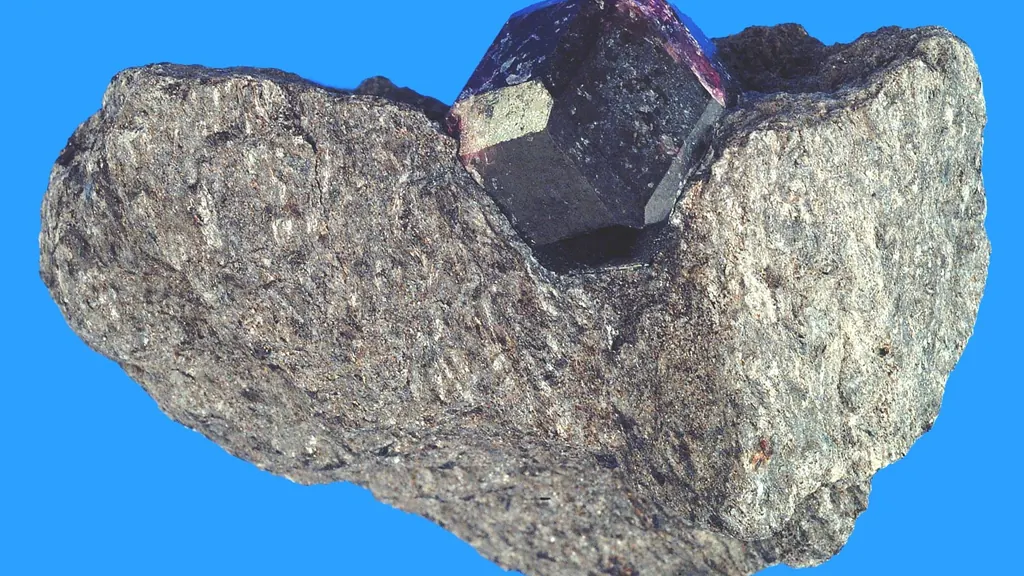
Pick up a rock that shimmers silver or gold in the sun, sheds glittery flakes on your hands and splits into wavy layers, and you're probably holding schist (rhymes with "fished"). It's one of the prettiest common rocks, and one of the best places to find gemstone crystals.
How schist forms
Schist starts life as mud: shale or mudstone. Buried and heated, shale becomes slate. Push it deeper and hotter, and the tiny clay minerals grow into flakes of mica big enough to see. All the flakes line up at right angles to the pressure, like a deck of cards, giving schist its sparkle and its tendency to split into layers.
How to identify schist
- Glittery: shiny mica flakes, silver (muscovite) or black and bronze (biotite)
- Layered and flaky, often wavy or crinkled
- Splits along the layers into rough slabs
- Scaly feel; mica flakes rub off on your fingers
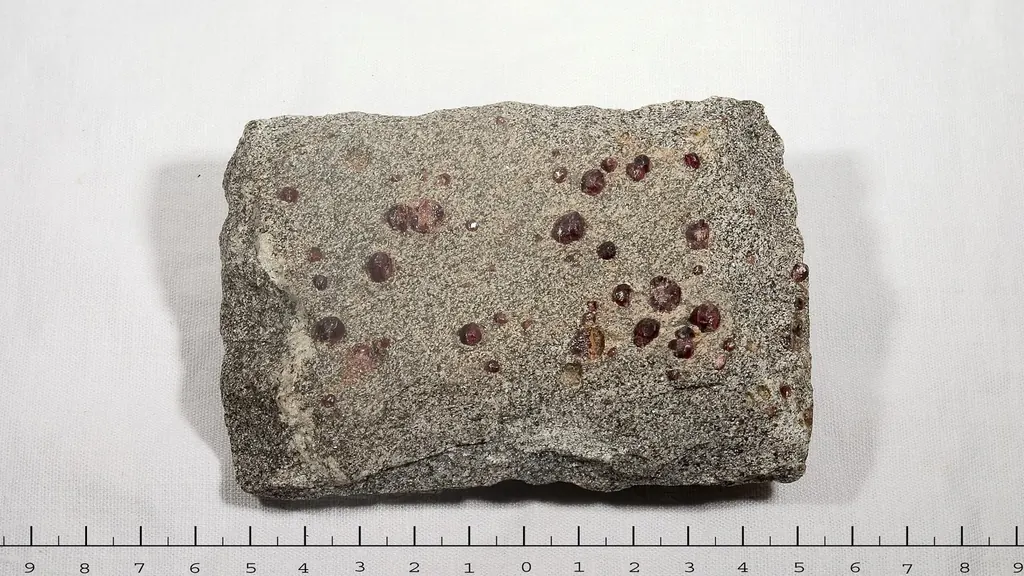
- Embedded crystals: red garnet balls, brown staurolite crosses, blue kyanite blades
Schist vs look-alikes
| Rock | How it differs |
|---|---|
| Slate | Very fine, smooth and dull; splits into flat sheets |
| Phyllite | Between slate and schist: silky sheen, no visible flakes |
| Gneiss | Bold light-dark bands, less mica, doesn't split |
| Mica-rich granite | Mica flakes scattered randomly, not lined up |
Garnets: schist's hidden treasure
Garnet schist is studded with round, dark red crystals, often with 12 neat faces. In some places they weather out and collect in streams and on hillsides. Famous spots include Wrangell, Alaska, where garnets have been collected for generations, and Gore Mountain in New York, home to some of the world's largest garnets.
Look also for staurolite: brown crystals that sometimes grow in the shape of a cross, sold as "fairy stones" or "fairy crosses" in Virginia and Georgia.
Fun facts
- Manhattan's skyscrapers sit on schist. The strong, shallow Manhattan Schist is part of why skyscrapers cluster where they do (though geologists still argue about how much it mattered).
- Blueschist forms only in very specific conditions where ocean plates dive under continents, so it's a clue to ancient plate collisions.
What's schist worth?
| Item | Rough value |
|---|---|
| Schist rocks | Essentially nothing |
| Schist flagstone for patios | Sold by the ton or square foot |
| Schist with small garnets | About $5 to $30 |
| Sharp garnet crystals on schist (Wrangell, etc.) | About $20 to a few hundred dollars |
| Staurolite "fairy crosses" | About $5 to $50+ for perfect crosses |
Prices are rough guides. Some garnet localities are on private or protected land, so ask before collecting.
Where to find schist
Schist forms deep in mountain belts, so look where old mountains have been worn down to their roots:
- The Appalachians and New England: Vermont, New Hampshire, Connecticut, Pennsylvania and the Manhattan schist that holds up New York City's skyscrapers
- The Scottish Highlands, Ireland, the Alps and Scandinavia
- The Rocky Mountains, the Grand Canyon's Vishnu schist (about 1.7 billion years old), and the Black Hills of South Dakota
- New Zealand's Otago, where flat schist slabs are a traditional building stone
Stream gravels below these areas are full of sparkly, flaky schist pebbles that split easily.
Types of schist
Schists are named after their most noticeable mineral:
| Type | What it looks like |
|---|---|
| Mica schist | Silvery or golden glitter from muscovite or biotite, the most common type |
| Garnet schist | Red to brown garnet balls stuck in a sparkly matrix |
| Chlorite schist (greenschist) | Green, soft and soapy-feeling |
| Blueschist | Blue-grey from the mineral glaucophane. Rare and prized by geologists |
| Talc schist | Very soft and greasy, related to soapstone |
| Kyanite or staurolite schist | Blue blades or brown cross-shaped crystals ("fairy crosses") |
From mud to schist
Most schist starts as mud. As it's buried deeper and heated, it goes through a series of rocks: shale becomes slate, then phyllite (with a satin sheen), then schist (with visible mica flakes), and finally gneiss (with light and dark bands). Geologists use the minerals in a schist, like garnet, staurolite or kyanite, to work out how hot and deep the rock got.
Sparkly layered rock?
Snap a photo with RockFinder to see if it's schist, gneiss, slate or mica-rich granite.
Questions people ask
How do you identify schist?
Schist sparkles because it's full of visible mica flakes all lined up in one direction. It splits into wavy, flaky layers, feels slightly scaly, and often contains other crystals like garnet, staurolite or kyanite.
What is the difference between schist and gneiss?
Schist is rich in mica, very sparkly and splits along its layers. Gneiss has distinct light and dark bands, less mica and doesn't split easily. Gneiss forms at even higher temperatures and pressures than schist.
Are the garnets in schist valuable?
Most garnets in schist are small and fractured, worth a few dollars as specimens. Large, sharp crystals on schist can sell for tens to hundreds of dollars, and clean garnet can be cut into gems.
Where is schist found?
Schist forms in mountain belts and is common in places like New England, the Alps, Scotland, Scandinavia and New Zealand. Much of Manhattan sits on a schist called the Manhattan Schist.
Is schist igneous, sedimentary or metamorphic?
Metamorphic. Schist forms when shale or mudstone is buried deep and heated and squeezed: more than slate and phyllite, but less than gneiss.
Keep reading
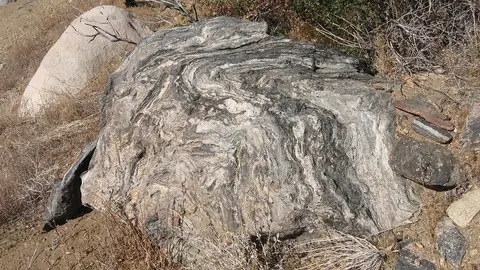
Gneiss: the striped rock that's been to the depths of the Earth
Pronounced 'nice'. Striped, folded, and sometimes 4 billion years old.
Shale: the crumbly rock that holds Earth's best-kept secrets
The world's most boring-looking rock is a fossil vault. Here's how to open it.
Gemstone identification: 7 tests you can do at home
Sapphire or blue glass? Seven at-home tests that catch most fakes.