
Garnet: a gem you can dig yourself
Garnets are one of the few gemstones you can realistically find on your own: as dark red balls in sparkly schist, in creek gravel, and even as pink and purple beach sand.
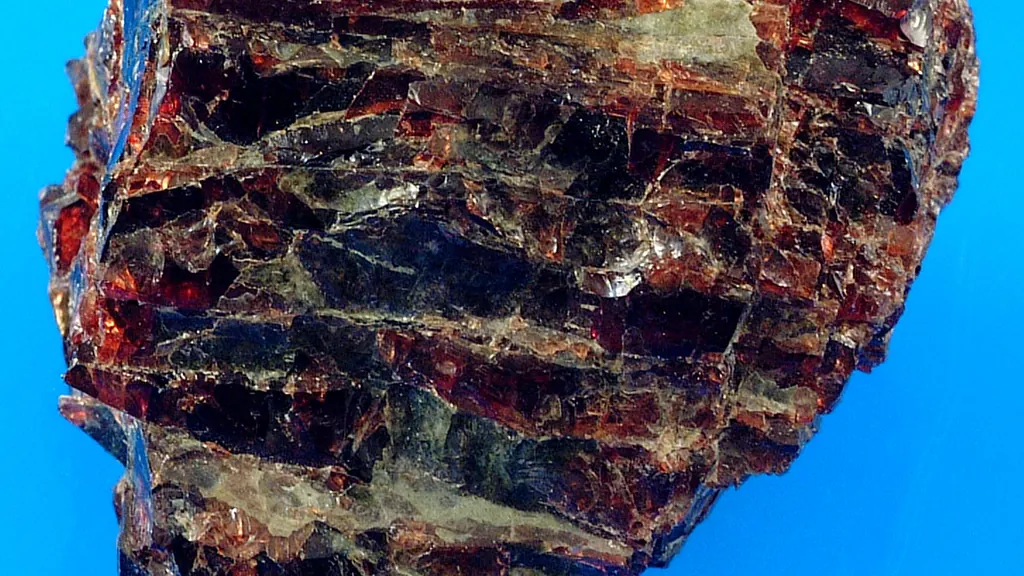
Most gemstones are hard to find without a mine. Garnet is the exception. It forms when rocks are heated and squeezed deep underground, so it's common in metamorphic rocks like schist and gneiss, which cover huge areas of the world. Because it's hard and heavy, it also collects in creek gravel and beach sand.
Garnet isn't one mineral but a family of closely related ones, which is why it comes in so many colors.
How to identify garnet
- Ball-shaped crystals with many flat faces, usually 12 diamond-shaped faces or 24 smaller ones
- Deep red to brownish red is most common; also orange, pink, purple, green, yellow and black
- Glassy shine on clean crystals
- Hard: about 6.5 to 7.5, scratches glass
- Heavy for its size
- No cleavage: it breaks unevenly instead of splitting along flat planes
- Sitting in schist or gneiss, like red berries in a glittery rock
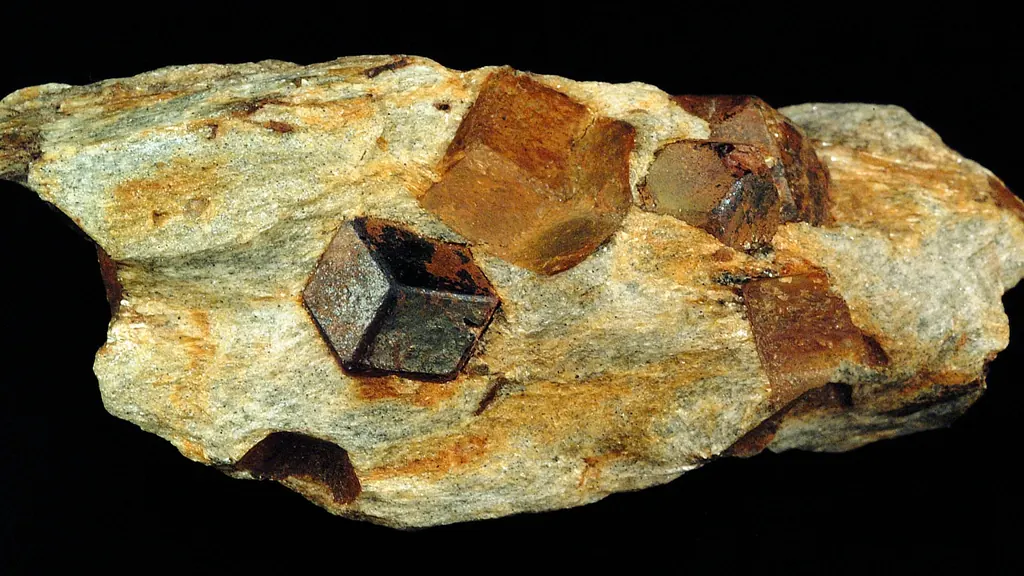
Garnet colors and types
| Type | Typical color |
|---|---|
| Almandine | Deep red to purplish or brownish red; the most common garnet |
| Pyrope | Fiery red, sometimes purplish |
| Spessartine | Orange to reddish orange |
| Grossular (incl. tsavorite, hessonite) | Green, yellow, orange-brown, colorless |
| Andradite (incl. demantoid, melanite) | Green, yellow, brown, black |
| Rhodolite | Raspberry pink to purple |
Garnet vs look-alikes
- Ruby: much harder (9), six-sided crystals, brighter pinkish red.
- Red spinel: forms eight-sided crystals shaped like two pyramids base to base.
- Red glass: often has bubbles, is softer, and has no crystal shape.
- Staurolite: also in schist, but brown and shaped like stubby prisms or crosses.
Where to dig your own garnets
- Emerald Creek Garnet Area, Idaho: a national forest site with a permit, famous for star garnets (Idaho's state gem)
- Gore Mountain, New York: home of some of the world's largest garnets; New York's state gem is garnet (check current tour and collecting options)
- Schist country in New England, the Appalachians, Scotland, Norway and the Alps
- Garnet sand beaches: pink and purple streaks in sand are often tiny garnets, for example in parts of California and Australia
Pan creek gravel downstream of schist and look for small dark red grains collecting with the heavy black sand.
Fun facts
- Garnet is January's birthstone.
- Crushed garnet is used as sandpaper and in water-jet cutters, because it's hard and doesn't contain free silica dust like quartz sand.
- The name comes from the Latin for pomegranate, because garnet crystals look like the fruit's red seeds.
What's garnet worth?
| Item | Rough value |
|---|---|
| Garnets in schist, rough | About $1 to $20 per piece |
| Star garnets | About $10 to a few hundred dollars |
| Faceted red garnets | About $20 to $100 per carat or less |
| Tsavorite and demantoid | Hundreds to thousands of dollars per carat |
Prices are rough guides. Clarity, color and size drive value.
Red crystals in a rock?
Snap a photo with RockFinder to see whether it's garnet, ruby, spinel or something else.
Questions people ask
How do you identify a garnet?
Look for round, many-sided crystals (often 12-sided) with a glassy shine, usually dark red to brownish red, sitting in schist or gneiss. Garnet is hard enough to scratch glass, feels heavy for its size and breaks unevenly rather than splitting flat.
What is the difference between garnet and ruby?
Ruby is much harder (9 vs about 7) and usually a brighter, pinkish or purplish red with a more brilliant sparkle. Garnets are often darker or brownish red and form ball-shaped crystals, while ruby crystals are six-sided.
Where can I find garnets?
In schist and gneiss, in creek gravels and beach sand below those rocks, and at public dig sites like Emerald Creek, Idaho (star garnets) and Gore Mountain, New York. Always check the rules first.
How much is a garnet worth?
Rough garnets in schist are cheap, often a few dollars. Faceted red garnets sell for about $20 to $100 per carat or less, while rare green kinds like tsavorite and demantoid can reach hundreds to thousands per carat.
Keep reading
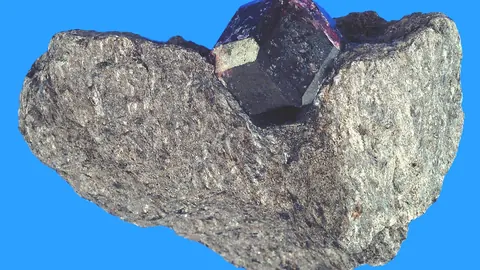
Schist: the glittery rock that hides garnets
Glitter rock with garnet raisins. And yes, the name is fun to say.
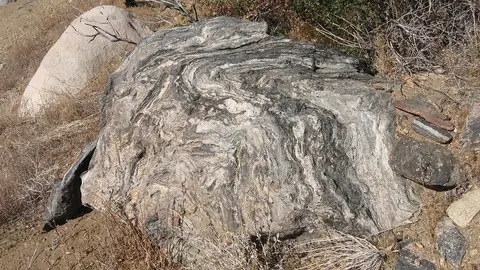
Gneiss: the striped rock that's been to the depths of the Earth
Pronounced 'nice'. Striped, folded, and sometimes 4 billion years old.
Gemstone identification: 7 tests you can do at home
Sapphire or blue glass? Seven at-home tests that catch most fakes.