
Igneous rocks: types, examples and how to identify them
Igneous rocks are 'fire-born': they formed when molten rock cooled and hardened. Granite countertops, black volcanic glass and the floating pumice in your bathroom are all igneous rocks.
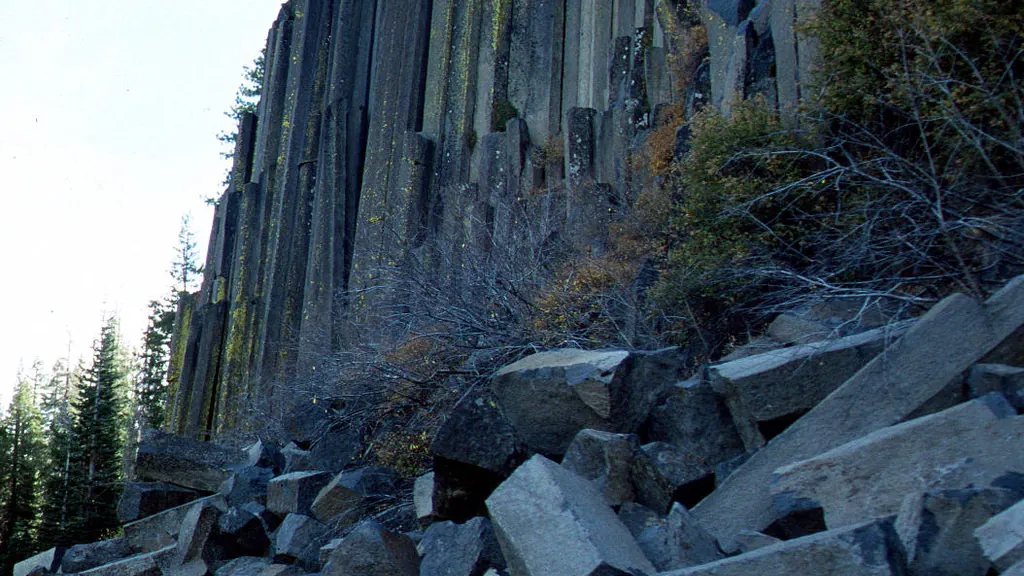
"Igneous" comes from the Latin word for fire. These rocks start as melted rock: magma while it's underground and lava once it erupts. How fast it cools decides almost everything about how the rock looks, and that's the key to identifying one. For how igneous rocks fit with the other two kinds, see types of rocks.
The 2 types of igneous rocks
| Intrusive (plutonic) | Extrusive (volcanic) | |
|---|---|---|
| Where it cooled | Deep underground | At or near the surface |
| How fast | Slowly, over thousands of years | Quickly, in days to seconds |
| Crystals | Large, easy to see | Tiny, or none (glass) |
| Examples | Granite, diorite, gabbro | Basalt, rhyolite, andesite, obsidian, pumice |
10 common igneous rocks
| Rock | Type | What it looks like |
|---|---|---|
| Granite | Intrusive | Speckled pink, white, grey and black crystals |
| Diorite | Intrusive | "Salt and pepper" black and white |
| Gabbro | Intrusive | Dark grey to black, coarse crystals |
| Pegmatite | Intrusive | Giant crystals, often with mica sheets |
| Basalt | Extrusive | Dark grey to black, fine-grained, heavy |
| Rhyolite | Extrusive | Pale pink, tan or grey, fine-grained, often banded |
| Andesite | Extrusive | Medium grey, often with small white crystals |
| Obsidian | Extrusive | Black glass with sharp, curved edges |
| Pumice | Extrusive | Pale, frothy, light enough to float |
| Scoria | Extrusive | Red or black, full of holes, heavier than pumice |
How to identify an igneous rock
- Look for crystals. Interlocking crystals of different colors with no layering usually mean an intrusive rock like granite or gabbro.
- Check the grain size. A rock that is one even color and too fine to see crystals, especially dark and heavy, is often basalt.
- Look for glass or bubbles. Glassy and sharp means obsidian. Lots of gas holes means pumice (light, floats) or scoria (heavier, sinks).
- Check the color. Light-colored igneous rocks (granite, rhyolite) are rich in silica; dark ones (basalt, gabbro) are rich in iron and magnesium.
- Rule out the others. Layers, rounded grains or fossils mean sedimentary. Wavy bands or sparkly flat sheets mean metamorphic.
Light vs dark igneous rocks
| Color | Big crystals (intrusive) | Fine or no crystals (extrusive) |
|---|---|---|
| Light (felsic) | Granite | Rhyolite, pumice, obsidian |
| Medium (intermediate) | Diorite | Andesite |
| Dark (mafic) | Gabbro | Basalt, scoria |
Obsidian looks black but is usually rhyolite-like in chemistry; its dark color comes from tiny amounts of iron in the glass.
Where igneous rocks are found
Extrusive rocks cover volcanic regions like Hawaii, Iceland, the Pacific Northwest and the Columbia Plateau. Intrusive rocks show up where erosion has stripped away the rocks above them: mountain cores like the Sierra Nevada, Yosemite and the Rockies, and old shield areas in Canada and Scandinavia. Ocean floors are almost entirely basalt.
Not sure what you found?
Snap a photo with RockFinder to see whether your rock looks igneous, sedimentary or metamorphic, and which one it most likely is.
Questions people ask
What are igneous rocks?
Igneous rocks are rocks that formed when molten rock (magma underground, or lava at the surface) cooled and became solid. They make up most of the Earth's crust. Common examples are granite, basalt, obsidian and pumice.
What are the two types of igneous rocks?
Intrusive (plutonic) igneous rocks cooled slowly deep underground, so they have large crystals you can see, like granite and gabbro. Extrusive (volcanic) igneous rocks cooled quickly at the surface, so they have tiny crystals or none, like basalt, obsidian and pumice.
How can you tell if a rock is igneous?
Look for interlocking crystals with no layers (like granite), a fine, even texture (like basalt), a glassy look (obsidian) or gas bubbles (pumice, scoria). Igneous rocks don't have fossils, rounded grains or flat layers, which are signs of sedimentary rock.
Is granite igneous?
Yes. Granite is the best-known intrusive igneous rock. It formed from magma that cooled slowly miles underground, which gave its crystals of quartz, feldspar and mica time to grow large enough to see.
Keep reading
Types of rocks: the 3 kinds, and how to tell which one you're holding
Fire, layers or pressure? Every rock you find is one of three types.
Basalt: the rock under every ocean
Dark, heavy lava rock that floors every ocean and paints the Moon.
Zodiac stones for every star sign
The traditional stone for every star sign, with colors and real-or-fake tips.