
Glass vs crystal: how to tell real quartz from glass
Clear quartz and glass look almost identical, and glass is far cheaper to make, so it's sold as 'crystal' everywhere. Five quick tests tell them apart.
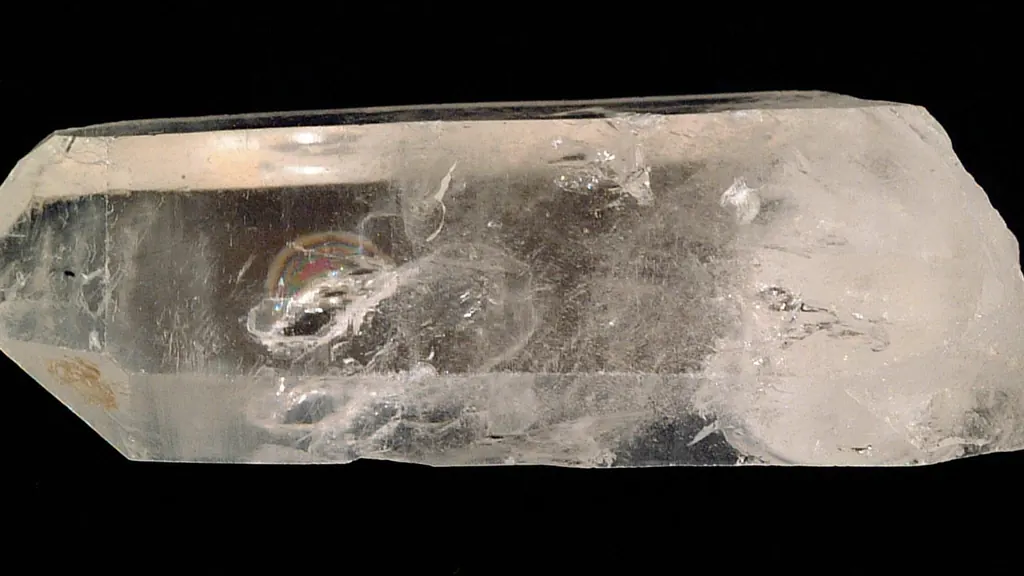
Quartz is a natural mineral that grew slowly underground. Glass is melted sand that was cooled too fast to form crystals. They're made of almost the same thing, which is why they look so alike, but that difference in how they formed leaves clues you can check.
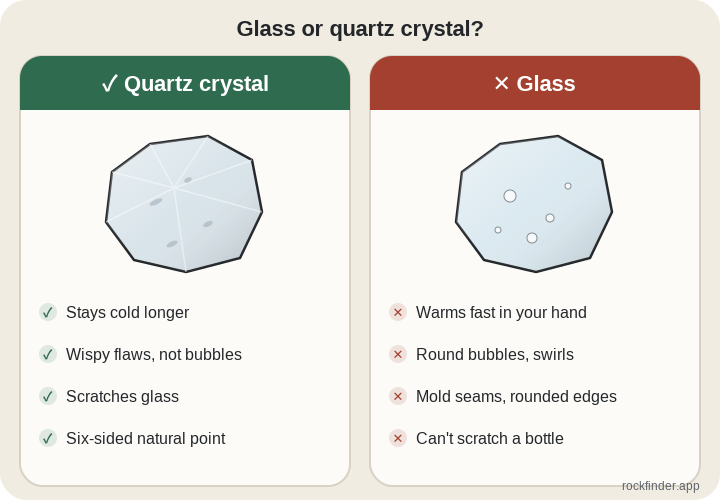
5 tests to tell quartz from glass
1. The temperature test
Hold the piece against your cheek or in your fist for a minute. Quartz conducts heat well, so it feels cold and stays cool. Glass warms up to your skin temperature noticeably faster. It's easiest to compare with a piece you know is glass.
2. The bubble test
Look inside with a magnifier or your phone camera zoomed in, with a light behind the stone. Perfectly round bubbles, often in lines, and swirly flow lines mean glass. Quartz shows wispy, feathery veils, tiny cracks, cloudy zones and sometimes tiny crystals of other minerals.
3. The scratch test
Quartz has a hardness of 7; window and bottle glass is about 5.5. Press a sharp edge of your piece firmly across an old glass jar and wipe it. A scratch that stays means it's harder than glass, which fits quartz. If it leaves only a powdery line that wipes away, it's probably glass. See our hardness test tool for more.
4. The shape test
A natural quartz point has six sides meeting in a pointed tip, faces that aren't perfectly even, and often fine horizontal lines on the sides. Glass shaped in a mold tends to have slightly rounded edges, very even faces and a seam line. Polished shapes like spheres and hearts can be either, so use the other tests.
5. The double-image test
Put a clear, polished piece over a single printed line and look down through it while turning it. Quartz bends light in two directions, so through some angles a sharp line can look slightly doubled. Glass never doubles the line. The effect is subtle in quartz, so a single line that never doubles doesn't prove glass, but a doubled line proves it isn't glass.
Quick comparison
| Quartz | Glass | |
|---|---|---|
| Feel | Cold, stays cool | Warms quickly |
| Inside | Wisps, veils, tiny cracks | Round bubbles, swirls |
| Hardness | 7, scratches glass | About 5.5 |
| Natural shape | Six-sided points | Molded, rounded edges |
| Double image | Sometimes | Never |
| Typical price | A few dollars for small points, more for clear big ones | Very cheap |
Glass that's sold honestly
Not all glass is a fake. Opalite is a milky man-made glass sold under its own name, slag glass is a factory by-product people collect, and sea glass is old bottle glass smoothed by waves. And natural glass exists too: obsidian is volcanic glass, and tektites formed in meteorite impacts.
Still not sure?
Take a photo with RockFinder. It tells you if your clear stone looks like quartz, calcite, glass or something else, and gives you a test to confirm it.
Questions people ask
How can you tell if a crystal is real or glass?
Hold it for a minute: quartz stays cool, glass warms up. Look inside with a magnifier: round bubbles mean glass. And quartz (hardness 7) scratches glass, while glass (about 5.5) usually can't scratch another piece of glass.
Is 'crystal glass' real crystal?
No. 'Crystal' glassware and chandelier 'crystals' are glass with added lead or other metals to make them sparkle. They aren't quartz or any natural crystal.
Is a crystal ball real quartz?
Some are, but most are glass. Real quartz spheres are expensive, usually have small natural flaws and feel cold. A perfectly clear, flawless, cheap ball is almost always glass.
Can glass have inclusions?
Glass can contain bubbles, swirl lines and sometimes deliberately added flecks, but not the natural wispy veils, tiny crystals and cracks that real quartz has.
Keep reading
How to tell if a rock is quartz
Six easy tests to tell quartz from calcite, glass and feldspar.
Real or fake? How to tell if your crystals are real
7 safe home tests to spot glass, dyed and plastic fakes, plus a guide for every popular stone.
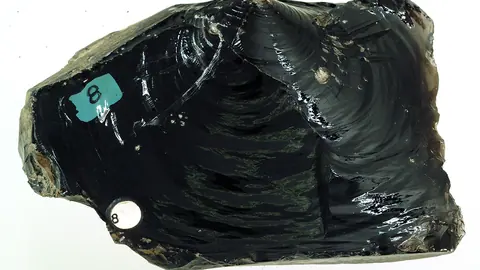
Obsidian: nature's sharpest glass
Lava that cooled into glass, with an edge sharper than a surgeon's steel.