
How to tell if amethyst is real
Amethyst is one of the most popular crystals in the world, and one of the most copied. Purple glass, dyed quartz and lab-grown amethyst all turn up in shops. Here's how to tell what you have.
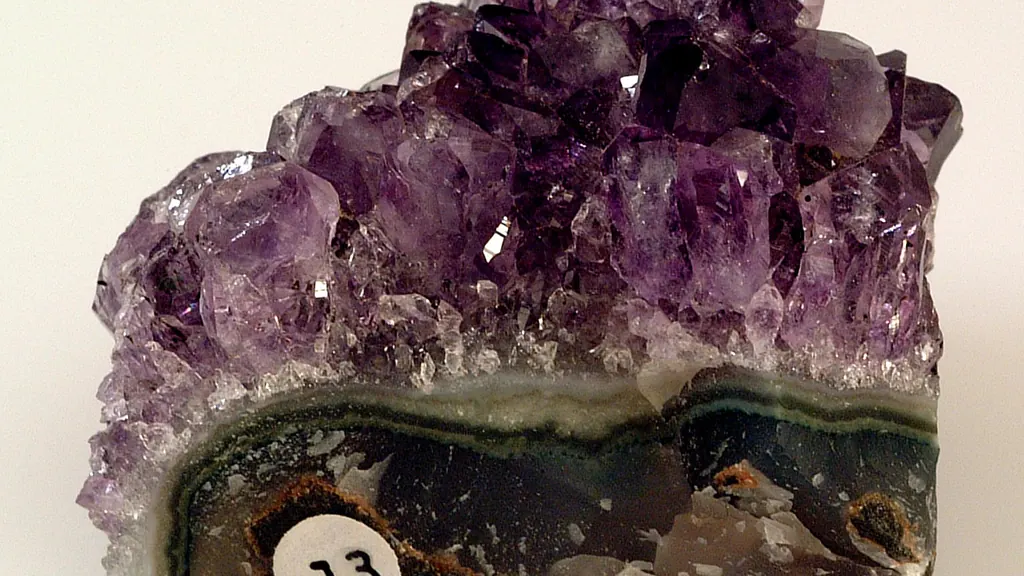
Amethyst is simply purple quartz. Tiny amounts of iron and natural radiation in the ground give it its color. That makes it cheap and common in clusters and geodes, so most amethyst you'll see is real. The fakes are usually polished stones, beads and "points" made of glass or dyed quartz.
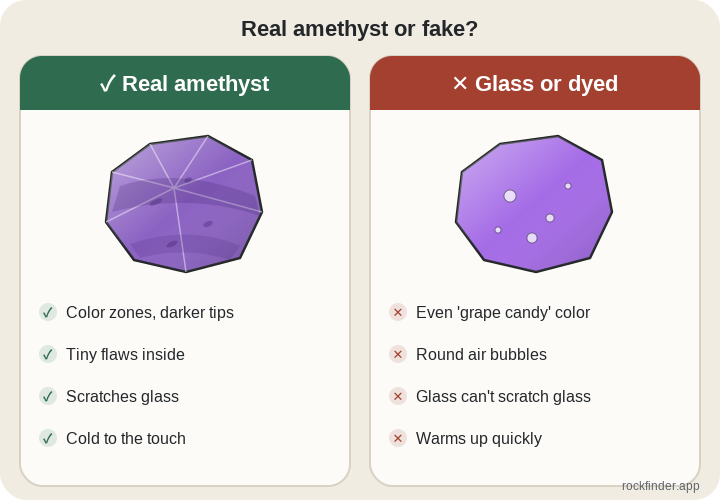
6 tests for real amethyst
1. Look for color zones
Hold it against white paper in daylight. Natural amethyst is almost never one flat color: look for darker purple near the tips, paler or white bases, and bands or patches of different shades. A stone that's the same bright purple everywhere deserves a closer look.
2. Look inside
Use a magnifier or your phone camera with a light behind the stone. Real amethyst shows small wisps, veils, tiny cracks or "tiger stripe" zones. Round air bubbles mean glass. In dyed quartz, the purple is darker inside cracks, sometimes in a spider-web pattern.
3. The scratch test
Amethyst is quartz, hardness 7, so a sharp edge will scratch an old glass jar. Glass can't easily scratch glass. Press firmly on a hidden edge, then wipe: a real scratch stays.
4. The touch test
Real amethyst feels cold and stays cool for a while in your hand. Glass warms faster, and resin barely feels cool.
5. The shape test
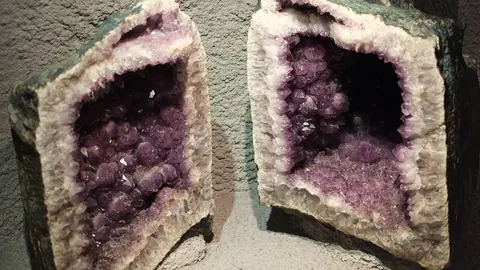
Natural crystals have six sides and pointed tips, often slightly uneven, and grow from a rocky base or the inside of a geode. Molded glass "clusters" look too regular, with rounded edges, smooth hollows and sometimes a seam.
6. The price test
Small amethyst points, tumbled stones and geode pieces really are cheap, so a low price alone isn't suspicious. But large, deep purple, perfectly clear faceted stones for very little are often glass or lab-grown.
What fake amethyst usually is
| Sold as amethyst | What it really is | Giveaway |
|---|---|---|
| Bright purple beads | Glass | Bubbles, even color, warms quickly |
| "Amethyst" with web pattern | Dyed crackled quartz | Purple only in the cracks |
| Flawless faceted gems | Lab-grown amethyst | Very clean, even color (needs a lab to prove) |
| Purple "fluorite-like" cube | Purple fluorite | Softer, flat cleavage; a real stone, just not amethyst |
What amethyst is worth
Tumbled stones and small points cost a few dollars. Geode halves and clusters range from about $10 to a few hundred dollars depending on size and color. Deep purple, clean faceted amethyst sells per carat, typically a few dollars to $30+ per carat for top color, and big "cathedral" geodes can sell for thousands.
Still not sure?
Snap a photo with RockFinder. It tells you if your purple stone looks like amethyst, fluorite, glass or something else, with a test to confirm it.
Questions people ask
How do you tell if amethyst is real or glass?
Look for color zones and tiny flaws: real amethyst is rarely one even shade and usually has small wisps or veils inside. Glass often has round air bubbles. Real amethyst is also cold to the touch and hard enough to scratch glass.
Is real amethyst always dark purple?
No. Natural amethyst ranges from very pale lilac to deep purple, often in the same crystal. Very dark, perfectly even purple can be real but top-grade, which costs more, so be suspicious if it's cheap.
Is lab-grown amethyst fake?
It's real quartz with the same hardness and color, just made in a lab. It isn't fake, but it's worth less than natural amethyst and should be sold as synthetic or lab-grown. Lab-grown stones are usually very clean and evenly colored.
Can amethyst lose its color?
Yes. Long exposure to strong sunlight can slowly fade amethyst, and heating turns it yellow or orange (that's how most 'citrine' is made). Keep displays out of direct sun.
Keep reading
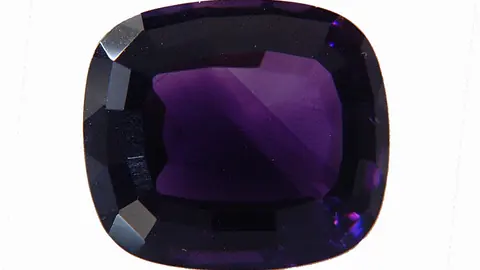
Real or fake? How to tell if your crystals are real
7 safe home tests to spot glass, dyed and plastic fakes, plus a guide for every popular stone.
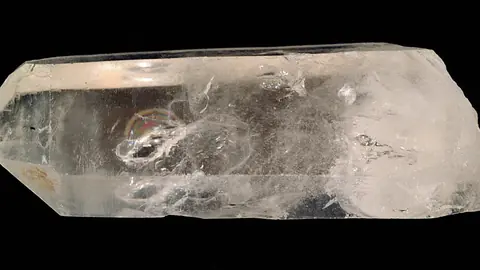
Glass vs crystal: how to tell real quartz from glass
5 quick tests to tell real quartz crystal from glass.
Geodes: how to find them, open them and what they're worth
Plain on the outside, a crystal cave inside. How to find, open and value them.