
Malachite: green stripes from copper mines
Malachite grows where copper ore meets air and water, in swirling bands of every shade of green. Ancient Egyptians ground it into eye makeup, and Russian tsars covered whole rooms in it.
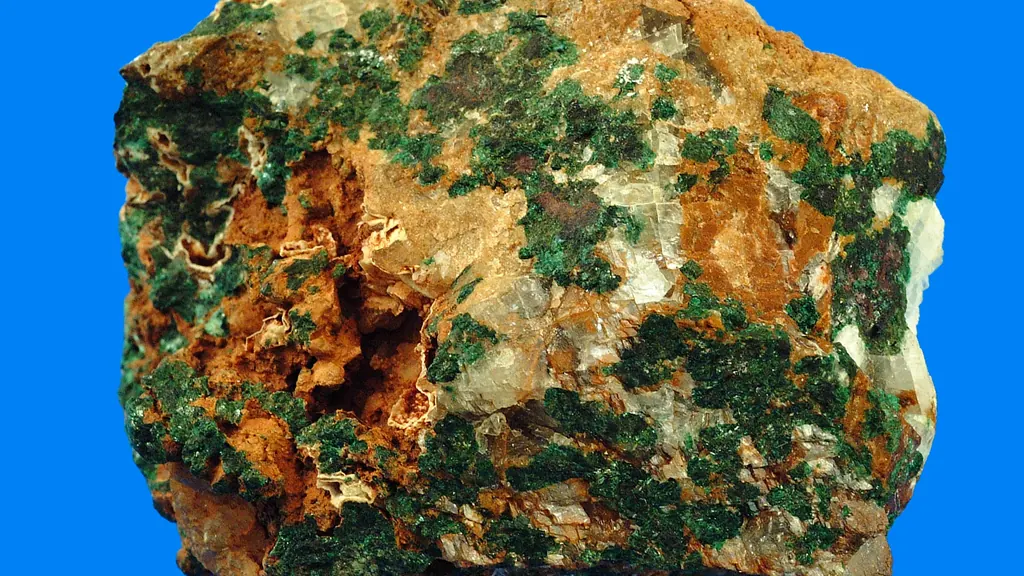
Malachite forms in the top layers of copper deposits, where water and air slowly attack copper minerals and re-deposit them as green copper carbonate. Layer after layer builds up into the swirling bands and bull's-eye rings that make malachite instantly recognizable.
People have loved it for thousands of years: ancient Egyptians ground it into eye paint, and in Russia it decorated palaces, including the famous Malachite Room in St. Petersburg's Hermitage.
How to identify malachite
- Bright to dark green, never blue (blue means azurite)
- Bands, rings and swirls of light and dark green when cut or broken
- Bubbly or crusty outside: rough malachite often looks like green grapes or velvet
- Fairly soft: about 3.5 to 4, a steel knife scratches it
- Heavy for its size, heavier than most green stones
- Pale green streak on unglazed white tile
- Found with copper minerals like azurite, chalcopyrite and native copper
Real malachite vs fakes
- Too perfect: identical, evenly spaced stripes or the same pattern repeating on every bead suggests plastic or printed resin.
- Too light and warm: real malachite feels cool and heavy; plastic feels warm and light.
- Hardness: plastic dents with a pin; real malachite scratches with a knife but feels like stone.
- "Reconstituted" malachite: crushed malachite mixed with resin; look for tiny chips and glue lines.
- Dyed stone: green-dyed howlite or agate is often too even in color.
Malachite vs look-alikes
| Stone | How it differs |
|---|---|
| Azurite | Deep blue, not green |
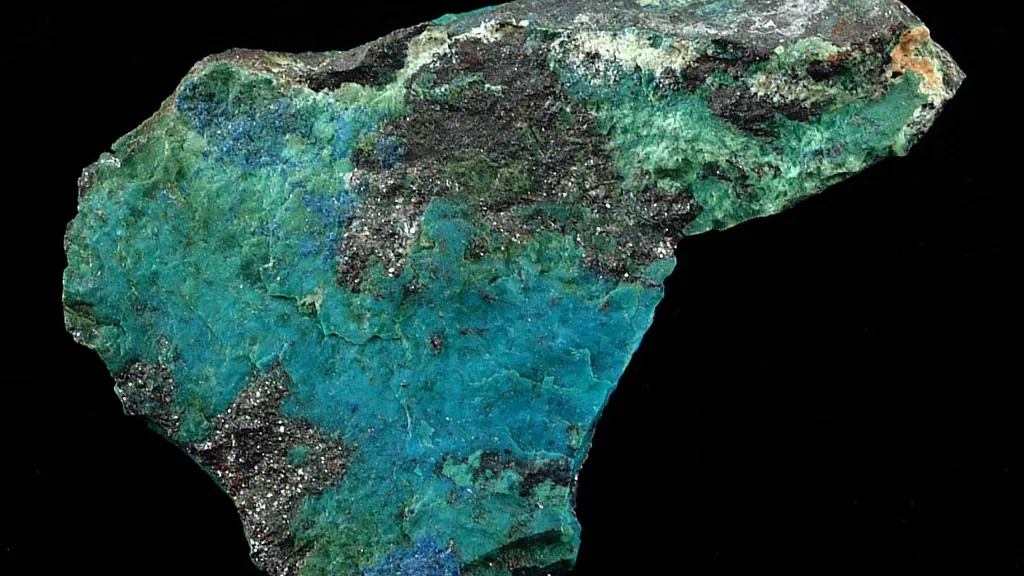
| Chrysocolla | Blue-green, often softer and chalky, no strong bands |
| Green turquoise | Pale, waxy, often with dark veins, no bands |
| Green jade or aventurine | Much harder (scratches glass), no bull's-eye bands |
Safety tips
- Handling polished malachite is generally considered safe; wash your hands after handling rough pieces.
- Never cut, sand or polish it dry. Copper dust is harmful to breathe and swallow; lapidaries use water and masks.
- Don't put it in water you'll drink, and don't use it for "gem elixirs". It's also too soft and porous for that.
Where malachite is found
- DR Congo: the source of most polished malachite today
- Russia's Ural Mountains: the historic source of huge masses used in palaces
- Arizona: Bisbee and other copper mines, often with azurite
- Namibia, Zambia, Australia and Mexico
- Old copper mine dumps anywhere: look for bright green crusts (get permission first)
What's malachite worth?
| Item | Rough value |
|---|---|
| Tumbled stones | About $2 to $5 |
| Polished slabs and cabochons | About $10 to $100 |
| Natural specimens with azurite | About $20 to several hundred dollars |
| Large carvings and fine pieces | Hundreds to thousands of dollars |
Prices are rough guides. Pattern, color and natural (not reconstituted) material matter most.
Found a green stone?
Snap a photo with RockFinder to check whether it's malachite, chrysocolla, jade or something else.
Questions people ask
How can you tell if malachite is real?
Real malachite has irregular light and dark green bands, feels cool and heavy, is scratched by a steel knife, and leaves a pale green streak. Fakes are often plastic, resin or dyed stone: too light, too perfect, warm to the touch, or with repeating patterns.
Is malachite toxic?
Polished malachite is generally considered safe to handle. Its dust contains copper and is harmful if breathed in or swallowed, so don't cut or sand it dry, wash your hands after handling rough pieces, and don't put it in drinking water.
What is the difference between malachite and azurite?
Both are copper carbonates that often grow together. Malachite is green and azurite is deep blue. Over time, azurite can slowly turn into malachite.
How much is malachite worth?
Tumbled stones cost about $2 to $5, polished slabs and cabochons about $10 to $100, and fine natural specimens or large carvings from $100 to thousands of dollars.
Keep reading
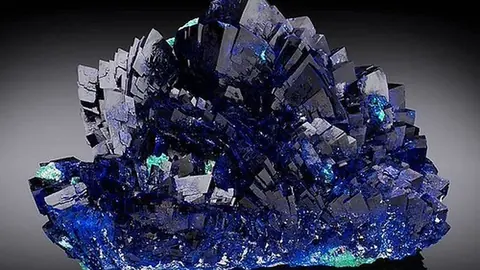
Azurite: the bluest stone in nature
The blue that painted Renaissance skies, and slowly turns into green malachite.
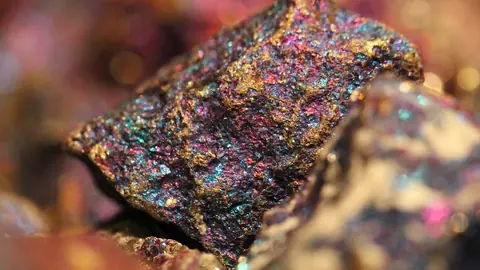
Chalcopyrite: the other fool's gold (and the world's copper)
Brassy, rainbow-tarnished and mistaken for gold. Meet the world's copper ore.
Gemstone identification: 7 tests you can do at home
Sapphire or blue glass? Seven at-home tests that catch most fakes.