
Azurite: the bluest stone in nature
Azurite is so intensely blue that Renaissance painters ground it up to paint the sky and the Virgin Mary's robes. It's a copper mineral, and it slowly turns green.
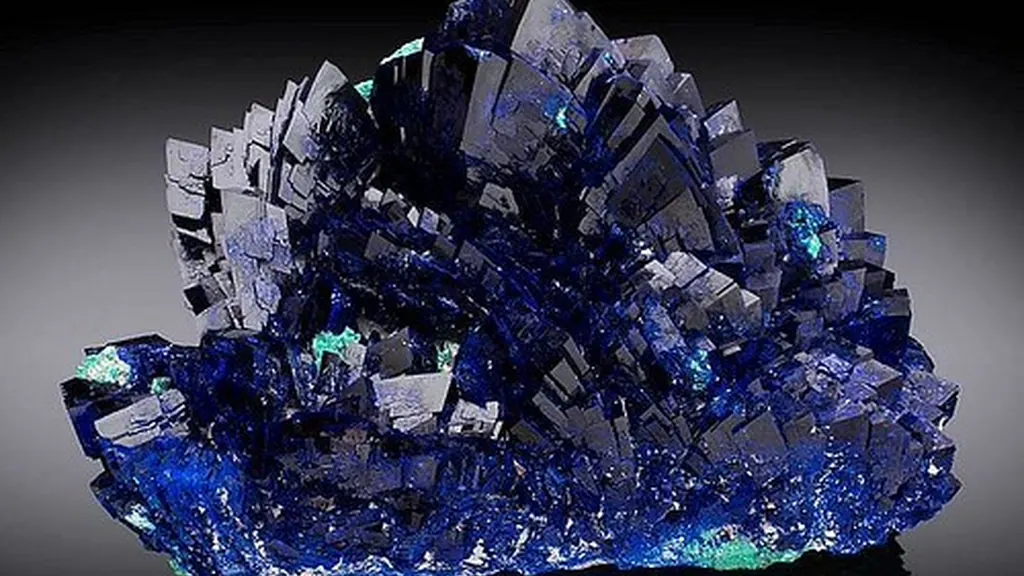
Look at a medieval painting with a deep blue sky or a rich blue robe, and there's a good chance you're looking at ground-up azurite. Before synthetic pigments, this intensely blue copper mineral was one of the main sources of blue paint in Europe, cheaper than ultramarine made from lapis lazuli, which could cost more than gold.
What azurite is
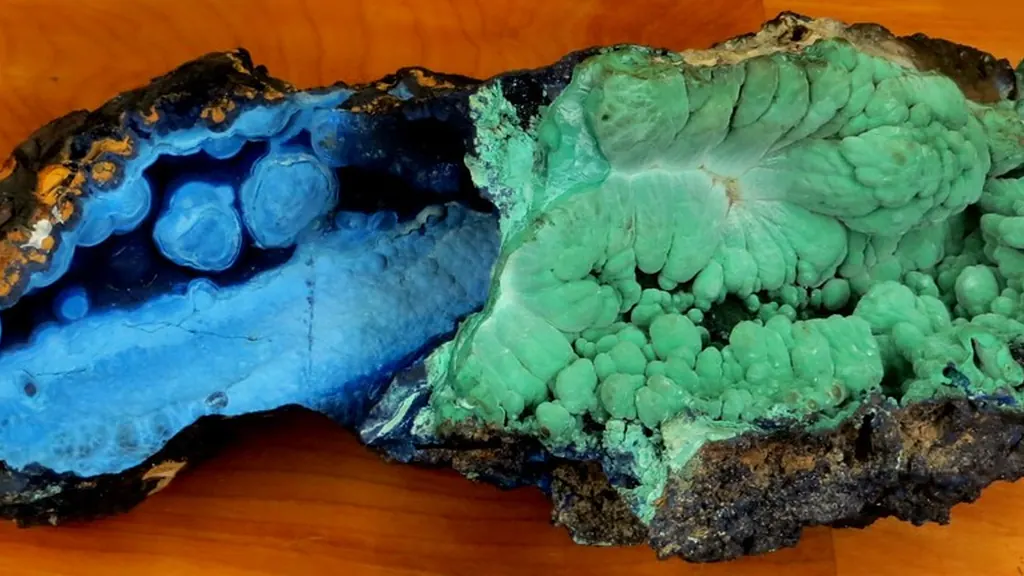
Azurite is a copper carbonate mineral. It forms near the surface where copper ores like chalcopyrite break down and copper-rich water reacts with carbonate rocks. It's almost always found with its green twin, malachite.
How to identify azurite
- Color: intense deep blue, sometimes almost black in thick crystals
- Light blue streak on unglazed tile
- Soft: about 3.5 to 4, a knife scratches it
- Glassy crystals or velvety, earthy crusts and round balls
- With malachite: blue and green together is a classic combo
- Fizzes in acid (don't use acid on specimens you want to keep)
Azurite vs other blue stones
| Stone | How it differs |
|---|---|
| Lapis lazuli | Royal blue with gold pyrite flecks; harder; not with malachite |
| Sodalite | Blue with white veins; harder; no fizz |
| Chrysocolla | Sky blue to blue-green, often softer and dull |
| Dyed howlite or magnesite | Uniform blue, white rock underneath |
The blue that turns green
Over time, azurite can slowly change into malachite, keeping its original crystal shape. These "pseudomorphs", green crystals in a blue mineral's shape, are a favorite of collectors. Painters discovered the problem too: in some old paintings, skies painted with azurite have turned greenish over centuries.
Azurite also fades if kept in bright sun or heat, so display it out of direct light.
Famous azurite
- Bisbee, Arizona: legendary for deep blue crystals and "Bisbee blue" stones
- Tsumeb, Namibia: some of the largest, sharpest azurite crystals ever found
- Chessy, France: historic azurite balls, giving it the old name "chessylite"
- Morocco and China: modern sources of fine specimens
What's azurite worth?
| Item | Rough value |
|---|---|
| Small rough pieces or tumbled azurite-malachite | About $2 to $10 |
| Azurite "blueberries" (small round nodules) | About $1 to $10 each |
| Nice crystal clusters | About $30 to a few hundred dollars |
| World-class crystals from Tsumeb or Bisbee | Thousands of dollars or more |
Prices are rough guides. Azurite is soft and contains copper: don't use it in drinking water, and wash your hands after handling.
How azurite forms
Azurite is a copper carbonate, Cu3(CO3)2(OH)2. It forms near the surface, in the weathered upper parts of copper deposits, where rainwater and carbon dioxide slowly attack copper ore such as chalcopyrite. It needs a bit more carbon dioxide and less water than malachite, so it's rarer. Over time, azurite often turns into malachite. You'll sometimes find crystals that kept azurite's shape but are now green all the way through: these are called pseudomorphs.
Where to find azurite
Look in old copper-mining districts and their mine dumps (only where collecting is allowed). Classic localities include Bisbee and Morenci in Arizona, Tsumeb in Namibia, Chessy near Lyon in France (azurite is sometimes called "chessylite"), Milpillas in Mexico, and copper mines in China, Morocco and Australia. A bright blue crust or blue stain on rock in a mining area is a good sign.
Caring for azurite
- Keep it out of strong sunlight and heat. Its deep blue can dull over the years.
- Keep it dry. Moisture speeds up the change to green malachite.
- Never use acids or vinegar to clean it. Azurite fizzes and dissolves in acid. Use a soft brush and a quick rinse in plain water at most.
- Handle it gently. At hardness 3.5 to 4 it scratches and chips easily.
- Wash your hands after handling rough pieces, and don't lick, grind or make elixirs from copper minerals.
A blue from the past
Ground azurite was one of the main blue pigments in European paintings from the Middle Ages to the 1600s, cheaper than lapis lazuli's ultramarine. Many blue skies and robes in old paintings have since turned greenish as the azurite slowly changed.
Bright blue find?
Snap a photo with RockFinder to see if it's azurite, lapis lazuli, sodalite or something else.
Questions people ask
How do you identify azurite?
Azurite is a deep, vivid 'azure' blue, glassy to dull, soft (about 3.5 to 4, a knife scratches it), and leaves a light blue streak. It fizzes in acid and is often found with green malachite on copper-bearing rock.
What is the difference between azurite and lapis lazuli?
Lapis lazuli is a rock: royal blue with gold pyrite flecks and white calcite, and it's harder. Azurite is a single mineral, usually darker or more vivid blue, often in crystals or crusts, softer, and commonly mixed with green malachite.
Why does azurite turn green?
Azurite is a copper carbonate that is slightly less stable than malachite. Over long periods, with moisture, it can slowly change into green malachite. Specimens showing the change are called pseudomorphs and are prized by collectors.
Is azurite valuable?
Small pieces are inexpensive, about $2 to $20. Sharp, glossy azurite crystals from famous mines in Arizona, Morocco, Namibia or China sell for hundreds to thousands of dollars.
Keep reading
Chalcopyrite: the other fool's gold (and the world's copper)
Brassy, rainbow-tarnished and mistaken for gold. Meet the world's copper ore.
Gemstone identification: 7 tests you can do at home
Sapphire or blue glass? Seven at-home tests that catch most fakes.
Unakite: the pink-and-green rock that looks like a watermelon
Pink and pistachio green. The granite that looks like watermelon.