
Real vs fake moldavite: how to tell
Moldavite formed about 15 million years ago when a meteorite hit what is now Germany, and it's only found in a small area of Central Europe. Demand has exploded, and so have green glass fakes. Here's how to check.
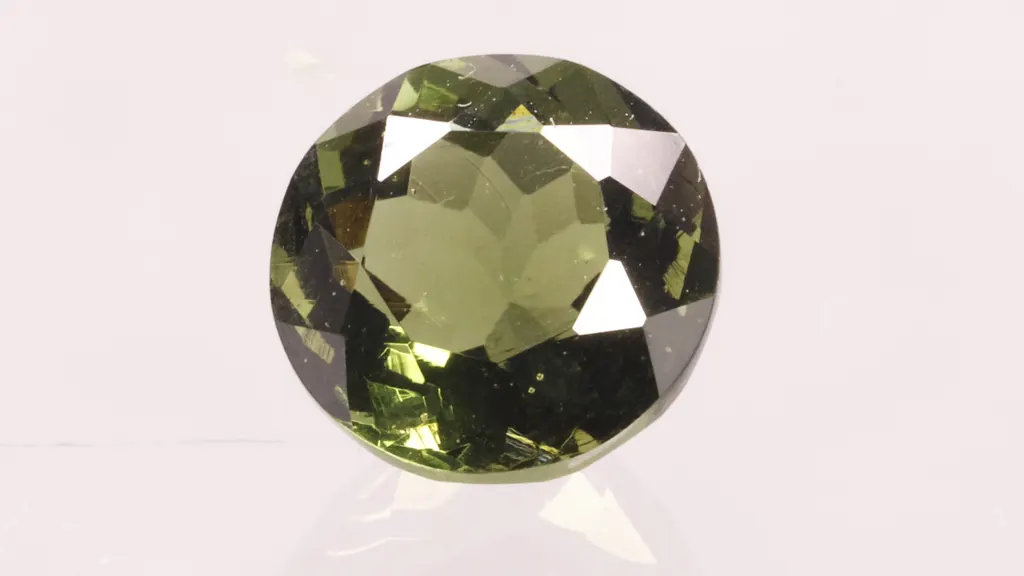
Moldavite is a tektite: natural glass created by a meteorite impact about 15 million years ago. Real pieces come almost only from southern Bohemia and Moravia in the Czech Republic, with a few from Austria and Germany. Because it's glass, a factory can copy it cheaply, which is why fakes are so common.
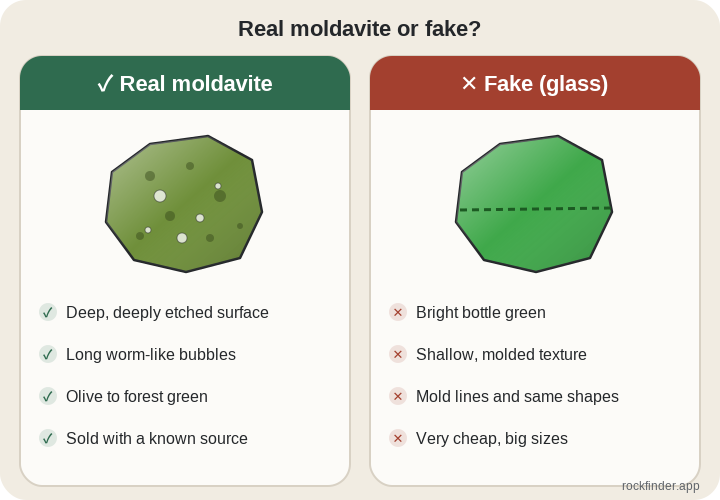
6 signs of real moldavite
1. The color
Hold it up to daylight. Real moldavite is olive, moss or forest green, often slightly brownish, and quite dark in thick pieces. Fakes are usually a bright, clear "bottle" or emerald green, sometimes almost neon.
2. The surface
Natural pieces spent millions of years in the ground, slowly etched by water. They have a deeply sculpted, wrinkled, pitted surface with sharp ridges, like a crinkled leaf. Fakes have a shallow, rounded, molded texture that looks the same all over, or a soft frosted look from acid etching.
3. The bubbles and swirls
Shine a flashlight through a thin edge and use a magnifier. Real moldavite often contains long, stretched, worm-like bubbles and swirls (schlieren) from when the glass flowed. Many fakes have small, perfectly round bubbles, or are completely clean.
4. The shape
No two natural pieces are alike. If a seller's photos show many identical shapes, or pieces with a flat side or seam line, they came from a mold.
5. Weight and size
Real moldavite is light (specific gravity about 2.3 to 2.4, a little less than window glass at about 2.5). Most natural pieces are small, a few grams. Very large pieces exist but are rare and expensive, so a huge cheap chunk is a red flag.
6. The seller
Buy from sellers who name the locality (for example Chlum, Besednice or Ločenice in the Czech Republic), show clear photos of the actual piece, sell by weight, and offer a return policy. Be wary of "moldavite" in mass-produced jewelry at very low prices.
Real or fake at a glance
| Real moldavite | Common fakes | |
|---|---|---|
| Color | Olive to forest green, slightly brownish | Bright bottle or emerald green |
| Surface | Deep, sharp, wrinkled etching | Shallow, rounded, uniform |
| Inside | Long worm-like bubbles, swirls | Round bubbles or none |
| Shape | Every piece unique | Repeated shapes, seams |
| Typical price | About $5 to $20+ per gram | A few dollars per piece |
Prices are rough guides and change with the market.
Other natural green glass
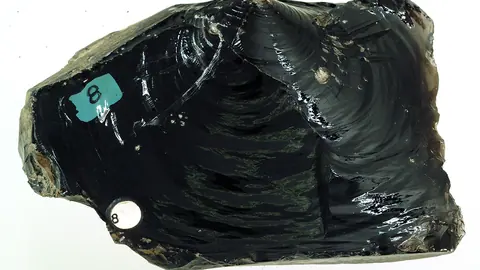
Not every green glassy stone is a fake. Green obsidian is rare but natural; Libyan desert glass is pale yellow; and bottle-green "sea glass" is old glass smoothed by waves. Ask what you're buying, and pay the price that matches.
Still not sure?
Snap a photo with RockFinder to see whether your green stone looks like moldavite, obsidian or man-made glass.
Questions people ask
How can you tell if moldavite is real?
Check the color in daylight: real moldavite is olive to forest green with a slightly brownish tone, not bright bottle green. Look for a deep, wrinkled, etched surface and, inside, long worm-like bubbles and swirls. Buy from sellers who state the locality in the Czech Republic and offer returns.
What does fake moldavite look like?
Most fakes are bright, even green glass with a shallow, molded texture and identical shapes repeated across many pieces. Some are 'etched' with acid to copy the surface, but the color and the bubbles usually give them away.
How much should real moldavite cost?
Prices change, but rough natural moldavite typically sells for a few dollars to over $20 per gram depending on quality and shape. Large, sharply sculpted pieces cost more. A big piece for a few dollars is almost certainly glass.
Is moldavite a crystal?
No. Moldavite is a natural glass, a type of tektite, formed when meteorite impact melted the ground and splashed it into the air. It has no crystal structure, which is also why it's easy to imitate with man-made glass.
Keep reading
Tektite: glass splashed across the Earth by asteroid impacts
Asteroid splash-glass that rained down across continents. You can own a piece.
Real or fake? How to tell if your crystals are real
7 safe home tests to spot glass, dyed and plastic fakes, plus a guide for every popular stone.
Obsidian: nature's sharpest glass
Lava that cooled into glass, with an edge sharper than a surgeon's steel.