
Flint: the stone that lit humanity's fires
Strike flint against steel and you get sparks. For thousands of years that was how people lit fires and fired muskets, and long before that, flint was the knife in every Stone Age toolkit.
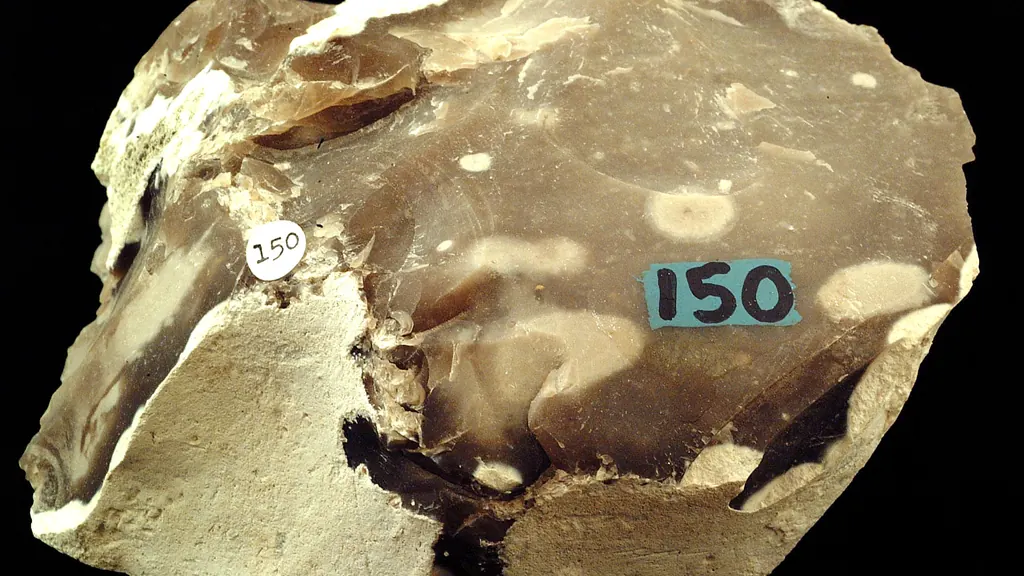
Flint is one of the most important stones in human history. It's a dark, glassy variety of chert that breaks into edges sharp enough to butcher animals, cut hides and shape wood. Our ancestors chipped it into tools for about two million years, and later struck it against steel to make fire.
How to identify flint
- Dark grey to black and glassy on fresh breaks; some is brown, honey or grey-blue
- White or cream chalky rind (the cortex) on the outside of nodules
- Knobbly, lumpy shapes, often like potatoes or bones, sometimes with holes
- Very hard: about 7, scratches glass and steel
- Smooth, curved, shell-like fractures with ripples and razor edges
- Translucent thin edges: the sharpest edges glow brown or grey against light
- Found in chalk or limestone, or in gravels and beaches eroded from them
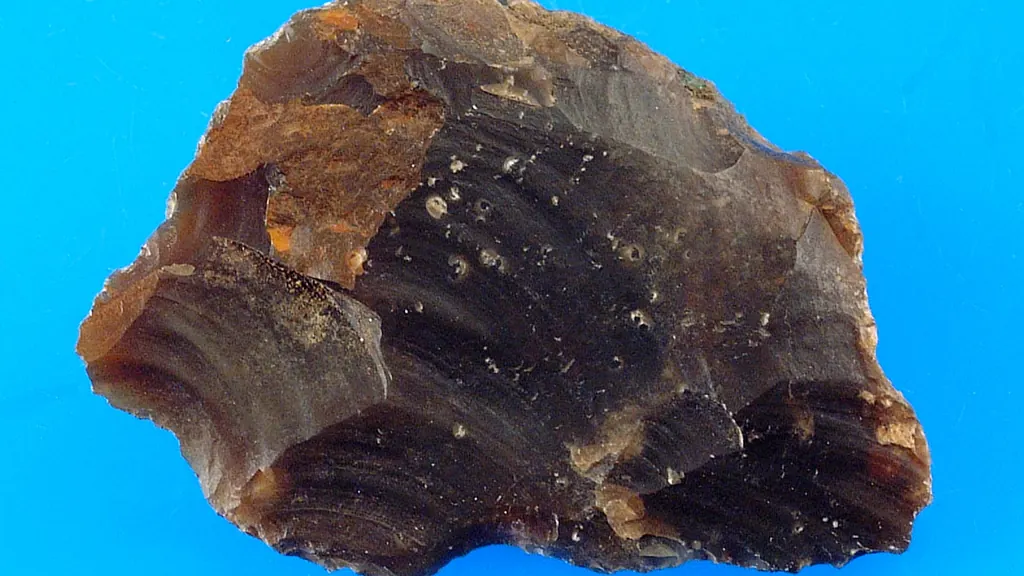
Flint vs chert vs obsidian
| Stone | How to tell |
|---|---|
| Flint | Dark and glassy, chalky rind, from chalk or limestone |
| Chert | Same material, usually duller and lighter colored |
| Obsidian | Volcanic glass: shinier, softer (scratched by quartz), from volcanic areas |
| Jasper | Opaque and strongly colored red, yellow or green |
How flint and steel make fire
- Hold a sharp-edged piece of flint with a bit of char cloth or tinder on top.
- Strike the flint's edge with a high-carbon steel striker, glancing down the edge.
- The flint shaves off tiny specks of steel. The heat of the strike makes them burn as orange sparks.
- A spark lands on the char cloth and glows; fold it into a tinder bundle and blow gently.
Fun twist: the "flint" in a modern lighter isn't flint at all. It's ferrocerium, a man-made metal alloy that sparks much more easily.
Flint in history
- Stone tools: hand axes, arrowheads, knives and scrapers, made for about two million years
- Flint mines: Neolithic people dug deep shafts to reach the best flint, like Grimes Graves in England, around 5,000 years old
- Flintlock guns: a piece of flint struck steel to fire muskets for about 200 years
- Buildings: across southern England, churches and walls are built from knapped flint
If you find a piece with neat rows of small flake scars or a deliberate point, it may be an ancient tool. Photograph it where it lies and check the rules: on public land and in many countries, collecting artifacts is illegal.
Where to find flint
- Chalk coasts: the beaches and cliffs of southern England, Normandy in France, and Denmark
- Ohio's Flint Ridge: famous colorful flint, Ohio's state gemstone (collecting is limited to permitted areas)
- Limestone regions of Missouri, Kentucky, Tennessee and Texas, in creek beds and plowed fields
What's flint worth?
| Item | Rough value |
|---|---|
| Ordinary flint nodules | Little to nothing |
| Knapping-quality flint | About $2 to $10 per pound |
| Fire-starting kits (flint and steel) | About $10 to $40 |
| Colorful Ohio flint, polished | About $5 to $50 per piece |
Prices are rough guides. Be very cautious with "ancient" points sold online: fakes are common.
Dark, glassy, sharp-edged?
Snap a photo with RockFinder to check whether it's flint, chert, obsidian or something else.
Questions people ask
How do you identify flint?
Flint is dark grey to black and glassy when broken, usually with a white or cream chalky outer rind. It's very hard (scratches glass), breaks with smooth curved fractures and sharp edges, and is often found as knobbly nodules in chalk or limestone.
What is the difference between flint and chert?
Flint is a type of chert. Geologists often use "flint" for the dark, glassy nodules found in chalk and limestone, and "chert" for the broader family in every color.
Does flint really make sparks?
Yes, when struck hard against high-carbon steel. The flint's sharp edge shaves off tiny bits of steel, and the heat of the strike makes them burn as sparks. The "flint" in modern lighters is actually a man-made metal alloy.
Where can I find flint?
In chalk and limestone country: the white cliffs and beaches of southern England, northern France and Denmark, and in the US in Ohio, Missouri, Kentucky, Tennessee and Texas, often in creek beds and plowed fields.
Keep reading
Chert: the rock that made the Stone Age possible
Humanity's first steel. Sharper than a scalpel, and probably in your local creek.
Obsidian: nature's sharpest glass
Lava that cooled into glass, with an edge sharper than a surgeon's steel.
Jasper: the stone with pictures inside
Colorful, tough and everywhere, and some pieces hide landscapes inside.